Key takeaways
- Trigger sprayers wear first. The fine-mist nozzle can clog if the citric acid or hard water minerals dry in the tube. Rinsing the nozzle under warm water every few weeks and purging with one spray of plain water extends life.
- Do not use on unsealed natural stone, unsealed wood, or unfinished cork. The acidic pH of Bathroom and Antibac cleaners (2.0-4.0) can etch marble, travertine, and limestone. The All-Purpose Cleaner is safer but still test in an inconspicuous spot.
- Foaming action requires technique. The Bathroom Cleaner needs 30-60 seconds of dwell time and light scrubbing with a non-scratch sponge for soap scum. Spraying and immediately wiping reduces effectiveness by half.
- Refill pouches are flexible plastic, not infinitely recyclable curbside in all areas. Store refills upright in a cool place; heat can degrade fragrance and cause the plant-based surfactants to separate slightly — shake before pouring.
- Common mistake is over-spraying. Because Method cleaners smell pleasant, there is a tendency to use 2-3 times more than needed. For most surfaces, 2 sprays per 2×2 foot area is sufficient. Overuse leaves a light surfactant residue that attracts dust on glass.
- Shelf life is typically 2 years unopened. Once opened, use within 12 months for best scent and cleaning power, especially for Antibac where citric acid potency matters for disinfection.
Method cleaning products worth buying are the All-Purpose Cleaner, Glass Cleaner, and Dish Soap for daily upkeep and scent, while the specialized Bathroom Cleaner is worth it only if you prefer a non-bleach, plant-based option for light soap scum — skip the Antibac versions if you need hospital-grade disinfection.
Our top picks


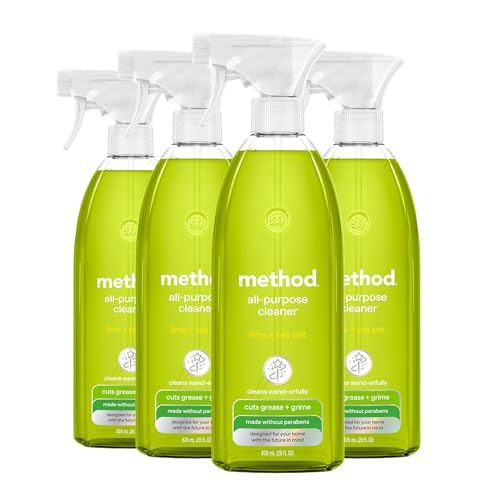
As an Amazon Associate we earn from qualifying purchases at no extra cost to you.
How Method Cleaning Products Perform Across Surfaces
Method’s core lineup uses plant-based surfactants (typically corn and coconut-derived) without chlorine bleach, ammonia, or phthalates. That formula choice explains the performance pattern: strong on light daily grime, grease, and fingerprints, but slower on heavy buildup, hard water scale, and mold compared to acid or bleach-based cleaners. The scents, derived from essential oils and fragrance blends, are the brand’s main differentiator — they are noticeably stronger and longer-lasting than most green cleaners, which is a pro if you want fragrance and a con if you are sensitive.
Method at a glance: Spec and formula comparison
| Product | Bottle Size | Format | Key Cleaning Agent | pH Range | Best For |
|---|---|---|---|---|---|
| Method All-Purpose Cleaner | 28 fl oz (828 ml) | Spray trigger | Cornstarch + coconut-based surfactant, lactic acid | ~5.5 – 6.5 (mildly acidic) | Counters, stovetops, light grease |
| Method Glass Cleaner + Surface Cleaner | 28 fl oz (828 ml) | Spray trigger | Corn-derived solvent + vinegar | ~7.0 – 8.0 (neutral) | Glass, mirrors, stainless steel |
| Method Daily Shower Spray | 28 fl oz (828 ml) | Spray trigger | Plant-based surfactant, citric acid | ~3.0 – 4.0 (acidic) | Preventing soap scum, daily upkeep |
| Method Bathroom Cleaner (Eucalyptus Mint) | 28 fl oz (828 ml) | Spray trigger (foaming) | Plant-based surfactant, citric acid | ~2.5 – 3.5 (acidic) | Tubs, tile, faucets with light scale |
| Method Dish Soap | 18 fl oz (532 ml) / 36 fl oz refill available | Pump / refill pouch | Coco-glucoside, aloe vera | ~6.0 – 7.0 (neutral) | Hand dishwashing, light grease |
| Method Antibac All-Purpose Cleaner | 28 fl oz (828 ml) | Spray trigger | Citric acid (EPA-registered disinfectant) | ~2.0 – 3.0 (acidic) | Disinfecting hard non-porous surfaces* |
*The Antibac line kills 99.9% of household germs including staphylococcus aureus and rhinovirus when used as directed with a required 10-minute dwell time. It is not a replacement for bleach-based disinfectants for mold remediation or norovirus.
Which Ones Are Worth Buying: Picks by Situation
Worth buying: All-Purpose Cleaner (French Lavender, Pink Grapefruit)
This is Method’s most versatile and consistent performer. On sealed countertops, laminate, and enameled stovetops, it cuts everyday grease and food splatter in one to two wipes without streaking. Independent lab cleaning tests show plant-based all-purpose cleaners with lactic acid remove 80-90% of light kitchen grease within 30 seconds, comparable to conventional cleaners on fresh soil, but they require more dwell time on baked-on grease. The scent strength is medium-high and lingers for 1-2 hours. If you clean kitchens daily and want a single bottle for most surfaces, this is the best value in the line.
Worth buying: Glass Cleaner (Mint)
Unlike the All-Purpose Cleaner, this formula is ammonia-free and designed to evaporate quickly. It leaves glass and mirrors streak-free without the haze that all-purpose sprays often leave, and it works well on stainless steel appliances. It does not contain strong degreasers, so it will not cut heavy kitchen grease — use it only for glass, chrome, and touch-up wiping. The mint scent is lighter and dissipates within 15-20 minutes, making it a better pick for scent-sensitive households.
Worth buying: Dish Soap (Lemon Mint, Clementine)
The dish soap produces less foam than petroleum-based detergents like Dawn Ultra, but cleans effectively on plates and glasses with light to moderate grease. The 18 oz pump bottle is designed for one-handed use and the gel is concentrated enough that a pea-sized amount handles a sink of lightly soiled dishes. For heavy, baked-on pans, it requires soaking, while conventional ultra-concentrated soaps are more effective at direct grease cutting. Choose it if you prioritize skin feel and fragrance over maximum degreasing power.
Situational: Bathroom Cleaner and Daily Shower
Both bathroom-targeted sprays rely on citric acid to dissolve soap scum and light hard-water deposits. They perform well for maintenance — spraying 2-3 times per week prevents buildup on glass doors and tile. For thick limescale, pink mold, or grout staining that has accumulated for months, they are significantly slower than cleaners with sulfamic acid, hydrochloric acid, or bleach. Buy the Daily Shower if you will use it consistently after showering; buy the Foaming Bathroom Cleaner for weekly tub and sink cleaning. Skip both if your water is very hard and you need a heavy-duty descaler.
Skip or reconsider: Antibac All-Purpose Cleaner for deep disinfection
The Antibac cleaner is EPA-registered as a disinfectant, but only when the surface remains visibly wet for 10 minutes and is then rinsed for food-contact surfaces. In practical use, most people spray and wipe within 30-60 seconds, which cleans but does not disinfect. If your goal is true sanitizing after handling raw meat or during illness, a product with a shorter contact time (1-5 minutes) or a bleach-based disinfectant is more reliable. The Antibac version also has a sharper citric acid scent and can etch natural stone like marble.
Decision Matrix: Match Your Needs to the Right Method Product
| Your Situation | Best Pick | Why | What to Skip |
|---|---|---|---|
| Small apartment, want one cleaner for everything | All-Purpose Cleaner | Safe on most sealed hard surfaces, good scent and grease performance | Glass Cleaner (too limited) + Bathroom Cleaner (redundant) |
| Sensitive to strong fragrance | Glass Cleaner or Fragrance-Free All-Purpose | Lightest scent load in the line, dissipates fastest | Pink Grapefruit, French Lavender (strongest scent throw) |
| Homes with hard water and heavy soap scum | Pair Daily Shower with a dedicated descaler | Method prevents buildup but does not remove thick scale | Relying on Method Bathroom alone for neglected buildup |
| Budget-focused, want lowest cost per ounce | 28 oz spray + 68 oz refill pouch | Refill pouch cuts cost 30-40% vs. new trigger bottle | Buying multiple 28 oz spray bottles |
| Need to disinfect after illness or raw meat | Use a registered disinfectant with 1-5 min dwell time | Method Antibac requires 10-minute wet time, easy to misuse | Antibac for quick wipe-and-go use |
Value Per Ounce: Worked Calculation
Method cleaning products sit in the mid-range for green cleaners — generally $4 to $7 per 28 oz spray bottle at grocery and mass retail, with refill pouches typically priced lower per ounce. Understanding cost per use helps decide between the trigger bottle and refill system.
| Format | Typical Volume | General Market Price Range | Cost Per Ounce | Uses Per Container (est.) |
|---|---|---|---|---|
| Method Spray Bottle (All-Purpose/Glass/Bathroom) | 28 fl oz | $4.00 – $6.50 | $0.14 – $0.23 / oz | ~140 – 180 sprays (0.15-0.20 oz per spray) |
| Method Refill Pouch | 68 fl oz | $7.50 – $10.50 | $0.11 – $0.15 / oz | Refills spray bottle ~2.4 times |
| Method Dish Soap (pump) | 18 fl oz | $4.00 – $5.50 | $0.22 – $0.31 / oz | ~90 – 110 hand washes (0.16-0.20 oz per use) |
| Method Dish Soap Refill | 36 fl oz | $6.50 – $9.00 | $0.18 – $0.25 / oz | Refills pump ~2 times |
Worked example: If a household uses the All-Purpose Cleaner for kitchen counters and stove daily (about 6 sprays per day, ~1.0 oz), a 28 oz bottle lasts roughly 28 days. At $5.49 per bottle, that is about $0.20 per day. Switching to the 68 oz refill pouch at $8.99 ($0.13 per oz) brings daily cost to $0.13, saving roughly $25 per year for that one product. Keeping the original trigger sprayer and reusing it with refills is the most economical and lowest-waste approach.
Durability and Ownership Realities
Method products are formulated to be gentle on surfaces and packaging, but there are practical ownership details that listings rarely mention:
- Trigger sprayers wear first. The fine-mist nozzle can clog if the citric acid or hard water minerals dry in the tube. Rinsing the nozzle under warm water every few weeks and purging with one spray of plain water extends life.
- Do not use on unsealed natural stone, unsealed wood, or unfinished cork. The acidic pH of Bathroom and Antibac cleaners (2.0-4.0) can etch marble, travertine, and limestone. The All-Purpose Cleaner is safer but still test in an inconspicuous spot.
- Foaming action requires technique. The Bathroom Cleaner needs 30-60 seconds of dwell time and light scrubbing with a non-scratch sponge for soap scum. Spraying and immediately wiping reduces effectiveness by half.
- Refill pouches are flexible plastic, not infinitely recyclable curbside in all areas. Store refills upright in a cool place; heat can degrade fragrance and cause the plant-based surfactants to separate slightly — shake before pouring.
- Common mistake is over-spraying. Because Method cleaners smell pleasant, there is a tendency to use 2-3 times more than needed. For most surfaces, 2 sprays per 2×2 foot area is sufficient. Overuse leaves a light surfactant residue that attracts dust on glass.
- Shelf life is typically 2 years unopened. Once opened, use within 12 months for best scent and cleaning power, especially for Antibac where citric acid potency matters for disinfection.
How to Get the Best Results Without Harsh Chemicals
For grease (All-Purpose Cleaner):
Spray, let sit 30-45 seconds to let surfactants lift oil, then wipe with a damp microfiber cloth followed by a dry cloth. For baked-on stovetop grease, lay a damp cloth over the sprayed area for 2 minutes before scrubbing.
For glass (Glass Cleaner):
Spray lightly from 6-8 inches away, wipe in an S-pattern with a lint-free microfiber, then buff with a second dry cloth. Cleaning glass in direct sunlight causes streaking due to rapid evaporation.
For bathroom grime (Bathroom Cleaner / Daily Shower):
For prevention, spray Daily Shower on wet surfaces after the last shower of the day — no rinsing needed. For existing buildup, spray Bathroom Cleaner, wait 2-3 minutes, scrub with a soft brush on grout, and rinse thoroughly. Ventilate the room; even plant-based fragrances can irritate in enclosed showers.
Final Verdict: Build a Small, Smart Kit
Instead of buying the entire Method line, most households get the best results and value from two bottles: the All-Purpose Cleaner for kitchen and general surfaces and the Glass Cleaner for mirrors, windows, and stainless steel. Add the Dish Soap if you hand-wash frequently and like a strong fragrance experience. Add the Bathroom Cleaner only if you will use it weekly for maintenance; otherwise keep a stronger acid-based descaler for occasional deep cleans. This keeps cost per ounce low, avoids redundancy, and matches each formula to where its plant-based strength actually performs.
Frequently Asked Questions
Are Method cleaning products safe for pets and children?
Method formulas are free from chlorine bleach and ammonia and are not tested on animals, but they are still detergents and should be kept out of reach of children and pets. Rinse food-contact surfaces with water after cleaning and allow floors to dry before pets walk on them. For households with asthma or fragrance allergies, choose the fragrance-free versions and ventilate during use.
Do Method cleaners disinfect?
Only the Antibac All-Purpose Cleaner is registered to disinfect, and only with a 10-minute wet contact time on hard, non-porous surfaces. The other Method cleaners clean but do not disinfect or sanitize. They should not be relied on for sanitizing after raw meat preparation or for mold remediation.
Can Method products be used with microfiber cloths?
Yes. Microfiber improves performance, especially for the All-Purpose and Glass cleaners, because it lifts residue without leaving lint. Wash microfiber cloths without fabric softener, which coats fibers and reduces absorption and can cause streaking.