
Our Top Picks
 Quincy Lab 10-140 Analog Acrylic-Door Gravity Convection Laboratory0.7 Cubic Feet10 x 12 x 10 inches22.2 PoundsCheck on Amazon
The best lab incubators for most small labs, classrooms and home-lab benches are the benchtop chamber models whose stated range covers body temperature and whose chamber fits the dishes you actually run. In this set that points to the 20 to 25 litre cabinets from IVYX, VEVOR, Sidawhope and Quincy Lab. Two entries are different instruments under the same label: a shaking incubator and a small dry bath. Below, ten Amazon listings are sorted by chamber type, with plain notes on what each title promises and what it leaves out. Everything comes from listing titles and general knowledge, so confirm details on the product page before ordering.
Top picks at a glance

IVYX Scientific 5L Incubator - Precise Temperature Control from 0°C to +55°C, 12V DC / 110V AC


As an Amazon Associate we earn from qualifying purchases. Product prices and availability are accurate as of the date/time indicated.

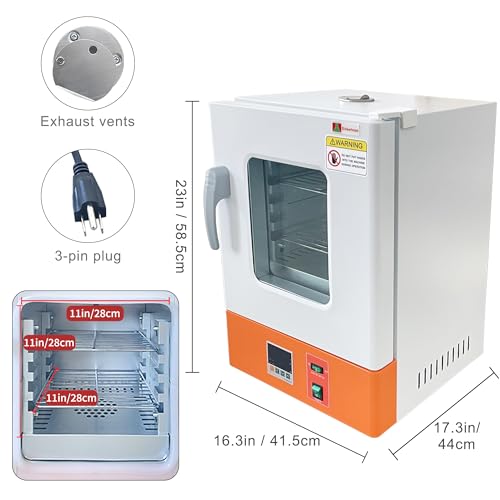
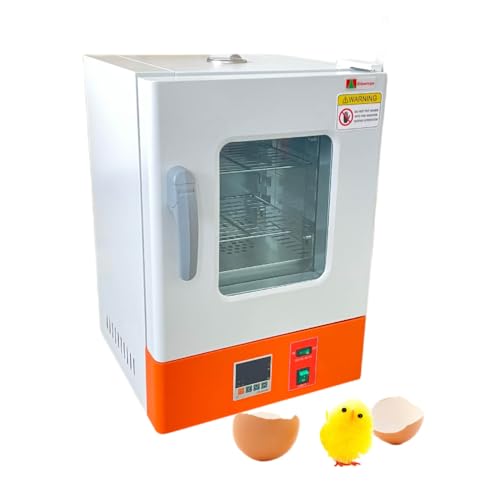
Sidawhope Electric Heating Constant Temperature Lab Incubator 22L 11X11X11Inch Chamber RT-70℃ 110V 60Hz Cabinet Incubator for Reptile Egg Bacterial Culture Seed Germination Medical Science



As an Amazon Associate we earn from qualifying purchases. Product prices and availability are accurate as of the date/time indicated.

VEVOR Laboratory Incubator 5.3 Gal / 20 L with Adjustable Air Circulation | For Petri Dishes, Room Temp+41℉ to 158℉ PID Temperature Control, Microbiological Lab Incubator, Digital Panel, Glass Door


As an Amazon Associate we earn from qualifying purchases. Product prices and availability are accurate as of the date/time indicated.

IVYX Scientific 25L Incubator - Precise Temperature Control from 2 to 60°C, 12V/110V


As an Amazon Associate we earn from qualifying purchases. Product prices and availability are accurate as of the date/time indicated.
Quincy Lab 10-140 Analog Acrylic-Door Gravity Convection Laboratory Incubator, 0.7 Cu Ft (19.8 L), Up to 143°F (62°C), 115V, Made in USA


As an Amazon Associate we earn from qualifying purchases. Product prices and availability are accurate as of the date/time indicated.
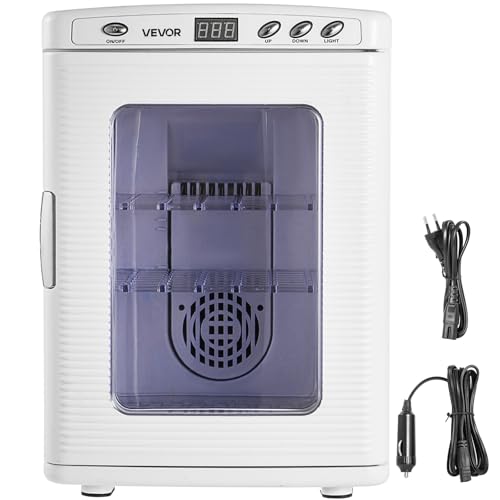
Happybuy White Reptile Incubator 25L Scientific Lab Incubator Digital Incubator Cooling and Heating 5-42°C Reptile Egg Incubator 12V/110V Work for Small Reptiles


As an Amazon Associate we earn from qualifying purchases. Product prices and availability are accurate as of the date/time indicated.
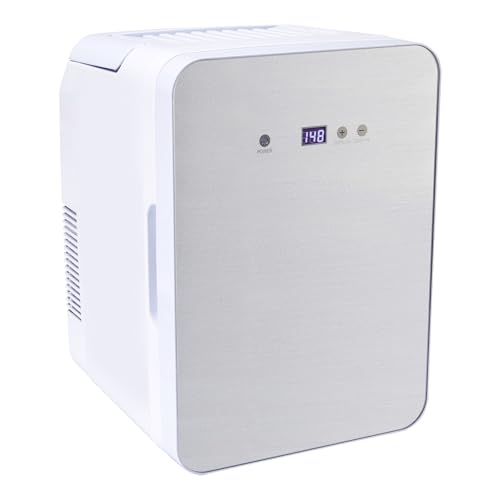
ScitoLAB 10L Lab Incubator, 35-148℉ Thermostatic Cabinet Incubator, 110V


As an Amazon Associate we earn from qualifying purchases. Product prices and availability are accurate as of the date/time indicated.

NEWTRY Lab Incubator Shaker 2 in 1 Scientific Incu-Shaker Shaking Incubator with Temperature and time Setting 50-300rpm 5-60℃ 20mm Circumferential Rotation


As an Amazon Associate we earn from qualifying purchases. Product prices and availability are accurate as of the date/time indicated.

Quincy Lab 12-140E Acrylic Door Digital Incubator, Gravity Convection, 2.0 Cubic feet, Amb.+2C-62C, 115V


As an Amazon Associate we earn from qualifying purchases. Product prices and availability are accurate as of the date/time indicated.

ONiLAB Mini Dry Bath Incubator, Up to 100℃, 15×1.5ml LCD | Aluminum Heating Block with 0.5℃ Accuracy, Timer Control, 9 Programs Memory, Rapid Calibration Function


As an Amazon Associate we earn from qualifying purchases. Product prices and availability are accurate as of the date/time indicated.
| Model | Key point from title | Price tier | Best for |
|---|---|---|---|
| IVYX Scientific 5L | 0 to +55 °C, 12V DC / 110V AC | Budget | Tiny batches, portable use |
| Sidawhope 22L | Room temp to 70 °C, cabinet | Mid-range | Plates, seeds, egg hatching |
| VEVOR 20L | Adjustable air circulation, PID, glass door | Mid-range | Petri dish work |
| IVYX Scientific 25L | 2 to 60 °C, 12V / 110V | Mid-range | Larger batches |
| Quincy Lab 10-140 | Analog, gravity convection, 19.8 L | Mid-range | Simple fixed-temperature runs |
| Happybuy 25L | Heating and cooling, 5 to 42 °C | Budget | Reptile eggs, mild-range work |
| ScitoLAB 10L | 35 to 148 °F thermostatic cabinet | Budget | Small bench incubation |
| NEWTRY Incu-Shaker | 50 to 300 rpm, 5 to 60 °C | Premium | Liquid cultures needing agitation |
| Quincy Lab 12-140E | Digital, 2.0 cu ft, gravity convection | Premium | Bigger chamber, digital setpoint |
| ONiLAB Mini Dry Bath | Up to 100 °C, 15 x 1.5 ml block | Budget | Microtubes, not dishes |
What is changing in this category
Search results for incubators now mix three audiences on one page: laboratory buyers, hobbyists hatching eggs or starting seeds, and fermentation fans. Sellers appear to know this, which is why one title can name bacterial culture, reptile eggs and seed germination in a single breath. The word “scientific” in a listing is a marketing label, not a certification, so it pays to read the actual numbers.
Digital displays and adjustable air circulation seem to be spreading into lower-priced units, and a few listings advertise dual power inputs such as 12V and 110V. Analog dials remain available and still make sense for a fixed, set-and-forget temperature. Meanwhile established laboratory-supply brands keep selling simpler gravity-convection cabinets alongside the newer digital ones.
Titles are also uneven. Some give a chamber volume, some give only outside dimensions, and some mix Fahrenheit and Celsius in one line. Accuracy, uniformity and recovery time, the figures that decide whether results are repeatable, are rarely stated at all. Expect to confirm those on the product page or with the seller, and expect to verify the temperature yourself once the unit arrives.
How we picked these
The set was assembled from listings that matched the search term, then sorted by chamber type so like is compared with like. Notes draw on published specifications in the listing titles, manufacturer documentation where linked, and general knowledge of how incubators work. Nobody on the team used or measured these units. Where a title is ambiguous, off-type or a near-duplicate, the entry says so plainly.
The ten listings, one by one
IVYX Scientific 5L: the compact, dual-power option
The title advertises temperature control from 0 °C to +55 °C and a 12V DC or 110V AC supply. A span that starts at 0 °C hints at cooling as well as heating, but the title does not explain how, so confirm that before planning sub-ambient work. At five litres it is the smallest chamber here, enough for a couple of petri dishes, a few tubes, or a small germination run.
Picture a teacher keeping a handful of agar plates steady for a week of classroom observation. A small box fits on a shelf and settles quickly; the cost is that two groups needing space at once will outgrow it. The 12V option may suit vehicle or field use, but the title says nothing about the adapter or power draw.
One practical point: very small chambers react quickly to every door opening, so the temperature can swing more than it would in a larger, better-insulated cabinet. If you choose this size, plan to open it rarely and to place a reference thermometer next to your samples during the first few runs.
- Pro: smallest footprint in the set.
- Pro: low and high ends of the stated range are both useful.
- Con: capacity runs out fast.
- Con: accuracy and uniformity are not stated.
Check the listing for internal dimensions, shelf count and cooling method. Question to ask: does the stated range hold when the room is much warmer than 20 °C?
Sidawhope 22L: cabinet with a wide range and a long use list
This one names a 22 L cabinet with an 11 x 11 x 11 inch chamber, a range from room temperature to 70 °C, and 110V at 60Hz. The chamber arithmetic is consistent: eleven inches cubed is about 21.8 litres. The use list is broad, covering reptile eggs, bacterial culture, seed germination and medical science, which signals a general-purpose heater more than a specialist instrument.
A home brewer holding a starter culture at a steady warm temperature, or a student group running plate growth, would be the natural audience. “Room temperature” as a lower bound means it cannot cool below the surroundings, so a hot summer room can push the floor of your range upward.
Since it only heats, its lowest usable setting follows the room. In a cool basement the floor may sit well below a culture temperature, while in a hot summer room even the lowest setpoint could be too warm for gentle work. Place it where room temperature stays fairly steady, and leave air space around the back and sides.
- Pro: roomy for the stated class.
- Pro: upper limit leaves headroom above typical culture temperatures.
- Con: no cooling, so the room sets the minimum.
- Con: “medical science” is a marketing phrase, not a clinical rating.
Check whether the 11-inch figure is inside or outside, and how many shelves come with it. Question to ask: is there a visible, calibrated display or only a dial?
VEVOR 20L: PID control and a glass door
The title lists 5.3 gallons or 20 L, adjustable air circulation, a digital panel, a glass door, and PID temperature control, and it names petri dishes as a use. The range reads “Room Temp+41℉ to 158℉”, which is ambiguous: it may mean a span from slightly above room temperature, or a flat 41 to 158 °F. Treat that wording as a prompt to read the specification table.
The glass door lets you look at plates without opening the chamber, which limits temperature dips during routine checks. Adjustable circulation is useful if you want to even out the chamber, but remember that moving air also dries open agar over a long run.
For a school or small lab, the combination of a window and a digital panel also helps teaching, because students can read the display and see the plates without changing the conditions. Whether the glass is double-layered or how well the door seals is not in the title, and both affect how steady the chamber stays.
- Pro: PID is named, which suggests finer control than simple on/off switching.
- Pro: viewing window reduces door openings.
- Con: range wording is unclear.
- Con: circulation can dry open samples.
Check shelf layout and whether the fan can be turned off. Question to ask: what is the stated temperature stability at 37 °C?
IVYX Scientific 25L: more room, 2 to 60 °C
The larger sibling of the 5 L model adds volume and a stated 2 to 60 °C span with the same 12V or 110V options. That low end implies some form of cooling, and the title does not say whether it can pull below room temperature on its own. Five times the capacity makes it the natural step up for anyone who has outgrown the small unit.
A small research group staging two or three experiments at the same time could use the volume, while a hobbyist might use the wider range for fermentation at lower temperatures. Because two IVYX listings share a naming style, double-check you are opening the 25 L page and not the 5 L one.
Larger chambers need more time to warm from cold, so factor in a settling period before loading samples. It is also worth thinking about noise and heat output, since a unit with cooling and heating hardware may be audible in a quiet office. The title is silent on both, so read buyer questions on the product page.
- Pro: large chamber for the price tier.
- Pro: range reaches both near-fridge and warm-culture temperatures.
- Con: no uniformity or stability figures in the title.
- Con: footprint is bigger on a crowded bench.
Check internal shelves, noise and the power supply. Question to ask: how long does it take to return to setpoint after the door opens?
Quincy Lab 10-140: analog gravity convection, simple by design
This listing states an acrylic door, gravity convection, 0.7 cubic feet or 19.8 L, a limit of 143 °F or 62 °C, 115V supply, and “Made in USA”. The country claim comes from the seller and should be checked on the page. Analog control means a dial with no digital readout, which keeps the design simple but makes exact setpoints harder to repeat.
Gravity convection moves air by warmth alone, so there is no fan to dry samples. That suits delicate or lightweight material, and it is a common choice for basic incubation. Picture a teaching lab running one fixed-temperature routine all term and wanting little to go wrong.
Established laboratory brands tend to publish fuller documentation than generic sellers, which can help with maintenance, parts and cleaning guidance. The listing still counts as a seller description, so look for a downloadable manual or specification sheet instead of relying on the title alone.
- Pro: no fan, gentle on open samples.
- Pro: straightforward, few settings to confuse students.
- Con: analog dial limits precision.
- Con: slower recovery after door openings is typical for this design.
Check whether a thermometer port or an included thermometer is part of the package. Question to ask: how will you verify the real temperature at the shelf?
Happybuy 25L: a reptile-egg unit with a lab label
The title calls this a white reptile incubator and a scientific lab incubator at once, with digital control, heating and cooling, 5 to 42 °C, and 12V or 110V power for small reptiles. It is best read as an egg incubator that also covers mild culture temperatures. The narrower upper limit rules out anything needing higher heat, such as some drying or sterilising tasks.
A keeper hatching eggs gets a fitting range and a roomy 25 L space. A lab buyer should treat it as a weaker class for formal work: the range tops out low, and nothing in the title points to published stability data.
Because the title leans on small reptiles, it helps to compare it with the other 25 L unit in this set: that one advertises a wider span. If your work is closer to hatching than culture, the narrower, gentler range is a feature rather than a limit. Check how the unit handles humidity if you hatch eggs.
- Pro: heating and cooling in one box.
- Pro: lowest ceiling is gentle for sensitive biology.
- Con: off-type for serious laboratory protocols.
- Con: 42 °C upper limit caps flexibility.
Check humidity handling, because egg hatching often depends on it and the title mentions none. Question to ask: is the sensor accuracy documented anywhere?
ScitoLAB 10L: small thermostatic cabinet
Here the title gives 10 L, a range of 35 to 148 °F, a thermostatic cabinet and 110V. That span converts to roughly 2 to 64 °C. A 10 L chamber is a middle ground between the 5 L box and the 20 L cabinets: enough for a few plates per layer without taking much desk space.
A small clinic-adjacent training room, a school, or a home lab running occasional batches would be the audience. “Thermostatic” describes the control approach in general terms; whether it is analog or digital, and how tight it is, requires a look at the product page.
It also helps to know where this sits among near neighbours. It is a little larger than the IVYX 5L and half the size of the 20 L cabinets, so it suits people who want more than a travel box but less than a full bench cabinet. Look for photographs of the interior to see how shelves are arranged.
- Pro: modest size with a wide stated range.
- Pro: low entry point in the price tiers.
- Con: sparse detail in the title.
- Con: capacity is limited for multi-user benches.
Check for shelf count and display type. Question to ask: does the seller list temperature uniformity or only a setpoint range?
NEWTRY Incu-Shaker: a different instrument class
This is a shaking incubator, not a standard cabinet. The title lists time and temperature setting, 50 to 300 rpm, 5 to 60 °C and a 20 mm circumferential rotation, which is the orbit diameter. Shaking is used to keep liquid cultures mixed and aerated, so it suits flasks, not stacked agar plates.
It is the most expensive entry in the set, and it solves a problem most readers of a general incubator guide do not have. If your protocol says “incubate with shaking”, this is the right class. If it says “incubate at 37 °C”, you probably want a plain cabinet and can save the money.
One thing to confirm is the load rating, because a shaking platform has limits on weight and flask size, and a heavy full tray can strain the motor. Another is how the machine is placed: vibration travels through a bench, so a sturdy surface matters. Look for a clamp or tray description in the product page.
- Pro: temperature and agitation in one unit.
- Pro: adjustable speed and timer.
- Con: premium tier and a larger footprint.
- Con: poor fit for dishes and tubes that must stay still.
Check which flask sizes the platform holds and the clamp or tray type. Question to ask: what maximum load does the platform support?
Quincy Lab 12-140E: the bigger digital cabinet
Another gravity-convection acrylic-door model, but with a digital readout, 2.0 cubic feet (about 56.6 L), a range given as ambient plus 2 °C up to 62 °C, and 115V. Doubling the interior over the 10-140 changes what you can load at once, and the digital interface makes repeat setpoints easier to hit.
A department that shares one incubator across several users would care about both volume and a clear display. Because it sits in the premium tier, the question is whether you will fill the space; a half-empty large cabinet takes longer to warm and gives you no benefit.
Large cabinets also change how a lab works. With more space, people tend to leave old plates inside, which crowds fresh ones and raises contamination risk. A shared incubator works best with a simple labelling rule, a regular cleaning schedule, and a short log of who set which temperature and when.
- Pro: large capacity from an established lab brand.
- Pro: digital control for repeatability.
- Con: premium tier.
- Con: no cooling; the lowest setting depends on room temperature.
Check the shelf count and the door seal description. Question to ask: do you really need two cubic feet?
ONiLAB Mini Dry Bath: off-type for most buyers
This listing is a block heater, not a chamber. The title says up to 100 °C, 15 positions for 1.5 ml tubes, an aluminum heating block, 0.5 °C accuracy, timer control, nine stored programs and a calibration function. It warms microtubes directly, which is useful for short reaction steps, but it cannot hold petri dishes, flasks or eggs.
Include it on a shortlist only if your work is microcentrifuge tubes. Anyone searching for a place to grow plates should skip this entry.
It is also useful as a companion rather than a replacement. Some labs keep a dry bath beside a chamber incubator for short heating steps, so the larger cabinet stays closed and steady. Treat it as an accessory in that sense, and compare block formats if your tubes are a different size.
- Pro: very small, with stored programs.
- Pro: accuracy figure is stated, though it is the seller’s claim.
- Con: wrong class for culture dishes.
- Con: block size fixes what you can heat.
Check whether other block sizes are sold. Question to ask: does the tube format match your protocol?
Buying guide
Start with the chamber, not the controller
Capacity is the first filter. Count the dishes or containers you run in a typical week, add space for air to move, and leave room for growth. A rough rule of thumb is to buy a chamber that is about half empty on a normal day, so a busy week does not crowd samples against the walls.
Match the temperature range to your protocol
Write down your lowest and highest setpoints before reading titles. A cabinet that only heats cannot go below room temperature, so a warm summer room raises its floor. Units that advertise cooling add range but also add a compressor or thermoelectric element whose capacity the title rarely states.
Gravity convection versus circulation
Without a fan, air movement is gentle and open samples dry slowly, but the chamber can have warm and cool zones and recovers slowly. A fan evens things out and speeds recovery, with a drying risk for uncovered dishes. Choose by sample type, and place a reference thermometer where samples will sit.
Power, ventilation and safety
Use a grounded outlet and keep ventilation space around the cabinet. Do not store flammable solvents in a standard incubator unless the manufacturer states it is designed for that. Follow the manufacturer’s instructions and local codes, and follow your institution’s biosafety rules when you culture microorganisms.
When you need a different instrument
Cell culture normally calls for carbon dioxide and humidity control, shaking cultures call for an incu-shaker, and microtubes call for a block. None of the standard cabinets here mention CO2.
Worked example: sizing for a school lab
These are estimates, not measurements. Assume 90 mm dishes about 15 mm tall, stacked four high, with roughly 25 mm of clearance on each side and above. Using the 11-inch (about 28 cm) chamber in the Sidawhope title, usable width is about 18 cm, which fits two dishes side by side and about two deep: four stacks of four, or 16 dishes. For a class producing 12 dishes a week, that leaves some buffer. A 5 L unit would hold roughly a quarter of that, so the same class would need staggered runs.
| Spec concept | What to look for | Why it matters |
|---|---|---|
| Volume | Internal litres, not outside size | Sets how many dishes fit with airflow |
| Range | Covers your setpoint with margin | Prevents running at the limit |
| Control | PID or digital over plain dial | Finer, more repeatable setpoints |
| Airflow | Fan on/off or gravity | Uniformity versus drying |
| Power | Voltage and plug match your outlet | Avoids adapters and unsafe setups |
Mistakes buyers make
Choosing by outside size is the most common. A listing may quote cabinet dimensions that include insulation, so the real working volume is smaller. Read for “chamber” or “internal”.
Trusting the display is next. A built-in readout reports the sensor position, not necessarily the shelf. Put an independent thermometer in the chamber for the first week and record the difference.
Others buy a reptile or hobby unit for formal lab work because the price looks attractive, then find the range or documentation falls short. Some buy an incu-shaker when a cabinet would do, or a dry bath when they needed a chamber. A few overload the shelves and block airflow, which creates the uneven zones they were trying to avoid. And many forget the room: a cabinet without cooling struggles in a hot space, and one near a window or vent drifts.
Verdict by use case
For small classroom and home-lab batches, the VEVOR 20L and Sidawhope 22L are the sensible cabinets to shortlist, the first for its stated PID control and glass door, the second for its roomy chamber. For simple fixed-temperature teaching, the Quincy Lab 10-140 suits a basic routine. For shared departmental use with a digital readout, the Quincy Lab 12-140E fits if you will fill the space.
For tiny batches or portable work, the IVYX 5L and ScitoLAB 10L keep things compact. The IVYX 25L adds volume. Choose the NEWTRY only for shaking cultures, the ONiLAB only for microtubes, and the Happybuy mainly for egg hatching. Whatever you pick, confirm range, internal volume and power on the page.
Related guides
- Black Friday Cyber Monday Health Equipment Deals
- Hanging Purse Organizer For Small Closet
- Closet Organizers For Small Closets
Frequently asked questions
What is the difference between a lab incubator and a reptile egg incubator?
The two overlap, because both hold a chamber at a set temperature. Reptile egg models usually cover a narrower range and are built around egg-laying needs, while lab models advertise wider ranges, air circulation, or sample-culture uses. Read the temperature span and the intended-use line in the title before choosing, and remember that a hobby label does not guarantee laboratory-grade stability.
Can I use these for cell culture?
Not on the strength of the titles. Mammalian cell work normally needs controlled carbon dioxide and humidity, and none of these listings mention either. A dry heating chamber suits bacterial plates, seed germination and similar tasks. If your protocol specifies a CO2 level, look at a dedicated CO2 incubator and follow your institution’s biosafety rules.
What does PID temperature control mean?
PID is a control method that adjusts heater power continuously instead of simply switching it on and off, which generally reduces temperature swings around the setpoint. Only one listing in this set mentions it by name. Whether that translates into steadier temperatures in your room depends on the chamber, the sensor placement and how often you open the door.
Is a gravity convection incubator better than forced air?
Neither is better in every case. Gravity convection has no fan, so it dries samples less and disturbs light material less, but it can take longer to recover after the door opens. Forced air recovers faster and tends to even out the chamber, but airflow can dry out open dishes. Match the design to your samples.
Do I need to calibrate a new incubator?
It is sensible to check it against a reference thermometer you trust, placed where your samples will sit, and to record the offset. Displays and sensors can differ from the real chamber temperature, especially in budget units. Keep a simple log for the first week so you know how the unit behaves before you rely on it.
Where should I put an incubator in the room?
Choose a stable bench away from direct sun, heaters, vents and drafts, with free space around the cabinet for ventilation. Keep it level, plugged into a grounded outlet, and out of reach of anything flammable. Follow the manufacturer’s instructions and local codes, and avoid crowding the shelves so air can circulate.









