
The best ocarina for most beginners in 2026 is a 12-hole plastic alto C — models such as the Night by Noble or Focalink’s plastic alto C sell for roughly $25–45, play in tune, and survive a drop onto a hard floor, which a ceramic ocarina will not. Move up to a glazed ceramic 12-hole alto C ($60–140) once you can play cleanly across the range and want a warmer, louder tone. Save wooden ocarinas ($150–450) for players who already play in tune and can keep the instrument at a stable humidity.
All three materials use the same fingering on a 12-hole instrument, so the choice is about tone, weight and how much abuse the ocarina will take — not about learning a different instrument.
Our top picks
 Ohuhu Ocarina 12 Hole Alto C with
- All-in-One Instrument: Experience the versatility of the Ohuhu…
- Meticulously Crafted: Our ocarina is beautifully and precisely…
- Premium Quality Materials: Made from high-quality kiln-fired ceramic,…
 DHwebWLP Zelda Ocarina of Time
- Complete Premium Set:The DHwebWLP Zelda Ocarina is a…
- Pro-Grade Materials:Made from high-quality kiln-fired ceramic, our ocarina…
- Exquisite Craftsmanship: Meticulously designed with a striking Gold…
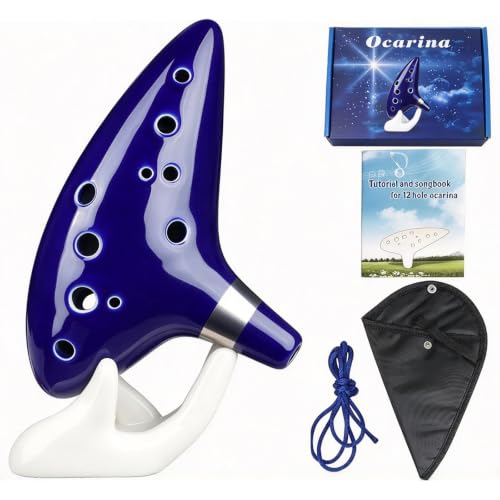 12 Hole Alto C Ocarina Instrument Hand
- This 12 hole Alto C ocarina is hand-tuned…
- Includes a 12 hole Alto C ceramic ocarina,…
- Unlike a flute or recorder, the ocarina produces…
| Product | Key specs | |
|---|---|---|
| Ohuhu Ocarina 12 Hole Alto C with | All-in-One Instrument: Experience the versatility of the Ohuhu… Meticulously Crafted: Our ocarina is beautifully and precisely… Premium Quality Materials: Made from high-quality kiln-fired ceramic,… | Check price |
| DHwebWLP Zelda Ocarina of Time | Complete Premium Set:The DHwebWLP Zelda Ocarina is a… Pro-Grade Materials:Made from high-quality kiln-fired ceramic, our ocarina… Exquisite Craftsmanship: Meticulously designed with a striking Gold… | Check price |
| 12 Hole Alto C Ocarina Instrument Hand | This 12 hole Alto C ocarina is hand-tuned… Includes a 12 hole Alto C ceramic ocarina,… Unlike a flute or recorder, the ocarina produces… | Check price |
 Deekec Zelda Ocarina 12 Hole Alto C | All-in-One Instrument: The Deekec Zelda Ocarina offers a… Expert Craftsmanship: Our ocarina is crafted with exceptional… High-Quality Materials: Constructed from durable kiln-fired ceramic, the… | Check price |
As an Amazon Associate we earn from qualifying purchases at no extra cost to you.
Quick comparison: the best ocarinas by situation
| Pick | Best for | Key specs | Typical price |
|---|---|---|---|
| 12-hole plastic alto C (Night by Noble, Focalink plastic alto C) | Most beginners, travel, cold weather | ABS/resin, ~17 cm long, 100–130 g, range A4–F6 | $25–45 |
| 12-hole ceramic alto C (STL Ocarina, Songbird, Focalink, Hans Rotter) | Tone upgrade after 3–6 months | Glazed ceramic, ~18–19 cm, 200–260 g, range A4–F6 | $60–140 |
| 6-hole pendant (Ocarina Workshop school models) | Children roughly 5–9, classrooms | Plastic, 7–9 cm, 30–60 g, about 9 notes (C5–D6) | $10–25 |
| 10-hole Budrio-style (Fabio Menaglio, Claudio Colombo) | Italian folk and classical repertoire | Terracotta, ~15–16 cm, 150–200 g, range of a 10th (C5–E6) | $80–250 |
| Wooden 12-hole alto C (Hind Ocarinas and small workshops) | Experienced players, indoor practice | Cherry, walnut or maple, ~17–18 cm, 130–190 g, range A4–F6 | $150–450 |
Best overall for beginners: 12-hole plastic alto C
A plastic alto C gives you the full range, the standard fingering that almost every method book and tab uses, and tuning that is accurate enough to play along with a tuner app out of the box. It weighs roughly 100–130 g, so it is comfortable to hold for a 30-minute session, and it will not shatter if a child drops it. Night by Noble (made by Noble in Korea) and Focalink’s plastic alto C (Taiwan) are the two most widely recommended examples; per the manufacturers’ spec sheets both cover A4 to F6 on a 12-hole layout.
Trade-off: plastic condenses moisture inside the windway faster than any other material. After 10–15 minutes the tone can turn breathy and the highest notes get squeaky. Warming the ocarina in your hands for a minute before playing and shaking out the condensation between pieces fixes most of it. If you want a warmer sound and don’t need drop protection, this is where ceramic wins.
Best step-up for tone: 12-hole ceramic alto C
Glazed ceramic is the traditional material and the one most makers build their best instruments from. Expect 200–260 g on an alto C — noticeably heavier than plastic — with a rounder tone, more projection and a slightly wider dynamic range. STL Ocarina (US), Songbird Ocarina (US), Focalink (Taiwan), Noble and TNG (Korea) and Hans Rotter (Austria) all sell 12-hole ceramic alto C models in the $60–140 band, with hand-finished instruments from smaller workshops running higher.
Trade-off: ceramic is brittle. A drop from waist height onto tile usually means a crack or a chipped voicing edge, and a chipped voicing is not repairable at home. Buy a padded case at the same time — a $12 case is cheaper than a replacement ocarina. Ceramic also shifts pitch more than the other materials as it warms up, so tune against a reference before playing with others.
Best for young players and classrooms: 6-hole pendant
A 6-hole pendant ocarina is 7–9 cm long and weighs 30–60 g, which puts every hole within reach of small hands, and it plays about nine notes (C5–D6) — enough for folk songs, school repertoire and most simple video-game melodies. Ocarina Workshop in the UK supplies plastic school ocarinas in this class, and they are the standard choice for classroom sets because they are cheap, nearly indestructible and loud enough to be heard in a group.
Trade-off: the fingering is not the standard 12-hole layout. Pendants use cross-fingering and half-holing, so a player who starts on a pendant has to relearn when they move to a transverse ocarina. For a 6-year-old that is fine; for a 12-year-old who wants to play Zelda themes, start on a 12-hole instead.
Best for traditional Italian playing: 10-hole Budrio-style
The Italian 10-hole ocarina, made in the Budrio tradition by workshops such as Fabio Menaglio and Claudio Colombo, has no subholes: you get a range of a 10th (C5–E6 on a C instrument) and produce every accidental by half-holing. The sound is brighter and more penetrating than an Asian-style 12-hole, which suits folk tunes and ensemble playing. They are usually unglazed or lightly glazed terracotta, around 150–200 g.
Trade-off: half-holing is a real technique that takes weeks to make reliable, and the smaller range rules out a lot of pop and game music. This is a considered second purchase, not a first one.
Best for experienced players: wooden ocarinas
Wooden ocarinas — Hind Ocarinas in the US is the best-known maker, with small workshops in Europe producing similar instruments — are turned from cherry, walnut, maple or exotic hardwoods. An alto C runs about 130–190 g, lighter than ceramic, and the bore absorbs moisture rather than pooling it, so long practice sessions stay clean. The tone is mellower and less piercing than ceramic at the top of the range.
Trade-off: wood moves with humidity. Most makers advise keeping the instrument between roughly 40% and 60% relative humidity and avoiding forced-air heating vents and direct sun. New wooden ocarinas are usually broken in over 2–4 weeks of short sessions so the wood acclimates gradually, and some makers recommend occasional bore oiling — follow the maker’s instructions rather than a generic rule.
How to choose: the numbers that matter
| Attribute (12-hole alto C unless noted) | Plastic | Ceramic | Wood |
|---|---|---|---|
| Typical weight | 100–130 g | 200–260 g | 130–190 g |
| Range | A4–F6 | A4–F6 | A4–F6 |
| Condensation buildup | Fastest (10–15 min) | Moderate | Slowest |
| Survives a 1 m drop on tile | Usually yes | Usually no | Sometimes |
| Humidity sensitivity | None | Low (thermal shock is the risk) | High (cracking below ~35% RH) |
| Break-in period | None | None | 2–4 weeks of short sessions |
| Cleaning | Rinse in lukewarm water, dry fully | Damp cloth only; never soak or dishwash | Swab the bore after playing; oil per maker |
Decision matrix
| Your situation | Buy this | Why |
|---|---|---|
| Total budget under $40 | 12-hole plastic alto C | Full range and usable tuning at the lowest cost |
| Child under 7 or very small hands | 6-hole pendant | 7–9 cm body fits small hands; ~9 notes is plenty |
| Playing outdoors in winter | Plastic | Cannot crack from thermal shock; least affected by cold |
| Wrist or hand fatigue | Plastic or wood | 100–190 g versus 200–260 g for ceramic |
| Recording or performing | Ceramic 12-hole | More projection and a more even tone across the range |
| Playing daily for years | Ceramic or wood, plus a hard case | Consumables are near zero; the case is what prevents replacement |
What it costs per session
A $30 plastic ocarina played three times a week for a year is 156 sessions, or about $0.19 per session; a $110 ceramic at the same rate is about $0.71. Over five years at that pace the figures fall to roughly $0.04 and $0.14. Because ocarinas have no reeds, pads or batteries, the running cost really is near zero — the only recurring expense is a case, a cleaning cloth and occasionally a replacement neck strap.
Ownership realities: what wears first
- The neck strap goes first. Cord straps fray within a year of daily use. Replace them before they fail, not after.
- Ceramic voicing edges chip. This is the single most common way a ceramic ocarina dies, and it usually happens during cleaning or transport rather than playing.
- Plastic windways clog with condensation, not dirt. A rinse and a full air-dry is enough; never leave a plastic ocarina in a hot car, which can warp the windway.
- Wood cracks from dryness. Low indoor humidity in winter is the main risk; a case with a humidity pack solves it.
- Common mistake: covering the subholes by accident. The two small holes beside the main holes lower the pitch by a semitone each; leaking air over them makes the low notes sound wrong and is usually blamed on the ocarina.
- Common mistake: blowing too hard on the top notes. Many 12-hole ocarinas need the “acute bend” — tipping the head and instrument down slightly — to keep the highest two or three notes from squeaking.
Frequently Asked Questions
Is a plastic ocarina good enough to learn on?
Yes. A plastic 12-hole alto C from Night by Noble or Focalink plays in tune, covers the same A4–F6 range as ceramic, and uses identical fingering. The only real drawback is faster condensation, which affects long sessions rather than learning. Many players keep a plastic ocarina permanently for travel and cold-weather practice even after buying ceramic.
How many holes should a beginner ocarina have?
Twelve, for an adult or older child. The 12-hole transverse layout has the widest repertoire of method books and tabs and gives roughly 1½ octaves. A 6-hole pendant is easier to hold for very young children but only plays about nine notes and uses a different fingering system that has to be unlearned later.
Should I buy an alto C or a soprano C?
Alto C for a first ocarina. It sits in a comfortable pitch range, is easier to play in tune, and does not sound piercing indoors. Soprano C instruments are smaller and louder, which suits ensemble playing but is harder on the ears during solo practice at home.
Why do the highest notes squeak?
The top of a 12-hole ocarina’s range needs the most breath control and the smallest amount of excess air. Condensation in the windway, an uncovered hole, or simply blowing too hard will all produce a squeak. Warming the instrument, clearing moisture, and using the acute bend usually fixes it.
Do ocarinas need tuning?
No — there is no tuning slide or adjustable part. Pitch is controlled entirely by breath pressure, so an ocarina that sounds flat needs slightly more air and one that sounds sharp needs less. Playing against a tuner app for a few minutes will show you the breath pressure your particular instrument wants.
How should I clean an ocarina?
Plastic can be rinsed in lukewarm water and left to air-dry completely. Ceramic should be wiped with a damp cloth only — never soaked, never put in a dishwasher, and never moved between hot and cold quickly, because thermal shock cracks glaze. Wooden ocarinas should be swabbed out after playing and oiled only as the maker specifies.









