
Our Top Picks


The best PS5 game for most players right now is Clair Obscur: Expedition 33. It is a turn-based RPG with real-time dodging and parrying layered on top, it sits in the mid-range price band rather than the premium one, it needs no online subscription, and it delivers a story campaign long enough to justify the purchase even if you only play a few hours a week. If you want the biggest-budget showpiece and you are willing to pay premium money for a cinematic action campaign, Marvel’s Wolverine is the pick. If the deciding factor is cost per hour of entertainment, Street Fighter 6 wins by a wide margin: it is the cheapest game here and the one you can keep playing for years.
This guide sorts five current PS5 titles by genre, single-player length, multiplayer support, accessibility features, performance modes and value at different budgets. Every pick below is judged on what it is built to do — a session-based fighter, a 30-hour RPG, a licensed sports annual and a horror action campaign ask very different things of your time, your storage and your wallet. The comparison tables further down give you concrete numbers for storage, frame-rate classes and cost per hour so you can match a game to your actual situation rather than to a genre you think you should like.
Top 3 Picks
Best overall: Clair Obscur: Expedition 33
The strongest all-round choice for a typical PS5 owner who wants one substantial single-player game. It pairs a classic turn-based battle system with timed dodge, parry and counter inputs, so it rewards attention without demanding fighting-game reflexes. A party of three active characters, a distinctive Belle Époque-inspired art direction and a campaign that runs roughly 30 hours for the main story — and well past 50 with side content — make it the best hours-per-dollar single-player pick in this roundup. It also sits in the mid-range price tier, which means you are not paying a premium for it.
Best budget: Street Fighter 6
At the budget tier, nothing here comes close for long-term value. Street Fighter 6 launches you into a full roster of fighters, a genuinely substantial single-player World Tour mode for people who never want to touch online play, and a ranked ladder with rollback netcode for people who do. A one-time purchase can carry you through hundreds of hours of play, which pushes the effective cost per hour toward the floor. It is also the most approachable modern entry point the series has had, thanks to simplified control schemes that let a newcomer throw special moves on day one.
Best premium: Marvel’s Wolverine
If you buy one full-price game and want it to feel like an event, this is the one. It is a PlayStation-exclusive, story-driven action game from a studio with a long track record of cinematic single-player campaigns, and it is built around a single character rather than a sprawling open world. The trade-off is the usual premium one: a shorter, more authored experience at the top price tier, with no multiplayer to extend it. Buy it when you want a focused, high-production campaign rather than a game you will still be playing in six months.
Quick Comparison
All five titles are current PS5 releases with physical and digital editions. Price tiers below are general market bands, not fixed prices — new releases move between tiers as they age.
| Product | Best for | Key specs | Price tier |
|---|---|---|---|
| MLB The Show 26 | Year-round sports play in short sessions | Annual licensed baseball sim; single-player career, franchise and online head-to-head; 15-minute sessions up to multi-season saves; 60 fps class performance; large install footprint | Mid-range |
| Marvel’s Wolverine | Cinematic single-player action | PS5 exclusive story campaign; single player only; no co-op or online modes; performance and quality display modes; mature tone | Premium |
| Street Fighter 6 | Competitive fighting on a small budget | 1v1 fighting with crossplay; 18-character launch roster plus post-launch additions; World Tour single-player mode; rollback netcode; 60 fps locked matches; three control schemes | Budget |
| Resident Evil 4 | Single-player horror action | Single player only; roughly 12–16 hour first campaign run, longer with side content; Separate Ways story expansion available; optional PSVR2 VR mode; 60 fps performance mode with a ray-tracing quality option | Budget |
| Clair Obscur: Expedition 33 | Turn-based RPG depth | Single player only; party of three active combatants; turn-based with timed dodge and parry; roughly 30 hours main story, 50+ with side content; performance and quality display modes | Mid-range |
How We Chose
Selection here is based on published product information, category conventions and the way each game is designed to be played — not on hands-on time with retail copies. Four criteria did the work. First, category fit: does the game actually deliver the thing its genre promises? A fighting game is judged on roster depth, netcode quality and whether it teaches a beginner, while an RPG is judged on campaign length, systems depth and whether the story sustains 30 hours.
Second, use case: how does the game slot into a real week? Session length, save flexibility and whether the game punishes you for taking a month off matter more to most players than raw content volume. Third, specification and platform support: performance modes, storage footprint, multiplayer scope, subscription requirements and accessibility options. A game that needs an online subscription to reach its main content is a different purchase from one that does not.
Fourth, upgrade path and longevity: post-launch content, replay value, seasonal support and how the price tier is likely to move over time. We also weighed what each game demands of your console — install size, patch cadence and how many of your roughly 667 GB of usable internal storage it will occupy. Where an exact figure is not something a listing or the publisher states plainly, we describe the spec class instead of guessing a number.
1. MLB The Show 26 – Best for Year-Round Sports Fans
As an Amazon Associate we earn from qualifying purchases at no extra cost to you.

MLB The Show 26 is the pick for the player who wants one game installed permanently and dips into it for twenty minutes at a time. It is an annual licensed baseball simulation, which means the roster, ratings, uniforms and rule changes track the real sport rather than being frozen at launch. If you follow baseball from April through October, this is the only game on this list that gives you something new to care about every week for six months.
The structure is built for fragmented play. A single game can take 20 to 40 minutes depending on how you set innings and difficulty; a Road to the Show career or a Franchise season is a long-term project you can chip away at all year; Diamond Dynasty gives you a card-collecting mode with online play attached. That spread matters, because it means the same purchase serves a lunch break, a rainy Sunday and a competitive online session.
Key specs
- Genre: annual licensed baseball simulation, single and multiplayer
- Modes: player career, franchise management, card-collection team building, quick play, online head-to-head
- Session length: roughly 20–40 minutes for a single game; seasons and careers run for months
- Performance class: 60 fps class, with the series’ usual display and difficulty options
- Online requirement: PlayStation Plus needed for online modes; career and franchise play fine offline
- Storage: annual sports titles with heavy asset libraries typically land at the upper end of the 50–100 GB install band
- Update cadence: roster and content updates through the season
What makes it worth the mid-range tier is the on-ramp. The series has a long history of adjustable difficulty and granular sliders, so you can tune pitch speed, timing windows, fielding assists and simulation rates until the game meets your skill level rather than the other way round. That is unusual in a licensed sports title, and it is the main reason this one stays playable for a casual fan who has not played a baseball game since childhood.
The honest downside is the annual cycle. Sports annuals have a shorter useful life than almost anything else here, because a new edition replaces yours roughly every twelve months and the online population migrates. Buy it early in its cycle and it is excellent value; buy it late and you are paying mid-range money for a game whose servers are about to get quieter. The install footprint is also the largest in this roundup, so if your SSD is already crowded, budget for a storage expansion or a deletion before you install it.
Pros
- Genuinely playable in short sessions, which suits adults with limited free time
- Deep slider and difficulty system lets you tailor the game to your ability
- Multiple modes cover casual quick play, long-term career and competitive online
- Season-long content updates keep a single purchase relevant for months
Cons
- Replaced annually, so long-term value depends on when in the cycle you buy
- Largest install footprint of the five games here
- Online modes need a PlayStation Plus subscription on top of the purchase
- If you do not follow baseball, the appeal drops sharply
Compared with the nearest alternative: Street Fighter 6 is the other session-based, keep-it-installed game on this list, and the two split cleanly. Street Fighter 6 is cheaper, does not expire annually and works offline in its single-player mode, but it demands practice and hand speed. MLB The Show 26 asks less of your reflexes and more of your patience, and it gives you a sport you already understand instead of a moveset you have to learn. If you play two or three times a week for half an hour, The Show is the easier fit; if you want a game that never goes out of date, Street Fighter 6 is the safer buy.
2. Marvel’s Wolverine – Best for Cinematic Single-Player Action

Marvel’s Wolverine is the premium pick and the only PlayStation-exclusive story campaign on this list. It is a character-driven action game from a studio with a long record of cinematic single-player work, and it is built around one protagonist rather than a wide-open map. If you buy one full-price game this year and you want it to feel like an event with a beginning, a middle and an end, this is where the money goes.
The audience is specific: players who finish what they start, who prefer authored set pieces to endless side content, and who do not care whether a game has a multiplayer mode attached. It is also the natural choice for anyone who wants a mature-toned action game rather than a family-friendly one — the character’s whole appeal is a short temper and a violent toolkit, and the game leans into that.
Key specs
- Genre: story-driven action-adventure, mature tone
- Platform: PS5 console exclusive
- Player support: single player only — no co-op, no competitive mode, no online requirement
- Campaign length: the studio’s previous story-driven action games have typically run in the 15–25 hour range for a main campaign, with side content on top
- Performance class: performance and quality display modes, the standard pairing for a PS5 first-party action title
- Price tier: premium
What you are paying the premium for is production density. Exclusive single-player action games in this class tend to spend their budget on animation, performance capture and set-piece staging rather than on systems that keep you playing for a hundred hours. That is a legitimate trade and it is the reason these games are remembered: the twenty hours are memorable in a way that a padded open world rarely is. The combat is also built around a close-quarters brawler with a healing factor, which usually translates into aggressive, forward-pressure fighting rather than defensive play.
The trade-offs are structural rather than hidden. There is no multiplayer, so once the campaign ends, your options are a replay, a harder difficulty or a trade-in. Premium pricing means the cost per hour is the highest on this list if you play through once and stop — a short campaign at a premium price can land north of four dollars per hour, against roughly a dollar or less for a mid-range RPG. There is also no version of this game for older PlayStation hardware, so it is a PS5-only purchase.
Pros
- High-production, tightly authored campaign with no filler to pad the runtime
- Single-player only means no subscription, no servers and no wait for matchmaking
- Mature, character-focused tone that suits the source material
- Performance mode lets you prioritise frame rate over resolution on a capable display
Cons
- Premium tier and the highest cost per hour if you play it once
- No multiplayer or co-op, so longevity depends entirely on replay value
- PS5 exclusive — no fallback version for older hardware
- Single-character focus means less variety in play style than a party-based game
Compared with the nearest alternative: Resident Evil 4 is the other single-player action campaign here, and the gap between them is mostly price and tone. Resident Evil 4 sits at the budget tier and delivers a comparable length of authored campaign for a fraction of the outlay, which makes it the better value by almost any measure. What the premium pick buys you instead is production scale, a modern first-party engine and a story built as a flagship release. If your budget is fixed, buy Resident Evil 4 and put the difference toward a second game. If you want the biggest-looking thing on your shelf, Wolverine is it.
3. Street Fighter 6 – Best for Competitive Fighting on a Budget

Street Fighter 6 is the best value on this list and the easiest recommendation to make on price alone. It is a 1v1 fighting game with a full launch roster, a single-player World Tour mode substantial enough to stand on its own, and a ranked online ladder built on rollback netcode — the netcode approach that makes matches feel local even when they are not. It costs budget-tier money and can absorb hundreds of hours.
It is also the most beginner-friendly entry the series has had. Three control schemes cover the whole spectrum: a classic six-button scheme for veterans, a modern scheme that turns special moves into single-button inputs with simplified timing, and a dynamic scheme that automates more of the work for players who just want to see the game do impressive things. That layered approach is why the game works both as a party game and as a serious competitive pursuit.
Key specs
- Genre: 2D fighting game, 1v1, online and local
- Launch roster: 18 fighters, with additional characters added through post-launch seasons
- Single-player: World Tour mode, a story-driven mode where you build a custom fighter and learn the systems
- Online: ranked and casual play with rollback netcode and crossplay across platforms
- Performance class: 60 fps locked during matches, which matters because fighting games are frame-sensitive
- Online requirement: PlayStation Plus for online matches; single-player and local play work without it
- Price tier: budget
The value maths is the strongest argument. A fighting game is the rare genre where a budget purchase can produce hundreds of hours: twenty matches a week at three minutes each is an hour of play, and the roster gives you dozens of characters to learn, each with their own matchup knowledge to acquire. Fighting games also age unusually well — the fundamentals do not rot, and a scene that stays populated keeps giving you opponents. Cost per hour here routinely falls below fifty cents, and often below twenty.
The cost of that value is a learning curve, even with modern controls. You will lose a lot at first, and progress comes in plateaus rather than a steady curve. There is also a content split worth understanding before you buy: the single-player World Tour mode is generous but finite, and the long tail is online. If you have no interest in playing against other people, you are buying roughly a third of what the game offers, and Resident Evil 4 or Clair Obscur: Expedition 33 would be the better use of the same money.
Pros
- Budget-tier price with the highest replay ceiling of any game here
- Three control schemes make it genuinely approachable for newcomers
- Rollback netcode and crossplay keep the online population healthy
- Substantial single-player World Tour mode for players who avoid online
- Frame-locked 60 fps matches suit the genre exactly
Cons
- Steep skill curve once you move past beginner ranks
- Long-term content is online, which requires a PlayStation Plus subscription
- Additional characters come through paid season passes rather than free updates
- Not a game you can meaningfully pause mid-match
Compared with the nearest alternative: MLB The Show 26 is the other ongoing, session-based game here, and both reward a weekly habit. The difference is shelf life and price. The Show is a mid-range annual that resets every twelve months; Street Fighter 6 is a budget purchase that keeps working for years and only grows its roster. Choose Street Fighter 6 if you want the cheapest long-term entertainment and you do not mind losing while you learn. Choose The Show if you would rather lose to a slider than to an opponent, and you want the sport itself to be the draw.
4. Resident Evil 4 – Best for Horror Action Campaigns
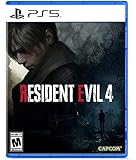
Resident Evil 4 is the best pure single-player value on this list. It is a survival-horror action campaign — a ground-up rebuild of one of the most influential action games ever made — and it sits at the budget tier despite offering a campaign that most players take roughly 12 to 16 hours to finish on a first run, longer if they chase the optional requests and treasure hunting that thread through each area.
It suits players who want tension, resource management and a campaign that respects their time. Ammunition is scarce, inventory space is a puzzle in itself, and the game constantly forces small decisions about whether to fight or run. That design makes it far more engaging than a straightforward shooter, and it makes a second playthrough on a harder difficulty feel like a different game rather than a repeat.
Key specs
- Genre: survival-horror action, single player only
- Campaign length: roughly 12–16 hours for a first run, longer with side requests and collectibles
- Additional content: a story expansion following a separate character, plus a wave-based arcade mode
- Optional VR: a PSVR2 VR mode is available as a free add-on for headset owners
- Performance class: a 60 fps performance mode alongside a quality mode with ray-traced lighting
- Online requirement: none — no subscription needed for any part of the campaign
- Storage: a 60 GB-class install, mid-pack for a current-gen action game
- Price tier: budget
Where it separates itself from the other single-player games here is pacing. The campaign moves through distinct environments — village, castle, island — each with its own enemy types and its own pressure. That variety is why the runtime feels shorter than it is, and why it holds up to a second run. The resource economy also does real work: because you cannot simply shoot your way through everything, every encounter carries weight, and the upgrade system for your weapons gives you a long-term progression thread to spend money on.
The trade-offs are the genre’s usual ones. It is a horror game, so expect tension, jump scares and a fair amount of gore — this is not a family pick. It is also strictly single-player, with no co-op and no competitive mode, so its value depends on you wanting a story to finish rather than a hobby to maintain. And if you bounce off the difficulty, the early hours are the hardest part; the game opens up considerably once your weapon upgrades start landing.
Pros
- Budget-tier price for a 12–16 hour campaign with strong replay value
- Excellent pacing with distinct environments and enemy types
- Resource management and weapon upgrades give real depth beyond shooting
- Optional PSVR2 VR mode at no extra cost for headset owners
- No online subscription required at any point
Cons
- Strictly single-player — no co-op, no online modes
- Horror, gore and sustained tension make it unsuitable for some households
- Early sections are punishing before upgrades accumulate
- Story expansion is a separate purchase, not included in the base game
Compared with the nearest alternative: Marvel’s Wolverine is the other single-player action campaign here, and Resident Evil 4 wins on value by a wide margin — a comparable length of authored content at a budget price instead of a premium one. Wolverine counters with higher production values and a modern flagship feel. Against Clair Obscur: Expedition 33, the split is genre and pace: Resident Evil 4 is tense, fast and mechanical, while Expedition 33 is slower, turn-based and roughly twice as long. If you want the most hours for the least money in a single-player game, Expedition 33 edges it; if you want the most intensity per hour, Resident Evil 4 is unbeatable at this price.
5. Clair Obscur: Expedition 33 – Best for Turn-Based RPG Depth

Clair Obscur: Expedition 33 is the best overall pick in this roundup and the easiest recommendation for a player who wants one big single-player game to sink into. It is a turn-based RPG with a twist: while you select actions from menus, you also dodge, parry and counter in real time during the enemy’s turn, so battles demand attention without demanding fighting-game reflexes. A party of three active combatants, each with distinct mechanics, gives the combat system far more depth than a straightforward menu-driven RPG.
The setting is a stylised, Belle Époque-inspired world with a premise built around a yearly countdown, and the art direction is distinctive enough that it looks unlike anything else on the console. The campaign runs roughly 30 hours for the main story and comfortably past 50 if you pursue side content, optional bosses and character-specific quests. At the mid-range price tier, that is the best hours-per-dollar ratio among the single-player games here.
Key specs
- Genre: turn-based RPG with real-time defensive inputs
- Player support: single player only, no online or co-op modes
- Party size: three active combatants, with a larger roster to build from
- Campaign length: roughly 30 hours main story, 50+ hours with side content
- Combat: turn-based actions combined with timed dodges, parries and counters
- Performance class: performance and quality display modes, the standard PS5 pairing
- Online requirement: none
- Price tier: mid-range
What elevates it above a conventional turn-based RPG is the parry system. Because you can negate damage with well-timed inputs, defensive play becomes an active skill rather than a menu choice, and boss fights turn into pattern-recognition exercises. The counter-attack payoff means the safest play is also the most rewarding, which is a smart inversion of the usual RPG maths where defence is passive. Character builds, weapon scaling and a flexible skill system give you plenty to optimise between fights.
The two honest caveats are the reaction-time layer and the length. Players who want pure menu-driven combat may find the timed inputs a barrier rather than a feature, and the game does not offer a way to remove them entirely. On length, a 30-hour main story is a commitment; if you play two hours a week, you are looking at several months. The upside is that turn-based RPGs pause perfectly — you can stop mid-battle, walk away for a fortnight and pick up exactly where you left off, which is not true of anything else on this list except MLB The Show 26.
Pros
- Best hours-per-dollar ratio of any single-player game here
- Turn-based structure with real-time parries adds genuine skill expression
- Distinctive art direction and a well-paced story campaign
- No online subscription or multiplayer requirement of any kind
- Pauses cleanly, which suits players with irregular schedules
Cons
- Timed defensive inputs mean pure menu-driven players may struggle
- 30-hour main story is a significant time commitment
- Single-player only, with no post-campaign multiplayer or co-op
- Mid-range price, though it is frequently discounted
Compared with the nearest alternative: Resident Evil 4 is the closest comparison on price and single-player focus, and the two are separated by pace rather than quality. Resident Evil 4 is roughly half the length and much more intense, with a budget-tier price; Expedition 33 is longer, slower and mid-range. Against Marvel’s Wolverine, Expedition 33 gives you noticeably more hours for less money, at the cost of production scale. If you are choosing one game to buy this month and you want the most content per pound, Expedition 33 is the answer.
Genre Fit: Which of These Five Actually Suits You
Genre is the fastest filter you can apply, and it is worth being honest with yourself about what you will still be playing in week three. These five games cover five distinct appetites: an annual sports simulation, a cinematic action campaign, a competitive fighter, a survival-horror campaign and a turn-based RPG.
| If you want… | Genre strength | Session shape | Pick |
|---|---|---|---|
| Something new every week for six months | Licensed annual sports sim | 20–40 minute games, months-long saves | MLB The Show 26 |
| A blockbuster story you finish and remember | Cinematic action-adventure | 15–25 hours, chapter-sized chunks | Marvel’s Wolverine |
| A skill to build for years | Competitive 1v1 fighting | 3-minute matches, endless ladder | Street Fighter 6 |
| Tension, scarcity and tight pacing | Survival-horror action | 12–16 hours, save-room pacing | Resident Evil 4 |
| Systems, builds and a long story | Turn-based RPG | 30–50+ hours, pause-friendly | Clair Obscur: Expedition 33 |
Two mismatches cause most wasted purchases. The first is buying a competitive game for its single-player mode: Street Fighter 6’s World Tour is generous, but if you have no intention of playing online, you are leaving most of the product untouched. The second is buying a long RPG during a busy period — a 30-hour campaign started in a month where you have no free time is a 30-hour campaign abandoned at hour eight.
If you are genuinely undecided between genres, note that turn-based RPGs and sports simulations are the two most interruption-tolerant categories on this list. Both let you stop instantly, both keep progress without a save-state scramble, and neither punishes a two-week absence. Action campaigns and fighting games are less forgiving of gaps, though for opposite reasons: one loses your place in the story, the other loses your muscle memory.
Single-Player Length and What It Really Costs You
Length is the number people quote and the number that misleads most often. A 40-hour game padded with collectible hunting is not the same purchase as a 15-hour game where every hour is authored. Here is what the five games actually ask of your time, with a rough split between a first completion and a thorough run.
| Game | First completion | Thorough run | Replay ceiling |
|---|---|---|---|
| MLB The Show 26 | Open-ended; a franchise season runs tens of hours | Hundreds of hours across modes | Very high while the online population is active |
| Marvel’s Wolverine | Roughly 15–25 hours, in the studio’s usual range | 25–35 hours with side content | Moderate — higher difficulties and collectibles |
| Street Fighter 6 | Roughly 20–30 hours for the single-player mode | Roster-wide practice is effectively endless | Very high if you play online |
| Resident Evil 4 | Roughly 12–16 hours | 20+ hours with requests, treasures and harder modes | High — new game plus and difficulty tiers |
| Clair Obscur: Expedition 33 | Roughly 30 hours | 50+ hours with side content and optional bosses | Moderate to high — build variety and higher difficulty |
The useful mental model is not “how long is it” but “how many hours will I personally get”. A 15-hour campaign you finish is worth more than a 60-hour open world you abandon. Estimate your realistic weekly playtime, multiply by the number of weeks you expect to stay interested, and compare that to the campaign length. If your realistic total is below the first-completion figure, you are probably buying the wrong genre rather than the wrong game.
There is also a pacing consideration that gets ignored. Resident Evil 4 and Marvel’s Wolverine are built to be played in one or two sittings a week, with natural chapter breaks and save points. Clair Obscur: Expedition 33 is built for longer, less frequent sessions. MLB The Show 26 and Street Fighter 6 are built for twenty minutes at a time. Match the game’s rhythm to your schedule and the same amount of content suddenly feels twice as long.
Multiplayer Support and Subscription Costs
Multiplayer is the single biggest hidden cost in a PS5 purchase, because online play on PlayStation requires an active PlayStation Plus subscription for most games. That subscription is an annual or monthly expense on top of the game price, and it changes the value calculation substantially over a two-year ownership period.









