
Key takeaways
- Type: handheld, compressor-driven sand blaster kit positioned by the maker for auto rust removal.
- Hopper: sealed, leak-proof design — the feature the listing leads with, and the one most worth paying a little extra for.
- Nozzle: ceramic-tip class, the standard for abrasive work because ceramic outlasts steel tips by a wide margin.
- Media: dry, free-flowing abrasives — aluminium oxide, garnet, crushed glass, glass bead and similar.
- Operating pressure: 60–110 PSI at the tool, the normal band for handheld blasters.
- Air demand: 6–12 CFM at roughly 90 PSI depending on nozzle diameter; a small 3/32 in. tip sits at the low end, a 1/8 in. tip at the high end.
- Working envelope: spot rust, weld seams, brackets, fasteners and small castings — not a whole flat panel in a single uninterrupted pass.
The best sandblasting kit for auto restoration for most home restorers is the InoKraft Leak-Proof Sand Blaster Kit for Air Compressor: it is a mid-range, compressor-driven handheld blaster built around rust removal on panels, brackets and suspension parts, and it targets the two problems that waste the most time on a restoration — media leaking from the hopper and inconsistent feed. It suits anyone who already owns a shop compressor and works on removable parts and spot rust rather than whole bodyshells. If you own a pressure washer and would rather not buy a compressor at all, the Selkie Pressure Washer Sandblasting Kit is the cheapest credible way in. If you are stripping dozens of small parts and want to stop chasing abrasive dust around the garage, the Eastwood B60 Sand Blasting Cabinet is the premium answer. Everyone else lands between those three, and the deciding factors are almost always compressor output, nozzle diameter and how you plan to contain the dust.
Top 3 Picks
Best overall: InoKraft Leak-Proof Sand Blaster Kit
InoKraft’s kit is the most balanced choice for a home restoration because it works with the compressor most enthusiasts already own, handles both panel rust and small-part cleanup, and its leak-proof hopper design addresses the single most common complaint about budget handheld blasters. It is not a production tool — it will not strip a whole door in one continuous pass — but it is the right first blaster for someone restoring one car at a time.
Best budget: HOLDWIN Heavy-Duty Sandblaster Gun Kit
HOLDWIN’s valve-type gun kit with two ceramic nozzle tips is the lowest-cost way to get a genuinely controllable air blaster, and the ball-valve metering gives you finer control over media flow than a simple trigger gun. It suits someone testing whether blasting fits their workflow, or someone who needs a second gun for odd jobs.
Best premium: Eastwood B60 Sand Blasting Cabinet
The Eastwood B60 is the pick when dust containment and repeatability matter more than portability — it turns blasting into a contained bench operation with media recovery, which is exactly what you want if you are processing brackets, hardware and small panels week after week. It is the most expensive route here and it needs a solid compressor behind it, but it is the only option on this list that changes the working environment rather than just the tool.
Quick Comparison
| Product | Best for | Key specs | Price tier |
|---|---|---|---|
| InoKraft Leak-Proof Sand Blaster Kit | All-around panel and part rust removal | Handheld compressor blaster; leak-proof sealed hopper; ceramic nozzle; 60–110 PSI class; needs 6–12 CFM | Mid-range |
| Selkie Pressure Washer Sandblasting Kit | Cheapest wet-blasting entry point | Pressure-washer attachment; wet abrasive injection; replacement nozzle tips included; needs a pressure washer, no compressor | Budget |
| PLATINUMEDGE Car Headlight Restoration Kit | Plastic lenses and delicate surfaces | 3 in. sanding discs and 3 in. buffing pad; drill-mounted; abrasive grading progression, not an air blaster | Budget |
| Tool Daily Pressure Washer Sandblasting Kit | Wet blasting on a high-pressure washer | Wet sand blaster rated to 5,000 PSI; abrasive siphon tube; fits standard pressure-washer fittings | Mid-range |
| HOLDWIN Heavy-Duty Sandblaster Gun Kit | Budget air gun with fine media control | Valve-type gun with ball valve; connector; 2 ceramic nozzle tips; dry media; needs 6–12 CFM class compressor | Budget |
| M MINGLE Pressure Washer Sandblasting Kit | Quick-connect wet blasting | 1/4 in. quick connect; rated to 5,000 PSI; wet abrasive sand blaster; no compressor required | Mid-range |
| Auto Dynasty 5 Gallon Sand Blaster | Portable pot blasting on small jobs | 5-gallon pressure pot; 4 ceramic nozzles; 60–110 PSI; holds roughly 40–50 lb of media | Mid-range |
| Eastwood B60 Sand Blasting Cabinet | Contained, repeatable bench work | Steel cabinet with glove ports, viewing window and media hopper; paint removal and metal restoration; needs 10–15 CFM class compressor | Premium |
| Jewboer Sand Blaster Gun Kit | Budget gun for cabinet use | Cabinet-style blaster gun; ceramic nozzle; dry abrasive media; air compressor required | Budget |
| Auto Dynasty 10 Gallon Sand Blaster | Longer continuous sessions | 10-gallon pressure pot; 4 ceramic nozzles; 60–110 PSI; holds roughly 80–100 lb of media | Premium |
| Auto Dynasty 20 Gal Sand Blaster | Large panels and multi-part runs | 20-gallon pressure pot; 4 ceramic nozzles; 60–110 PSI; holds roughly 160–200 lb of media | Premium |
| VEVOR Heavy Duty Sandblasting Cabinet Kit | Dual-gun shop throughput | Industrial-grade steel cabinet; dual blasting guns; media reclaim; needs a high-CFM compressor | Premium |
How We Chose
This roundup is built from published product listings, manufacturer specification sheets and established category knowledge about abrasive blasting equipment — not from physical trials of the units themselves. The first filter was category fit: every product here had to be a genuine abrasive-blasting tool or an adjacent surface-preparation kit that a restorer would realistically substitute for one, which is why a drill-mounted headlight restoration kit sits alongside pressure pots and cabinets. The second filter was media compatibility, because a blaster that only runs one narrow media type is a dead end for a restoration that spans rusty steel, cast iron, aluminium and plastic trim.
The third filter was the compressor and nozzle equation. Air demand, not brand, is what actually decides whether a blaster works in your garage, so every air-driven product here was assessed against realistic CFM-at-90-PSI figures for its nozzle class, and wet-blasting options were assessed against pressure-washer flow rather than compressor output. The fourth was containment: whether the tool contains its own dust or dumps it into your workspace, which changes the true cost of ownership far more than the sticker price. Finally, we weighed upgrade path — whether the product is a sensible first step that stays useful as you scale up, or a dead end you will outgrow in a month.
1. InoKraft Leak-Proof Sand Blaster Kit – Best for All-Around Panel and Part Rust Removal
As an Amazon Associate we earn from qualifying purchases at no extra cost to you.
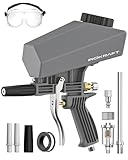
The InoKraft kit suits the restorer who already has a shop compressor and wants one handheld tool that can chase rust around a door skin, a control arm, a battery tray and a box of fasteners without a lot of setup. It is a compressor-driven blaster rather than a pressure pot or a cabinet, so it is portable, easy to store and easy to aim into awkward shapes — but it also means you supply the air and you supply the containment. The kit’s defining claim is its leak-proof hopper, and that matters more than it sounds. The most common frustration with budget handheld blasters is media dribbling from a hopper seam or fill cap, which wastes abrasive, changes your feed rate mid-pass and leaves grit in places you have to clean later.
Listed specs and category-typical figures for this class:
- Type: handheld, compressor-driven sand blaster kit positioned by the maker for auto rust removal.
- Hopper: sealed, leak-proof design — the feature the listing leads with, and the one most worth paying a little extra for.
- Nozzle: ceramic-tip class, the standard for abrasive work because ceramic outlasts steel tips by a wide margin.
- Media: dry, free-flowing abrasives — aluminium oxide, garnet, crushed glass, glass bead and similar.
- Operating pressure: 60–110 PSI at the tool, the normal band for handheld blasters.
- Air demand: 6–12 CFM at roughly 90 PSI depending on nozzle diameter; a small 3/32 in. tip sits at the low end, a 1/8 in. tip at the high end.
- Working envelope: spot rust, weld seams, brackets, fasteners and small castings — not a whole flat panel in a single uninterrupted pass.
Where the InoKraft earns its place is in the middle of a restoration, after the panels are off the car. Rust on a subframe mount, scale inside a wheel arch lip or pitting on a bracket is exactly the kind of work a handheld blaster does better than a grinder, because it gets into corners and pits a wire wheel cannot reach and does not thin the metal the way aggressive grinding can. The leak-proof hopper also means you can tip the gun into odd angles — upside down under a floorpan, for example — without a lap full of abrasive, which is a genuine advantage over cheaper siphon designs.
The trade-off is speed. A handheld blaster fed by a hopper empties quickly and refills often, and it cannot match the sustained cut rate of a pressurised pot. If your project involves large flat panels with broad rust fields, you will spend more time refilling than blasting, and a pot blaster or a cabinet becomes the better answer.
Pros
- Sealed hopper genuinely reduces media waste and mess compared with open siphon designs
- Works with the compressor most home restorers already own, provided it can hold pressure while flowing 6–12 CFM
- Portable and easy to aim into brackets, seams and inner structures
- Ceramic nozzle handles aggressive media without rapid wear
- Good entry point that stays useful as a detail tool even after you buy a bigger blaster
Cons
- Small hopper means frequent refills on anything larger than a bracket or a patch
- No dust containment — you must build your own tarp or curtain arrangement
- Handheld air blasters are slower than pressurised pots on broad rust fields
- Requires a compressor that can sustain pressure, not just peak at it
Compared with the nearest alternative on this list, the HOLDWIN Heavy-Duty Sandblaster Gun Kit, the InoKraft costs more but is the more finished tool: the leak-proof hopper is the differentiator, and the HOLDWIN’s ball-valve metering is the counter-advantage for people who want fine control over media flow. Compared with the Auto Dynasty 5 Gallon Sand Blaster, the InoKraft is more portable and better suited to awkward shapes, while the pot is dramatically faster on flat, accessible work. If you are choosing between the two, pick based on whether your rust lives in corners or on panels.
2. Selkie Pressure Washer Sandblasting Kit – Best Budget Wet-Blasting Entry Point
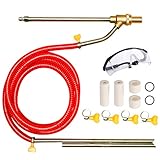
The Selkie kit is the answer for the restorer who does not own — and does not want to buy — an air compressor. It converts a pressure washer into a wet abrasive blaster by siphoning media into the water jet, and it ships with replacement nozzle tips, which is the part that wears out first. It suits someone stripping rust, paint or heavy grime from a chassis, a trailer, a set of wheels or a garden tractor in the driveway, where the water itself handles a lot of the dust problem that makes dry blasting unpleasant.
Listed specs and category-typical figures:
- Type: pressure-washer sandblasting attachment — a wet abrasive blasting kit, not an air tool.
- Power source: your existing pressure washer; no compressor required.
- Included: replacement nozzle tips, which is significant because the nozzle is the first consumable to erode.
- Media: fine, clean, free-flowing abrasives suitable for wet injection — the media must be dry and screened before it goes in, or it bridges in the siphon tube.
- Typical pressure-washer class: most consumer electric and petrol washers in the 2,000–4,000 PSI range can drive a wet blaster attachment; flow rate matters as much as pressure.
Wet blasting has real advantages for automotive work that are worth understanding before you dismiss it as a shortcut. Water suppresses airborne dust almost completely, so you are not filling the garage with abrasive particulate; the water film also lubricates the cut, which produces a slightly smoother finish than dry blasting at the same media; and it rinses as it works, so you can see the metal as you expose it. On a rusty subframe or a set of steel wheels, that combination is genuinely pleasant to use.
The limitations are equally real. Wet blasting leaves a slurry of water and spent abrasive that has to be managed — it will stain driveways, it will clog drains, and it carries the same disposal questions as dry spent media. Bare steel flash-rusts quickly after wet blasting, so you need to dry and prime promptly, sometimes within the hour. And a pressure-washer attachment cannot deliver the concentrated cutting power of a dedicated pot blaster with a large nozzle; it removes rust and paint, but on heavy scale it is slower than the alternative.
Pros
- No air compressor needed — the single biggest cost barrier for a beginner disappears
- Water dramatically reduces airborne abrasive dust
- Replacement nozzle tips included, addressing the first wear item
- Rinses the surface as it cuts, making progress easy to see
- Lowest entry cost on this list
Cons
- Creates a wet slurry that needs containment and disposal planning
- Bare steel flash-rusts fast, forcing you to dry and coat quickly
- Slower than a pot blaster on heavy scale
- Media must be kept dry and screened or it bridges in the siphon
- Effectiveness depends heavily on your pressure washer’s flow rate, not just its PSI rating
Compared with the Tool Daily and M MINGLE pressure-washer kits elsewhere in this list, the Selkie is the budget option: it competes on price and on the included spare tips, while the Tool Daily kit leans on a 5,000 PSI rating and the M MINGLE kit leans on 1/4 in. quick-connect convenience. If your washer is a modest electric unit and your ambition is modest too, the Selkie is the sensible spend. If you already own a high-output petrol washer, the higher-rated kits will use that capacity better.
3. PLATINUMEDGE Car Headlight Restoration Kit – Best for Plastic and Delicate Surfaces

This is the odd one out on this list, and deliberately so: the PLATINUMEDGE kit is not an abrasive blaster at all. It is a drill-mounted headlight restoration kit built around 3 in. sanding discs and a 3 in. buffing pad, and it belongs in a blasting roundup because it represents the correct answer to a question restorers ask constantly — what do I do about plastic and delicate surfaces that blasting would destroy? If you point a blaster at a polycarbonate headlight lens, a plastic bumper trim piece or a thin aluminium panel, you will not restore it; you will texture it, or worse, punch through it. The PLATINUMEDGE kit is the controlled alternative.
Listed specs and category-typical figures:
- Type: drill-mounted lens restoration kit — sanding and polishing, not abrasive blasting.
- Disc size: 3 in., the standard size for headlight and small-trim work.
- Components: 3 in. sanding discs in a graded progression plus a 3 in. buffing pad for the final polish.
- Power source: a corded or cordless drill; no compressor and no pressure washer.
- Best use: oxidised and yellowed headlight lenses, small plastic trim, painted surfaces where you want to remove a thin layer rather than profile the substrate.
The reason a graded sanding progression works where blasting does not comes down to control. Abrasive blasting removes material by impact, and its aggressiveness is set by media type, nozzle size and pressure — a combination that is hard to dial down to the tolerance of a plastic lens a few millimetres thick. Sanding discs remove material in a controlled, directional way, and you can step from coarse to fine in known increments, finishing with a polish that restores optical clarity. For headlights specifically, that progression is the established method and blasting has no real role in it.
It also has value as a diagnostic and preparation tool in a broader restoration. If you are blasting a steel bracket and want to know whether a neighbouring trim piece can take the same treatment, the honest answer for most plastics is no — and having a mechanical kit on the shelf means you do not have to choose between skipping the part and ruining it. The same logic applies to thin-gauge panels and any surface where you are worried about heat distortion.
Pros
- Safe for plastic lenses, thin trim and delicate surfaces that blasting would damage
- Graded sanding progression gives predictable, controllable material removal
- No compressor or pressure washer required — only a drill
- Low cost and easy to store
- Useful complement to a blaster rather than a competitor to it
Cons
- Cannot remove rust, scale or heavy paint from steel — it is not a blaster
- 3 in. discs are slow on anything larger than a headlight or a small trim panel
- Requires patience and a steady hand to keep the finish even
- Consumable discs wear and need replacing
Compared with the Jewboer Sand Blaster Gun Kit, the cheapest air-driven option here, the PLATINUMEDGE kit occupies completely different territory: one removes material by impact, the other by abrasion. The right comparison is not which is better but which surface you are holding. For a steel bracket, the Jewboer gun; for a headlight lens, the PLATINUMEDGE kit. Many restorers end up owning both, and the pair costs less than a single mid-range pot blaster.
4. Tool Daily Pressure Washer Sandblasting Kit – Best Wet Blaster for High-Pressure Washers

The Tool Daily kit suits the restorer with a serious pressure washer — particularly a petrol unit — who wants wet abrasive blasting with a bit more headroom than a budget attachment provides. Its 5,000 PSI rating is the headline, and while almost no home washer actually reaches that figure, the rating tells you the fittings and body are built for high-output machines rather than being the weak link in the chain. It is aimed at chassis work, trailers, farm equipment, steel wheels and heavy paint removal.
Listed specs and category-typical figures:
- Type: pressure-washer wet sandblasting kit with abrasive siphon tube.
- Pressure rating: up to 5,000 PSI, comfortably above typical consumer washer output.
- Power source: pressure washer; no air compressor required.
- Media: fine dry abrasive drawn into the water stream — screened silica-free media, garnet or similar fine grades work best.
- Fittings: standard pressure-washer connection class.
The practical benefit of a higher pressure rating is not that you will use 5,000 PSI; it is that the assembly survives the pressure spikes and vibration of a real high-output washer without cracking at the swivel or blowing the siphon seal. Cheap wet-blasting attachments tend to fail at the fittings, and a failure there usually means a face full of water and abrasive. Buying above your washer’s rating is a durability decision, not a performance one.
Where this kit differs from the Selkie and M MINGLE options is in emphasis. The Selkie competes on price and includes spare tips; the M MINGLE leads with 1/4 in. quick-connect convenience; the Tool Daily positions itself on pressure capacity. All three do the same fundamental job — injecting abrasive into a water jet to strip rust and paint — and all three share the same wet-blasting realities: slurry management, rapid flash-rust on bare steel, and media that must stay dry and screened.
One practical note specific to wet blasting on automotive sheet metal: because the water cools the cut, you get less heat input than dry blasting, which is a modest advantage on thin panels where distortion is a worry. But the cooling effect also slows material removal, so on thick scale you will be standing there longer. Budget your time accordingly, and plan to dry and prime the same day.
Pros
- High pressure rating suits petrol and high-output electric washers
- Reduces airborne dust dramatically compared with dry blasting
- No compressor needed
- Lower heat input on thin panels than dry blasting
- Good for chassis, trailers, wheels and heavy paint removal
Cons
- Wet slurry must be contained and disposed of responsibly
- Slower than dry blasting on heavy scale
- Bare steel flash-rusts quickly and needs prompt coating
- Media must be dry and screened to avoid bridging
- Requires a pressure washer with decent flow, which many small electric units lack
Against the M MINGLE kit, the Tool Daily trades a quick-connect fitting for a higher pressure ceiling — a fair trade if your washer is powerful and your fittings are already standard. Against the Selkie kit, it costs more but should outlast a budget attachment on a hard-working petrol washer. If your washer is a light-duty electric model, the extra headroom buys you nothing and the Selkie makes more sense.
5. HOLDWIN Heavy-Duty Sandblaster Gun Kit – Best Budget Air Gun Kit

The HOLDWIN kit is the cheapest sensible way into air-driven blasting. It is a valve-type sandblaster gun with a ball valve, a connector and two ceramic nozzle tips, and the ball valve is the detail that separates it from the most basic trigger guns: it lets you meter media flow rather than just switching it on and off. It suits the restorer who wants to try blasting before committing real money, and it also suits anyone who needs a spare gun for a cabinet or a second workbench.
Listed specs and category-typical figures:
- Type: valve-type sandblaster gun with ball-valve media control.
- Included: ball valve, connector and two ceramic nozzle tips — two tips means you can run a fine nozzle for detail work and a larger one for faster coverage.
- Media: dry abrasives, the same aluminium oxide, garnet and glass bead range as other air blasters.
- Air demand: 6–12 CFM at roughly 90 PSI depending on nozzle size — the same band as other handheld air blasters.
- Best use: spot rust, seams, small brackets, hardware and cabinet work.
The ball valve is worth understanding because it changes how the tool behaves. On a simple on/off trigger gun, media flow is essentially binary and you tune aggressiveness with pressure and nozzle size alone. A ball valve gives you a continuum: you can crack it open for delicate work on a seam and open it fully for heavy scale, which is genuinely useful when you are moving between a rusty bracket and a thin panel edge in the same session. It also lets you shut media off and blow air only, which is handy for clearing dust from a part before you inspect it.
The honest limitation is that this is a gun, not a system. There is no hopper, no pot and no containment; you supply the media feed arrangement and you supply the dust control. If you pair it with a cabinet, it is a perfectly good working gun. If you pair it with nothing, you will be holding a bag of abrasive and improvising, which gets old fast.
Pros
- Lowest-cost air blaster here, with a real control feature in the ball valve
- Two ceramic nozzle tips included, covering fine and coarse work
- Ceramic nozzles wear far more slowly than steel
- Ball valve allows fine media metering and air-only blow-off
- Makes an excellent spare or second gun for a cabinet
Cons
- No hopper or media container included — you must arrange your own feed
- No dust containment of any kind
- Cheaper build than mid-range kits, so treat it as a consumable-grade tool
- Still requires a compressor capable of 6–12 CFM at pressure
Compared with the InoKraft kit, the HOLDWIN is cheaper and gives you finer media control, but it lacks the sealed hopper that makes the InoKraft cleaner and more convenient to use. Compared with the Jewboer gun, the HOLDWIN is the more general-purpose tool because it comes with two nozzle sizes and a metering valve, while the Jewboer is aimed specifically at cabinet mounting. If you are buying your first air blaster and want the least financial risk, start here; if you want the tool you will still be reaching for in two years, spend the extra on the InoKraft.
6. M MINGLE Pressure Washer Sandblasting Kit – Best Quick-Connect Wet Blaster

The M MINGLE kit is for the restorer who values setup speed above everything else. Its defining feature is a 1/4 in. quick connect, which means it snaps onto a compatible pressure washer wand or hose in seconds instead of being threaded on and off. It is rated to 5,000 PSI, and like the other wet-blasting kits here it needs no compressor at all. It suits someone who blasts intermittently — an hour here, an hour there — and does not want a fifteen-minute setup ritual each time.
Listed specs and category-typical figures:
- Type: pressure-washer wet sandblasting kit.
- Connection: 1/4 in. quick connect, the most common fitting standard on consumer pressure washers.
- Pressure rating: up to 5,000 PSI.
- Power source: pressure washer; no compressor.
- Media: fine dry abrasive drawn into the water stream.
Quick connect is a bigger deal than it sounds on a restoration project. Threaded fittings seize, cross-thread and wear; every connection and disconnection costs time and risks a leak that ruins your media draw. A quick connect removes that friction, and on a job where you are switching between blasting, rinsing and inspecting, that adds up to a meaningfully more pleasant working rhythm. It also reduces the temptation to leave the attachment fitted when you want to use the washer for something else.
The constraints are the same as any wet-blasting kit. You need a pressure washer with adequate flow, you need to manage a slurry of water and spent abrasive, and you need to dry and coat bare steel quickly because wet blasting leaves a surface that flash-rusts fast. The 5,000 PSI rating gives durability headroom on high-output washers, but on a modest electric unit it is simply insurance rather than a performance figure you will ever approach.
Pros
- 1/4 in. quick connect makes setup and teardown genuinely fast
- High pressure rating suits a wide range of washers, including petrol units
- No compressor required
- Dust suppression from the water stream
- Good for intermittent users who do not want a permanent rig
Cons
- Slurry containment and disposal still required
- Flash rust on bare steel demands prompt priming
- Slower than dry blasting on heavy scale
- Only useful if your washer has enough flow, not just pressure
- Quick connect depends on your existing fittings matching the standard
Against the Tool Daily kit, the M MINGLE trades a slightly higher emphasis on pressure capacity for connection convenience; both are rated to 5,000 PSI and both do the same job, so the choice is really about which fitting style suits your washer. Against the Selkie kit, the M MINGLE is the better buy if you blast often, because the quick connect pays back in setup time, while the Selkie wins on pure entry cost and included spare tips.
7. Auto Dynasty 5 Gallon Sand Blaster – Best Mid-Range Portable Pot for Small Jobs

The Auto Dynasty 5 Gallon Sand Blaster is the natural step up from a handheld hopper gun. It is a pressurised portable pot — 5 gallons, four ceramic nozzles, 60–110 PSI — which means media is pushed out under pressure rather than siphoned, giving a stronger, more consistent cut. It suits the restorer working on individual components: a set of control arms, a subframe section, a pair of wheels, a batch of brackets on a tarp in the driveway.
Listed specs and category-typical figures:
- Type: portable pressurised sand blaster pot.
- Capacity: 5 gallons, which in practical terms holds roughly 40–50 lb of typical blasting media.
- Nozzles: four ceramic nozzles included, giving you options across the aggressiveness range.
- Pressure: 60–110 PSI operating range.
- Air demand: with a 3/16 in. class nozzle, expect roughly 20–25 CFM at 90 PSI; smaller nozzles reduce that substantially.
- Best use: portable outdoor blasting on removable parts and small-to-medium areas.
The worked arithmetic here is the thing most buyers get wrong. A 5-gallon pot holding around 40–50 lb of media, running a 3/16 in. nozzle at 90 PSI, consumes abrasive at a rate of roughly 400–600 lb per hour. That works out to about five to seven minutes of continuous blasting per fill. On a small bracket, that is fine — you will finish before the pot empties. On a set of four wheels with heavy scale, you will refill repeatedly, and each refill means depressurising, opening the pot, pouring media and re-pressurising. That cycle, not the blasting itself, is what eats your afternoon.
Pressurised blasting is still the right call for this class of work, because the alternative — a siphon gun — is slower and less consistent on pitted rust. The pot format also lets you use larger nozzles with more aggressive media, which matters when you are facing heavy scale rather than surface flash rust. If your parts are removable and your workspace is outdoors or well-ventilated, a 5-gallon pot is a genuinely useful tool.
Pros
- Pressurised feed gives a stronger, more consistent cut than siphon guns
- Four ceramic nozzles included, covering a useful range of aggressiveness
- Portable — can be moved to the job rather than the job to it
- 5-gallon capacity is manageable for a single person to lift and fill
- Handles heavier scale than a handheld hopper blaster
Cons
- Only about five to seven minutes of blasting per fill with a large nozzle
- Refilling cycle is tedious on multi-part jobs
- Requires a high-CFM compressor to run a large nozzle continuously
- No dust containment; outdoor use and respiratory protection are essential
- Pressure pot maintenance — seals, gaskets and the metering valve — is an ongoing chore
Against the InoKraft handheld kit, the 5-gallon pot is faster and more consistent but far less convenient for corners and small parts, and it demands a much bigger compressor. Against the 10-gallon Auto Dynasty pot, it is easier to move and cheaper, but you will notice the refill penalty quickly if your project grows. Buy the 5-gallon if your parts are small and your sessions are short; step up if you already know you are doing a whole underside.
8. Eastwood B60 Sand Blasting Cabinet – Best Premium Cabinet for Repeatable Work

The Eastwood B60 is a different category of tool from everything above it: a steel sand blasting cabinet designed for paint removal and metal restoration, with a contained working chamber, viewing window and glove access. It suits the restorer who processes a steady stream of small parts — brackets, hardware, linkages, small panels — and who has tired of chasing abrasive dust around a garage. It is the premium answer to the containment problem, and containment is where most home blasting setups fail.
Listed specs and category-typical figures:
- Type: steel benchtop-style blasting cabinet with media recovery.
- Access: glove ports and a viewing window for working inside a sealed chamber.
- Media: dry abrasives — glass bead, aluminium oxide, garnet and similar; media is recovered and reused, which changes the cost equation substantially.
- Air demand: cabinet guns typically need roughly 10–15 CFM at 90 PSI to run continuously; a small compressor will run out of air and force pauses.
- Best use: paint removal, rust removal and surface preparation on parts that fit through the door.
The economic argument for a cabinet is media reuse. In open blasting, every pound of abrasive you shoot ends up on the ground, mixed with paint residue and rust, and is gone. In a cabinet, spent media falls into a hopper, passes through a screen or separator, and goes back into circulation. Depending on the media and the separation quality, you can recover the majority of what you use, which turns a per-hour consumable cost into a much smaller per-hour figure. Over a multi-year restoration, that difference frequently pays for the cabinet.
The second argument is the working environment. Open blasting outdoors in a driveway works, but it is weather-dependent, it coats everything downwind in abrasive, and it demands serious respiratory protection because of the dust. A cabinet contains essentially all of it. You still need protection — cabinet seals leak, and opening the door releases a cloud — but the exposure is a fraction of open blasting.
The limitation is size. A cabinet only blasts what fits inside it, which means large panels, floorpans and anything still attached to the car are out of scope. It is a complement to a pot blaster, not a replacement, and if your rust is on the bodyshell rather than in boxes of removed parts, a cabinet will not solve your problem.
Pros
- Contains dust and abrasive, dramatically improving the working environment
- Media recovery and reuse substantially lowers long-run consumable cost
- Repeatable, controlled blasting on small parts
- Weather-independent — usable indoors year-round
- Encourages steady progress on boxes of brackets and hardware
Cons
- Premium price, the highest single outlay in this roundup
- Only works on parts that fit through the door
- Needs a compressor capable of roughly 10–15 CFM to run continuously
- Consumes floor or bench space permanently
- Window glass and gloves are wear items that need periodic replacement
Against the VEVOR Heavy Duty Sandblasting Cabinet Kit, the Eastwood B60 is the more focused home-restoration tool, while the VEVOR leans industrial with dual blasting guns for higher throughput. If you are one person working through one project, the Eastwood is the better fit. If you are running multiple people or processing parts in volume, the dual-gun VEVOR design will keep two operators busy. Both need a serious compressor behind them.
9. Jewboer Sand Blaster Gun Kit – Best Budget Cabinet Gun

The Jewboer kit is a cabinet-style blaster gun with a ceramic nozzle, designed to be used inside a sandblasting cabinet or as a replacement gun for one. It suits the restorer who already has a cabinet and needs a spare or replacement gun, and it also suits someone building a homemade cabinet who wants an inexpensive gun to fit into it. It is not a standalone blasting solution and should not be bought as one.
Listed specs and category-typical figures:
- Type: abrasive blaster gun intended for cabinet machines.
- Nozzle: ceramic, the standard wear-resistant choice.
- Media: dry abrasives — glass bead, aluminium oxide and similar.
- Air demand: cabinet guns in this class typically want roughly 10–15 CFM at 90 PSI.
- Best use: small parts inside a cabinet; replacement or spare gun duty.
The value case for a cheap cabinet gun is straightforward: guns wear out. The nozzle erodes, the media passage abrades, the trigger mechanism gets gritty, and eventually you replace it. Having a spare on the shelf means a worn gun does not stop your project. For that purpose, a low-cost ceramic-nozzle gun is exactly the right purchase — you are buying a consumable, not an heirloom.
What you should not expect is precision. A budget cabinet gun will not have the metering refinement of a better-made unit, and the ceramic nozzle, while far more durable than steel, will still eventually open up and change your blast pattern. The practical consequence is that you replace nozzles periodically and, in the meantime, learn to compensate by adjusting pressure. For hobby-level cabinet work, that is an acceptable trade.
Pros
- Very low cost, making it a sensible spare or starter gun
- Ceramic nozzle resists wear far better than steel
- Simple design with few failure points
- Fits typical cabinet setups
- Low financial risk if you are experimenting
Cons
- Not usable as a standalone blaster — needs a cabinet or improvised enclosure
- Budget build quality; expect to replace it periodically
- Limited metering refinement compared with better guns
- Still requires a substantial compressor
Against the HOLDWIN gun kit, the Jewboer is more cabinet-specific while the HOLDWIN is a more general-purpose handheld tool with a ball valve and two nozzles. If you have a cabinet, the Jewboer is the cheaper replacement part; if you do not, the HOLDWIN is the more versatile buy. Against the Eastwood B60 cabinet itself, the Jewboer is a component rather than a system — the cabinet is the investment, and this is the part you keep spares of.
10. Auto Dynasty 10 Gallon Sand Blaster – Best for Longer Continuous Sessions

The 10-gallon version of the Auto Dynasty pot blaster is the direct answer to the refill problem. Doubling the capacity roughly doubles your continuous blasting time, which matters enormously when you are working through a batch of parts rather than a single bracket. It suits the restorer who has moved past spot work and is now facing a whole subframe, a set of suspension components or a trailer chassis. Four ceramic nozzles and a 60–110 PSI range put it in the same family as the 5-gallon unit.
Listed specs and category-typical figures:
- Type: portable pressurised sand blaster pot.
- Capacity: 10 gallons, holding roughly 80–100 lb of typical media.
- Nozzles: four ceramic nozzles included.
- Pressure: 60–110 PSI operating range.
- Runtime: with a 3/16 in. nozzle consuming roughly 400–600 lb per hour, expect roughly 8–14 minutes of continuous blasting per fill.
- Air demand: 20–25 CFM at 90 PSI for a large nozzle; less for smaller ones.
The arithmetic is the whole point of this unit. If a 5-gallon pot gives you five to seven minutes and a 10-gallon gives you eight to fourteen, you have halved the number of refill cycles for the same work. Each refill costs you several minutes of depressurising, filling and re-pressurising, so on a four-hour session the difference is substantial — potentially an extra hour of actual blasting. That is the return you are buying with the larger pot.
The trade-off is weight and handling. A full 10-gallon pot is heavy, and you will not want to carry it up a driveway. Plan to blast where the pot sits, or move parts to it. It also needs a compressor that can genuinely sustain 20–25 CFM if you intend to run a large nozzle without constant pressure decay; a small compressor will simply not keep up, and you will spend the session waiting for the tank to recover.
Pros
- Roughly double the continuous blasting time of a 5-gallon pot
- Fewer refill cycles means meaningfully more productive sessions
- Four ceramic nozzles included
- Suits batch work on subframes, suspension and chassis components
- Same operating range as the smaller unit, so no learning curve
Cons
- Heavy when full — not truly portable in the carry-it-anywhere sense
- Demands a high-CFM compressor to exploit a large nozzle
- Still no dust containment
- More media to buy up front per fill
- Storage footprint is larger than a 5-gallon unit
Against the 5-gallon Auto Dynasty pot, the 10-gallon is the better buy for anyone whose project is bigger than a single part — the refill savings alone justify it. Against the 20-gallon unit, it remains manageable for one person to fill and move, which the largest pot is not. If your compressor is modest, the 10-gallon is also the sensible ceiling, because a 20-gallon pot with a large nozzle will simply outrun a small air supply faster.
11. Auto Dynasty 20 Gal Sand Blaster – Best for Large-Panel and Multi-Part Runs

The 20-gallon Auto Dynasty pot is the largest portable blaster in this roundup and is aimed at the restorer doing sustained work: a full chassis, a trailer, a set of wheels plus suspension, or large flat panels where stopping every few minutes would be intolerable. It holds roughly 160–200 lb of media and shares the four-ceramic-nozzle, 60–110 PSI specification of its smaller siblings. It suits someone who has already decided that blasting is central to their restoration, not incidental to it.
Listed specs and category-typical figures:
- Type: large portable pressurised sand blaster pot.
- Capacity: 20 gallons, holding roughly 160–200 lb of typical media.
- Nozzles: four ceramic nozzles included.
- Pressure: 60–110 PSI operating range.
- Runtime: with a 3/16 in. nozzle at roughly 400–600 lb per hour, expect roughly 16–30 minutes of continuous blasting per fill.
- Air demand: a large nozzle in this class will pull 20–25 CFM or more; a 1/4 in. nozzle pushes toward 35–40 CFM.
The runtime figure is where this unit justifies itself. Half an hour of uninterrupted blasting versus five minutes transforms how a job feels. You stop thinking about the pot and start thinking about the work. On a chassis rail or a set of four wheels, that continuity is the difference between a weekend job and a fortnight of frustration. It also means you can run a larger nozzle, which cuts faster and handles heavier scale that smaller nozzles simply bounce off.
The catch is the compressor. A pot this size running a 3/16 in. or 1/4 in. nozzle needs a serious air supply — realistically a two-stage, high-horsepower unit with a large tank, the kind that costs more than every other item in this article combined. If you do not have that, the 20-gallon pot will sit at pressure and drain faster than it ref









