
Our Top Picks


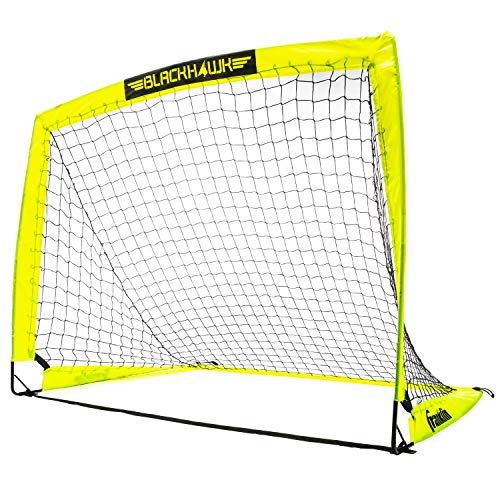

Short answer: for most families who want one goal that can take real shooting practice and small-sided games, the SKLZ Quickster 12′ x 6′ is the best soccer goal to buy in 2026 — it suits players aged roughly 8 and up, needs a yard about 30 to 40 feet wide with 15 to 20 feet of clear depth, and folds into a carry bag without tools. If your players are under 7, or your only space is a driveway, patio or small lawn, the GoSports Team Tone 4 ft x 3 ft is the smarter buy: it puts a real goal mouth at the right height for small children and moves indoors in seconds. If you want a goal that stays up all season and can absorb adult shots, the MangoStar 12X6 FT is the premium pick. The rest of this guide sorts every option by age group, field size, frame durability, net quality, setup time and storage.
Top 3 Picks
Best overall: SKLZ Quickster 12′ x 6′. The Quickster hits the sweet spot between a toy and a permanent installation — a 12 x 6 goal mouth is the size older kids and teenagers actually aim at, and the tensioned frame design keeps the net taut enough that shots rebound rather than sag into the grass. It suits a household with at least one player aged 8+ and a yard that can spare roughly 20 feet of depth behind the goal line.
Best budget: GoSports Team Tone 4 ft x 3 ft. At the budget tier, this is the cleanest entry point: a single 4 x 3 pop-up goal with a folding frame and a carry bag, in a colour that is easy to spot in long grass. It is the right first goal for a 4- to 7-year-old and the right second goal for a family that already owns a bigger net.
Best premium: MangoStar 12X6 FT. If you want a backyard goal that reads as a permanent fixture rather than a weekend gadget, the MangoStar’s 12 x 6 dimensions and heavier-duty construction justify the premium tier. It is the pick for teens and adults playing small-sided games, or for a family that will leave the goal assembled from spring through autumn.
Quick Comparison
| Product | Best for | Key specs | Price tier |
|---|---|---|---|
| Bearwill Kids Soccer Goal Set of 2 | Two young children playing at once | Two junior pop-up goals, folding shock-corded frame, pre-strung net, ground stakes, carry bags | Mid-range |
| VAVOSPORT Kids Soccer Goals Set of 2 | Training drills and paired play for ages 4-8 | Two junior goals, pop-up frame, attached net, stakes, storage bag, training-equipment styling | Mid-range |
| Theresduet 2 Pack 4′ x 3′ Pop Up Goals | Lowest-cost way to get two real goal mouths | 2 x (4 ft x 3 ft), folding pop-up frame, mesh net, stakes, flat carry bag | Budget |
| MangoStar Soccer Goal 12X6 FT | Teens and adults, season-long backyard use | 12 ft x 6 ft goal mouth, portable frame, full-size net, ground anchoring, carry bag | Premium |
| SKLZ Quickster 12′ x 6′ | Serious practice with a full-size target | 12 ft x 6 ft, Tension-Tite frame, heavy-duty net, pre-attached shock-corded poles, carry bag | Premium |
| GoSports Team Tone 4 ft x 3 ft | First goal for ages 4-7, driveway or lawn | 4 ft x 3 ft, pop-up net, folding frame, pink finish, ground stakes, carry bag | Budget |
| Amazon Basics Portable Pop Up Goal Set | Families who want a no-fuss starter set | Two junior pop-up goals, folding frame, attached net, stakes, carry bag | Mid-range |
| Bearwill 12X6FT Soccer Net | Backyard games that need a big target | 12 ft x 6 ft, portable frame, full-size net, stakes, storage bag | Premium |
| BORNEW 2 Pack 4X3 ft Kids Goals | Indoor and outdoor pair play on a budget | 2 x (4 ft x 3 ft), pop-up frame, mesh net, indoor-safe base, carry bag | Budget |
| BORNEW Kids Soccer Goal Set 7X5 / 6X4 ft | Growing players moving up from 4 x 3 | Two goals in mixed sizes (7 ft x 5 ft and 6 ft x 4 ft), larger net volume, stakes, carry bags | Premium |
| Franklin Blackhawk Portable Goal – Small | Quick sessions, travel and camp use | Small portable frame, sleeve-and-elastic assembly, durable net, carry bag | Budget |
| MUROZA Kids Soccer Goal Set, Pop Up | All-round backyard starter set | Junior pop-up goals, folding frame, attached net, stakes, carry bag | Mid-range |
Read the table as three groups rather than twelve separate products. The 4 x 3 pop-up class (GoSports, Theresduet, BORNEW 2-pack, Franklin Blackhawk) is for ages roughly 3 to 8. The 6 x 4 to 7 x 5 class (BORNEW mixed set) is the transition zone for ages 8 to 11. The 12 x 6 class (SKLZ, MangoStar, Bearwill 12 x 6) is the small-sided-game class for ages 12 through adult.
How We Chose
This roundup is built from published product specifications, manufacturer descriptions and established norms for the category — not from physical testing. Every goal here was assessed against six criteria. First, age fit: whether the goal mouth height is appropriate for the player’s size, because a goal that is too tall teaches nothing about aiming and a goal that is too short stops being fun by age nine. Second, field size: the footprint the goal needs, including the depth behind the goal line and the width for a run-up. Third, frame durability: pole material, joint construction, and whether the frame uses shock-corded or push-button connections that survive repeated folding.
Fourth, net quality: mesh construction, attachment method and how the net is anchored to the frame, since the net is the part that wears out first. Fifth, setup and takedown time: whether a parent can assemble it alone, and whether it can be moved by one person. Sixth, storage needs: packed dimensions, bag quality, and whether the folded goal fits a garage shelf, a car trunk or a closet. We also weighed the upgrade path — whether the goal is a dead end or a sensible step toward a larger size later.
1. Bearwill Kids Soccer Goal Set of 2 – Best for Toddlers and First-Time Players
As an Amazon Associate we earn from qualifying purchases at no extra cost to you.

This Bearwill set is aimed squarely at the youngest end of the market: children roughly three to seven years old who are kicking a ball for fun rather than training for anything. The set-of-two format is the real selling point. Two goals means two children can each defend one, or one child can shoot at one goal while a parent stands in the other, or both can be set up side by side as a two-target accuracy drill. If you have twins, siblings close in age, or a regular playdate, a pair solves more arguments than a single goal does.
Key specs at a glance:
- Format: two matching pop-up goals supplied as one set
- Size class: junior — the 3 to 4 foot wide, roughly 3 foot tall class that suits pre-school and early primary players
- Frame: folding shock-corded poles that collapse flat and stay connected, so there are no loose parts to lose
- Net: pre-strung mesh attached to the frame, so no threading or tying on arrival
- Anchoring: ground stakes intended for grass or soft turf
- Storage: carry bag per goal; the folded bundle is thin enough for a garage hook or a car boot
- Setup: unfold, click the frame into shape, stake it down — a minute or two per goal once you have done it twice
The strengths here are simplicity and redundancy. Because the net comes already attached and the poles are shock-corded, there is nothing to assemble and nothing to misplace. The frame weight is low, which matters more than most buyers expect: a goal a six-year-old can drag into position by themselves gets used far more often than one that requires an adult. The two-goal format also extends the useful life of the set, because a pair of small goals can be arranged as a mini pitch long after a single small goal has become boring.
Pros
- Two goals in one purchase, which suits siblings and playdates
- Light enough for young children to move without help
- No assembly — net is pre-attached and poles are shock-corded
- Packs flat into bags that fit a shelf, a boot or a cupboard
- Low-stakes entry price for a family testing whether a child will stick with the sport
Cons
- Junior size becomes limiting fast — most players outgrow the goal mouth by around age eight
- Not built to absorb hard shots from older children or adults
- Stakes only work in soft ground; concrete and decking need weights instead
- Mesh in this class is typically lighter than the netting on a 12 x 6 goal, so it wears through sooner under heavy use
The nearest alternative in this list is the VAVOSPORT set of two, which occupies the same size and price class but is marketed around training equipment rather than pure play. If your child is already doing structured drills, the VAVOSPORT framing fits better; if this is a first goal for a four-year-old, the Bearwill pair is the more natural starting point. Against the budget Theresduet pair, the Bearwill set costs more but generally carries a sturdier feel and a better-organised bag.
2. VAVOSPORT Kids Soccer Goals for Backyard Set of 2 – Best for Early Training Drills

VAVOSPORT’s set of two sits in the same junior size class as the Bearwill pair but pitches itself as training equipment rather than a toy. That distinction matters if you are running actual sessions: two goals let you set up a passing gate, a shooting target and a small-sided game without buying anything else. It suits parents coaching a five- to eight-year-old at home, and it suits the child who has started club training and wants to replicate drills in the garden.
Key specs at a glance:
- Format: two junior pop-up goals, supplied together as a training set
- Size class: junior — the 3 to 4 foot wide class, sized for primary-school players
- Frame: folding pop-up poles with shock-corded joints
- Net: attached mesh, pre-strung to the frame
- Anchoring: ground stakes supplied for grass
- Storage: carry bag; folds flat for a boot or a shed shelf
- Setup: pop open and stake — under two minutes per goal with practice
The practical advantage of this set over a single small goal is drill design. Cones and a pair of goals let you build a circuit: dribble through the cones, shoot into goal one, sprint to goal two and repeat. That is the sort of structure that keeps a seven-year-old engaged for twenty minutes rather than five. The pre-attached netting also means there is no threading job on day one, which is the single most common reason a cheap goal sits in its bag unused.
Where this set earns its mid-range position is in the small details — bag construction, the firmness of the frame joints and the consistency of the mesh tension across both goals. None of those are dramatic, but they are the difference between a set that survives two seasons of weekly use and one that develops a floppy corner by August.
Pros
- Two goals open up passing, shooting and small-sided drill formats
- Pre-strung nets remove the fiddliest part of setup
- Light enough for a child to reposition alone
- Folds flat and stores in a bag that travels well
- Good match for a child already in structured training
Cons
- Still a junior goal mouth — it will not satisfy a ten-year-old
- Mesh and frame are not designed for full-power shots
- Grass stakes are the only anchoring option provided
- Overlaps heavily with the Bearwill pair, so owning both would be redundant
Compared with the Bearwill set of two, the VAVOSPORT option leans more toward organised practice and less toward free play, and the two are close enough in class that the deciding factor should be price and bag quality on the day you buy. Compared with the BORNEW 2-pack, which sits at the budget tier, VAVOSPORT asks more but generally delivers a slightly more durable frame and net. If you have already decided to spend mid-range money on junior goals, this is one of the two strongest choices in the category.
3. Theresduet 2 Pack 4′ x 3′ Portable Pop Up Goals – Best Budget Pair for Indoor and Outdoor Play
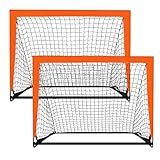
Theresduet’s two-pack is the cheapest way in this roundup to put two genuine 4 x 3 goal mouths in front of a child. A 4 x 3 goal is the classic small-sided size for ages four to eight: tall enough that a child has to lift the ball to score, small enough that they can defend it. The listing explicitly covers indoor and outdoor use, which is the feature that separates it from most of the field — this is a set you can set up in a hallway, a garage or a garden depending on the weather.
Key specs at a glance:
- Size: 4 ft wide x 3 ft tall, two goals per pack
- Format: pop-up — the frame springs into shape from a folded loop
- Frame: flexible shock-corded poles, folding flat for storage
- Net: mesh attached to the frame
- Anchoring: ground stakes for outdoor use; the frame is light enough to use unanchored indoors
- Storage: flat carry bag; both goals together take up roughly the space of a folded camping chair
- Setup: seconds, not minutes — this is the fastest class of goal to deploy
The 4 x 3 size is the reason this set works indoors. It is small enough to fit across a double doorway or at the end of a garage, and light enough that a misplaced shot pushes the goal rather than breaking a window. For a family in a flat, a house with a small yard, or a climate with long winters, that indoor capability roughly doubles the number of days per year the goals actually get used — which is the single biggest factor in whether a cheap goal was worth buying.
Pros
- Two real 4 x 3 goals at the lowest tier of the market
- Fastest setup of any format — pop open and play
- Small enough to use indoors, which extends the season
- Folds completely flat for storage in tight spaces
- Replacing one damaged goal costs little, since they are sold as a pair
Cons
- Budget mesh and stitching are the first things to fail under daily use
- Pop-up frames can twist out of shape if folded carelessly or stored under weight
- Light frames move on impact unless staked or weighted
- No size progression — the set is a starting point, not a long-term goal
The direct alternative at the same size and tier is the BORNEW 2-pack of 4 x 3 goals, which targets the same indoor-and-outdoor use case. Both are budget pop-up pairs; the difference usually comes down to which bag and stake set you prefer. If you want the same 4 x 3 size but a step up in finish quality, the GoSports Team Tone is the single-goal alternative, though it gives you one goal rather than two. For a household that needs two goals and wants to spend as little as possible, this Theresduet pack is the rational choice.
4. MangoStar Soccer Goal 12X6 FT – Best Premium Goal for Teens and Adults

The MangoStar 12 x 6 is a full-size small-sided goal, and 12 x 6 is the size that matters once players pass roughly age twelve. A 12-foot-wide mouth with a 6-foot crossbar is the standard for 5-a-side, futsal-style outdoor games and serious backyard shooting practice. This goal suits teenagers, adults, and families where a parent joins in and hits the ball properly. It is the premium pick here because it is built for that job rather than for toddlers.
Key specs at a glance:
- Size: 12 ft wide x 6 ft tall — the standard small-sided goal mouth
- Format: portable frame that assembles and disassembles, supplied with a carry bag
- Frame: heavier-gauge tubing than junior goals, with rigid joints to hold the crossbar square under load
- Net: full-size netting with a larger mesh volume, deep enough to catch a struck ball rather than let it bounce straight back
- Anchoring: ground anchoring for grass; the goal should never be left unsecured where wind can reach it
- Storage: packs into a long bag — plan on roughly the footprint of a golf bag or a set of camping poles
- Setup: a genuine assembly job, typically ten to twenty minutes the first time and faster afterwards
What you are paying for at this size is structure. A 12-foot crossbar spans a long distance, and a flimsy frame sags in the middle within a season. A goal in this class needs thicker tubing, braced corners and a net that is tensioned along the top rail rather than simply draped over it. The deep net volume matters too: on a shallow junior net, hard shots rebound back at the shooter, which is fine for a five-year-old and frustrating for a fifteen-year-old.
Pros
- True 12 x 6 goal mouth that supports real shooting and small-sided games
- Heavier frame holds its shape under repeated hard shots
- Deep net catches the ball instead of spitting it back
- Still portable and storable, unlike a permanent post-and-net installation
- Sensible long-term purchase — it will still be the right size when the player is eighteen
Cons
- Overkill, and physically awkward, for children under about nine
- Needs a meaningful amount of clear space — roughly 30 to 40 feet wide and 15 to 20 feet of depth
- Assembly and takedown are real chores, so most owners leave it up for the season
- Must be anchored; an unsecured 12 x 6 goal is a genuine wind hazard
The nearest alternative is the SKLZ Quickster 12′ x 6′, which competes on the same dimensions and tier but emphasises a tensioned frame design that keeps the net taut without extra guying. The Bearwill 12 x 6 is the third option in this class and typically sits at a similar premium level. Choose MangoStar if you want a conventional frame that you assemble once and leave standing; choose SKLZ if you plan to fold and move the goal regularly. All three are a clear step above any 4 x 3 or 7 x 5 goal for older players.
5. SKLZ Quickster 12′ x 6′ – Best Overall Portable Goal for Serious Practice

The Quickster is the best overall pick because it solves the two problems that ruin most large portable goals: frames that sag and nets that hang slack. Its Tension-Tite frame is designed so the poles tension the netting as the goal is assembled, which means the net stays taut across the full 12-foot span rather than drooping in the middle by mid-season. It suits players from about eight years old through adults, and it suits anyone who wants a goal they can set up for a session and pack away afterwards.
Key specs at a glance:
- Size: 12 ft wide x 6 ft tall
- Frame: Tension-Tite design with pre-attached shock-corded poles — no loose tubes to sort
- Net: heavy-duty netting tensioned by the frame rather than tied on
- Assembly: poles stay connected, so setup is a sequence of clicks rather than a parts-matching puzzle
- Portability: collapses into a carry bag; one adult can move and store it
- Anchoring: ground anchoring for grass; keep it secured whenever it is standing
- Storage: long, slim packed shape — a garage wall or shed corner works well
The shock-corded pole design is the feature that earns the premium tier in practice. On a conventional frame, takedown means separating tubes, and every separation is an opportunity to lose a connector or bend a joint. On a corded frame, the goal folds as a single connected unit, which is why this class of goal survives years of being packed and unpacked rather than two seasons. The tensioned net also means shots come off the back panel predictably, which is what makes practice transferable to a real match.
Pros
- Tensioned net stays taut across a full 12-foot span
- Shock-corded poles keep the frame together through repeated folding
- Genuine 12 x 6 target for teenagers and adults
- Packs into a bag that one person can carry and store
- The most balanced option for a family that trains regularly but has no permanent space
Cons
- Premium price for a goal that is not a permanent installation
- Too large to be useful for children under about eight
- Requires a real setup routine — it is not a ten-second pop-up
- Like every portable frame, it must be taken down or anchored in high wind
Against the MangoStar 12 x 6, the Quickster trades a little raw frame mass for a smarter tensioning system and better folding behaviour. Against the Bearwill 12 x 6, it generally wins on setup ergonomics and net tension, which are the two things owners notice most after the first month. If your goal lives outdoors all season and never moves, MangoStar is a fine choice; if it goes up and down around practice sessions, the Quickster is the better tool.
6. GoSports Team Tone 4 ft x 3 ft – Best Budget First Goal for Young Kids

The Team Tone is a single 4 x 3 pop-up goal, and it is the best budget option for a family buying their first goal for a child aged roughly four to seven. The 4 x 3 mouth is the correct size for that age band: a child can cover it, score in it and understand the geometry of the game without being discouraged. It arrives with a folding frame, a pre-attached net, ground stakes and a carry bag, and the pink finish makes it easy to spot against grass, which is a small thing that turns out to matter when a goal is left out.
Key specs at a glance:
- Size: 4 ft wide x 3 ft tall
- Format: single pop-up goal with a folding frame
- Net: attached pop-up netting; nothing to thread
- Anchoring: ground stakes for grass
- Storage: flat carry bag; fits a boot, a hallway cupboard or a shed shelf
- Setup: pop open and stake — the fastest class of goal to put up and take down
Buying one goal rather than a pair keeps the entry cost low and avoids cluttering a small garden. For a single child practising shooting, one goal and a few cones is genuinely enough. The 4 x 3 size also works indoors in a garage or across a wide hallway, which is the difference between a goal that gets used three times a week and one that gets used twice a month.
Pros
- Lowest-commitment way to give a young child a real goal
- 4 x 3 size is genuinely correct for ages four to seven
- Pops up and folds down in seconds
- Compact enough to store anywhere and to take to a park
- Bright finish is easy to find in long grass
Cons
- Only one goal, so paired play needs a second purchase
- Light frame shifts on impact unless staked
- Outgrown by around age eight
- Budget netting is the wear point under daily use
The closest alternative is the Theresduet two-pack, which gives you two 4 x 3 goals for a similar outlay if you shop carefully — the trade being that the Theresduet nets and stitching are generally lighter. If you have one child and want the better-built single goal, the GoSports is the pick. If you have two children who will both want to shoot, buy the pair instead; you will spend less per goal and avoid the daily argument.
7. Amazon Basics Portable Pop Up Soccer Goal Set – Best No-Fuss Starter Set for Families

The Basics pop-up set is the pragmatic mid-range choice for a household that wants a pair of junior goals without researching the category at all. It is a two-goal set in the junior size class, with folding frames, attached nets, stakes and a carry bag — the standard package for this tier, executed plainly. It suits families with children roughly four to eight, and it suits anyone who values consistency and easy returns over specialist features.
Key specs at a glance:
- Format: set of two junior pop-up goals
- Size class: junior — the 3 to 4 foot wide class for primary-school players
- Frame: folding pop-up poles, shock-corded, no loose components
- Net: attached mesh, pre-strung
- Anchoring: ground stakes supplied
- Storage: carry bag; folds flat and light enough for a child to carry
- Setup: pop open and stake, under two minutes
The advantage of buying at this tier is predictability. The specification is stated clearly, the set is complete, and there is nothing exotic to go wrong. For a family that will use the goals a few times a week in the garden and occasionally take them to a park, that is exactly the right trade: you are buying a known quantity rather than a specialist product with a specialist price.
Pros
- Complete set — two goals, nets, stakes and a bag in one purchase
- Simple, predictable specification with no unusual parts
- Light enough for children to move and set up themselves
- Folds flat for storage in small homes
- Works indoors as well as in a garden
Cons
- Junior size only — no path to larger play within the same product
- Generic build quality; nothing is reinforced for hard shooting
- Grass stakes only, so hard surfaces need improvised weighting
- Competes directly with several similarly priced specialist sets
The MUROZA pop-up set is the nearest alternative in both size and tier, and the two are close enough that price and availability should decide. Against the VAVOSPORT set of two, the Basics option is the more neutral purchase — less oriented toward structured drills, more oriented toward general play. If your child has started formal training and you want equipment that reflects that, VAVOSPORT or Bearwill is a better fit; if you simply want two working goals in the garden this weekend, this set does the job.
8. Bearwill 12X6FT Soccer Net – Best Premium Backyard Goal for Family Games

Bearwill’s 12 x 6 goal is the brand’s step up from its junior sets, and it targets the same buyer as the MangoStar and SKLZ options: a family with players old enough to strike a ball properly. Twelve by six feet is the size at which backyard football starts to resemble the real thing — a goalkeeper can move across the mouth, a striker has to pick a corner, and the ball has enough room to be controlled inside the net.
Key specs at a glance:
- Size: 12 ft wide x 6 ft tall
- Format: portable goal that assembles and packs into a storage bag
- Frame: heavier-gauge tubing with braced corners to keep the crossbar level
- Net: full-size netting, deep enough to absorb a struck ball
- Anchoring: ground stakes or pegs for grass; anchoring is essential
- Storage: long packed bundle — plan on a shed, garage or a wall bracket
- Setup: a proper assembly of roughly ten to twenty minutes
The reason to consider this over a junior goal is durability under real force. A 4 x 3 net absorbs a gentle rolled ball; a 12 x 6 net absorbs driven shots, and the top corners and back panel take the brunt. That is where budget nets fail first — the mesh stretches at the stress points, then a hole opens, then the whole panel sags. A goal in this class should have reinforced corners and a net attached along the full top rail, not tied at intervals.
Pros
- Full 12 x 6 target for teenagers and adults
- Substantial frame that resists crossbar sag
- Deep net volume makes shooting practice realistic
- Portable enough to move for mowing or storage
- Useful for years rather than seasons, since the size does not date
Cons
- Premium tier price for a portable rather than permanent goal
- Needs substantial clear space and safe distance from windows
- Assembly is not a casual task — most owners leave it standing
- Useless to a child under about nine
Compared with the SKLZ Quickster, the Bearwill is a more conventional frame design: solid and straightforward rather than cleverly tensioned. That makes it a good choice if the goal will be assembled once in spring and left alone. Compared with the MangoStar 12 x 6, the two are extremely close in purpose, and the decision usually comes down to which frame and net package is better value on the day. If you fold and travel with your goal, choose SKLZ; if it stays put, either Bearwill or MangoStar is fine.
9. BORNEW 2 Pack 4X3 ft Kids Soccer Goals – Best Budget Indoor and Outdoor Pair

BORNEW’s two-pack of 4 x 3 goals is explicitly aimed at backyard and indoor use, which is exactly the right framing for this size. Two 4 x 3 goals let a child set up a small pitch in a garden, a garage or a long hallway, and the low weight means the goals can be carried between locations without help. It suits families with children roughly four to eight, and it suits anyone who wants the maximum amount of goal for the minimum spend.
Key specs at a glance:
- Size: 4 ft x 3 ft, two goals per pack
- Format: pop-up frames that fold flat
- Frame: shock-corded flexible poles, no separate parts
- Net: mesh attached to the frame
- Anchoring: stakes for outdoor use; light enough to use unanchored indoors
- Storage: flat carry bag; minimal shelf or cupboard space
- Setup: seconds per goal
The indoor capability is the strongest argument for this set. Weather, short winter days and small gardens all reduce outdoor play time, and a goal that works in a hallway roughly doubles the number of usable days per year. Because the 4 x 3 mouth is small, an indoor shot is unlikely to damage anything beyond a knocked-over lamp — provided you keep the ball soft and the space clear.
Pros
- Two 4 x 3 goals at the budget tier
- Genuinely usable indoors, which extends the playing season
- Fast setup and fast packing away
- Folds flat for cramped storage
- Cheap enough to replace rather than repair
Cons
- Light frames move on impact and need staking outside
- Budget mesh wears at the corners under frequent hard shots
- No larger size available in the same product line
- Outgrown by age eight or nine
The direct comparison is with the Theresduet two-pack, which occupies the same size and tier. Both are pop-up pairs aimed at indoor and outdoor use; the choice usually comes down to which bag and stake set suits you better, since the core specification is nearly identical. If you want the same size with slightly better finish, the GoSports Team Tone is the single-goal upgrade, though you lose the second goal. For pure value per goal, this BORNEW pack is one of the strongest options in the roundup.
10. BORNEW Kids Soccer Goal Set 7X5 / 6X4 ft – Best for Players Moving Up a Size

This BORNEW set is unusual because it supplies two goals in different sizes — a 7 x 5 and a 6 x 4 — rather than a matched pair. That makes it the natural next step for a child who has outgrown a 4 x 3 goal but is not ready for a full 12 x 6 mouth. It suits players roughly eight to twelve, and it suits a household with two children of different ages, since each gets a goal at roughly the right scale.
Key specs at a glance:
- Sizes: 7 ft x 5 ft and 6 ft x 4 ft — a matched pair in two sizes
- Format: two pop-up goals supplied together
- Frame: folding shock-corded poles
- Net: attached mesh sized to each frame, with more volume than a 4 x 3 net
- Anchoring: ground stakes for grass
- Storage: carry bags; the larger goal packs into a longer bundle than a 4 x 3
- Setup: pop open and stake, a few minutes for both
The size jump from 4 x 3 to 7 x 5 is bigger than it looks on paper. Area roughly triples, which means the shooter has to aim rather than simply hit the target, and a goalkeeper has to move rather than stand still. That is the developmental value of this set: it introduces the idea that scoring requires placement. Meanwhile the 6 x 4 goal is small enough to remain useful for accuracy work and for a younger sibling.
Pros
- Two different sizes suit two children of different ages
- Bridges the gap between junior goals and a full 12 x 6
- More net volume than a 4 x 3, so shots do not rebound straight back
- Still pop-up fast and portable
- Extends the useful life of a goal purchase by two or three years
Cons
- Premium tier pricing for pop-up construction rather than a rigid frame
- Neither goal is large enough for teenagers or adults
- Two different sizes cannot be used as a symmetrical pitch
- Larger pop-up frames are more awkward to fold correctly than small ones
The alternative in this size range is to skip straight to a 12 x 6 goal such as the MangoStar or SKLZ Quickster — a bigger jump in cost, size and setup effort, but a purchase that will not need replacing again. Choose the BORNEW mixed set if space is limited or the players are still under twelve; choose a 12 x 6 if the players are already there and you have the room.
11. Franklin Blackhawk Portable Soccer Goal – Small – Best for Travel and Quick Sessions
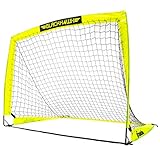
The Franklin Blackhawk in its small size is the travel option in this roundup. Franklin Sports is a long-established name in backyard and school sports equipment, and the Blackhawk line is built around quick assembly and easy transport rather than maximum size. It suits coaches, families who play in parks, and anyone who wants a goal that lives in the boot of a car and comes out for twenty minutes at a time.
Key specs at a glance:
- Size class: small portable — a training target rather than a full goal mouth
- Frame: tubular poles that assemble with sleeve-and-elastic connections, so parts stay paired
- Net: durable netting designed to take repeated shots from close range
- Portability: packs into a carry bag small enough for a car boot
- Anchoring: ground pegs for grass; weigh it down on hard surfaces
- Setup: a few minutes, with no tools
The value of a small portable goal is that it removes excuses. A goal that lives in the car can be used at a park, on a beach, at a campsite or in a friend’s garden, and it can be used for accuracy drills that a full-size goal is actually worse at — hitting a small target from twelve yards is a more demanding skill than hitting a 12-foot mouth. It also doubles as a rebounder-style target for close-range finishing practice.
Pros
- Small and light enough to keep in a car permanently
- Fast assembly with no tools and no loose parts
- Useful for accuracy work in a way large goals are not
- Franklin is a well-established brand in this category
- Budget tier, so low risk as a second goal
Cons
- Too small to serve as a primary goal for older players
- Requires weighting on hard surfaces
- Single goal only
- Not a substitute for a full-size target if shooting power is the goal
Against the GoSports Team Tone, the Blackhawk is smaller and more travel-oriented, while the Team Tone is a more conventional 4 x 3 backyard goal. If your primary need is a goal at home, choose the Team Tone; if you need something that travels, the Blackhawk is the better fit. It is also a sensible second goal for a family that already owns a 12 x 6 and wants a portable target for warm-ups.
12. MUROZA Kids Soccer Goal Set, Pop Up – Best All-Round Backyard Starter Set

MUROZA’s pop-up set sits in the crowded middle of the market: junior-sized goals, folding frames, attached nets, a carry bag. It suits the family that wants a dependable all-rounder for children roughly four to eight, without paying specialist prices or accepting the thinnest budget build. If you are buying your first goal and do not want to think hard about it, this is a reasonable landing spot.
Key specs at a glance:
- Format: pop-up goal set for backyard use
- Size class: junior — the 3 to 4 foot wide class for younger players
- Frame: folding shock-corded poles that collapse flat
- Net: mesh attached to the frame, no threading required
- Anchoring: ground stakes supplied for grass
- Storage: carry bag; fits a cupboard or a car boot
- Setup: pop open and stake, under two minutes
What makes a mid-range pop-up set worth more than a budget one is rarely dramatic. It is the thickness of the mesh, the firmness of the pole joints, the quality of the stitching where the net meets the frame, and whether the bag has a proper zip and a shoulder strap. Those details determine whether the goal is still usable after two summers of regular use or has developed a sagging corner and a torn panel.
Pros
- Complete pop-up set with nets, stakes and a bag
- Fast setup and fast pack-down
- Light enough for children to move independently
- Folds flat for small homes and car boots
- Mid-range build without a specialist price
Cons
- Junior size only; outgrown by around age eight
- Overlaps closely with several other sets in this list
- Stakes are the only anchoring method supplied
- Not built for hard shots from older children
The nearest alternatives are the Amazon Basics set and the VAVOSPORT set of two, both of which occupy the same size and price class. MUROZA’s advantage is simply that it is a complete, straightforward package with no unusual parts. If you want a slightly more durable junior pair, the Bearwill set of two is the step up; if you want to spend less, the Theresduet or BORNEW pairs are the budget alternatives.
How to Choose
Start with the player’s age, not the size of the yard
The single most common buying mistake is choosing a goal based on the space available rather than the age of the player. A goal that is too tall for a five-year-old is not aspirational — it is a net they cannot reach, which means every shot either goes in or misses high, and there is no feedback to learn from. As a rule of thumb: ages three to five suit a 3 x 2 to 4 x 3 goal; ages six to eight suit a 4 x 3; ages nine to eleven suit a 6 x 4 to 7 x 5; ages twelve and up suit a 12 x 6. Match the age band first, then check that the size fits your space.
Match the goal to the field size and shot type
A 12 x 6 goal is roughly 72 square feet of goal mouth. A 4 x 3 goal is 12 square feet — six times smaller. That gap determines what kind of practice is possible. On a 4 x 3, a child practises striking a ball accurately into a small target, which is a finishing drill. On a 12 x 6, a player practises picking a corner against a goalkeeper, which is a game skill. Both are valuable, but they are different jobs.
Space requirements scale similarly. A 4 x 3 pop-up goal needs about 12 to 15 feet of depth behind it and 15 feet of width for a run-up. A 7 x 5 goal needs roughly 20 feet of depth. A 12 x 6 goal needs 30 to 40 feet of width and 15 to 20 feet of clear depth behind the goal line, plus enough distance in front that a struck ball does not reach a window or a neighbour’s fence at speed. Measure the depth behind the goal line before you buy, not after.
Understand what makes a frame durable
Three things determine whether a goal frame lasts. The first is tubing gauge — thicker walls resist bending, and on a 12-foot crossbar this matters more than anything else, because a thin tube will bow in the middle within a season. The second is joint construction. Push-button connections are fast but can loosen; sleeve-and-elastic connections stay paired but can fray; welded or moulded corner pieces are strongest but least portable. The third is corrosion protection. Powder-coated steel is the standard for larger goals, but any scratch in the coating becomes a rust point if the goal lives outside. Plastic and fibreglass poles never rust, which is why junior pop-up goals use them — but they also flex more under impact.
Net quality: what actually wears out
The net is the first component to fail on almost every backyard goal, and it fails in a predictable order. The top corners go first, because that is where the ball hits hardest and where the netting is under the most tension. The back panel goes next









