Key takeaways
- Multi-Surface Cleaner: For countertops, desks, and general surfaces. Fresh Lemon scent is the standard.
- Glass + Mirror Cleaner: Streak-focused formula for windows and mirrors.
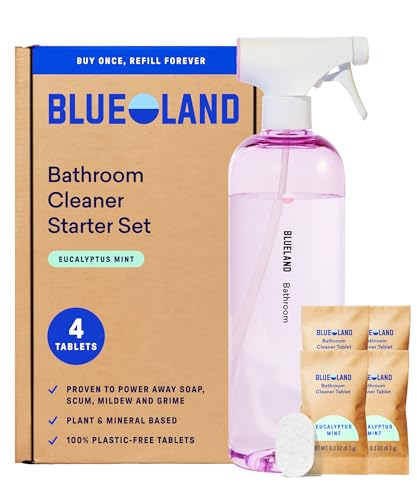
- Bathroom Cleaner: Formulated for soap scum and hard water spots on tile, tubs, and sinks.
- Foaming Hand Soap: Tablet + foaming pump bottle, distinct from the spray cleaners.
- Dish Soap, Toilet Cleaner, and Laundry Tablets: Same tablet concept but for other household uses, with different dissolution methods.
Blueland cleaning products are a good buy if you want to cut single-use plastic and lower refill costs over time and don’t mind waiting a few minutes for tablets to dissolve, but they are not the strongest choice for heavy soap scum or greasy stovetops where traditional sprays still perform faster.
Our top picks



As an Amazon Associate we earn from qualifying purchases at no extra cost to you.
How Blueland’s Tablet System Works
Blueland cleaning products use dry tablets that dissolve in water inside reusable bottles, rather than shipping pre-mixed liquid. You fill the bottle with warm water to the fill line, drop in a tablet, and wait for it to fully dissolve before spraying. The system centers on a few core lines:
- Multi-Surface Cleaner: For countertops, desks, and general surfaces. Fresh Lemon scent is the standard.
- Glass + Mirror Cleaner: Streak-focused formula for windows and mirrors.
- Bathroom Cleaner: Formulated for soap scum and hard water spots on tile, tubs, and sinks.
- Foaming Hand Soap: Tablet + foaming pump bottle, distinct from the spray cleaners.
- Dish Soap, Toilet Cleaner, and Laundry Tablets: Same tablet concept but for other household uses, with different dissolution methods.
The appeal is lower shipping weight, less plastic, and a lower cost per refill. The trade-off is dissolution time and a reliance on warm water to get a fully mixed bottle without grit.
Performance Breakdown by Product
Based on aggregate user reports and ingredient evaluations, performance varies more by task than by brand. Blueland cleaners are effective for light, frequent cleaning but require more dwell time on built-up grime than conventional cleaners that contain stronger solvents or surfactants.
What performs well
- Glass + Mirror: Consistently rated as the best in the lineup. Leaves minimal streaking when sprayed lightly and buffed with a microfiber cloth. Works best on dust and fingerprints, not dried hard-water spots.
- Foaming Hand Soap: Produces a stable foam, rinses clean, and is gentle on skin. One tablet reliably makes a full bottle without clumping if water is warm (not hot). Scent is light and does not linger.
- Multi-Surface for daily maintenance: Cuts through dust, light kitchen spills, and daily countertop grime effectively after a 10-20 second dwell time.
Where it requires more effort
- Bathroom Cleaner on heavy soap scum: Requires spraying, letting sit for 60-90 seconds, and scrubbing. It will not dissolve thick mineral scale on first pass the way an acidic descaler might. For weekly maintenance it keeps surfaces clean; for deep restoration on neglected showers, a dedicated descaler is faster.
- Greasy kitchen mess: Multi-surface handles light grease but needs two applications on congealed stovetop oil or oven splatter. It lacks the strong degreasers found in traditional kitchen sprays.
All Blueland cleaners are free of dyes, ammonia, and chlorine bleach and are EPA Safer Choice certified and Leaping Bunny certified cruelty-free. That is relevant for households avoiding harsh fumes, but it also explains why they are not marketed as disinfectants.
Bottle Durability and Ownership Realities
The long-term cost depends on how well the reusable bottles hold up. Blueland’s spray bottles and hand soap bottles are the most durable part of the system, but they have specific wear points.
- Spray bottles: Made from durable acrylic and silicone, not single-use PET plastic. They resist cracking and do not warp like thin plastic bottles. The trigger sprayer is the first component to wear, typically showing weaker misting or a stiff trigger after 12-18 months of daily use.
- Foaming hand soap pump: More reliable than the spray trigger, but the foaming mesh can clog if tablet fragments were not fully dissolved. Rinsing with warm water restores function.
- What to avoid: Using hot water above 120°F / 49°C can warp the internal markings and reduce tablet dissolution speed. Cold water significantly extends dissolve time and leaves undissolved particles that clog nozzles. Do not cut or crush tablets to speed up dissolving; it creates powder that sticks to the bottle walls.
- Cleaning: Rinse bottles between refills. If you switch scents, a quick water and white vinegar rinse prevents scent mixing. The tablet wrappers are compostable paper, so store tablets in a dry pouch to prevent premature crumbling.
| Product | Bottle Capacity | Bottle Material | Tablet Weight | Dissolve Time (Warm Water 90-110°F) |
|---|---|---|---|---|
| Multi-Surface Cleaner | 24 fl oz / 710 ml | Acrylic + Silicone Sleeve | ~7 g | 2-3 minutes |
| Glass + Mirror Cleaner | 24 fl oz / 710 ml | Acrylic + Silicone Sleeve | ~7 g | 2-3 minutes |
| Bathroom Cleaner | 24 fl oz / 710 ml | Acrylic + Silicone Sleeve | ~9 g | 3-4 minutes |
| Foaming Hand Soap | 9 fl oz / 266 ml (foaming pump) | Glass or Acrylic | ~8 g | 4-5 minutes, shake lightly |
| Toilet Cleaner | No bottle – drop in bowl | N/A | ~11 g | 5-7 minutes, then scrub |
The key difference from conventional cleaners is not just the bottle material but that you keep the same bottle for a year or more, replacing only a 7-11 gram tablet instead of a 700ml bottle of liquid.
Refill Cost vs. Traditional Cleaners: A Worked Calculation
Refill tablets generally cost less per ounce than buying a new bottle of pre-mixed cleaner. The exact savings depend on which starter configuration you choose. Starter sets with bottles generally fall in the $30-$55 range, while refill tablets typically fall in the $2-$3 per tablet range when bought in multi-packs. Traditional spray cleaners in the same volume typically fall in the $4-$7 per bottle range in general retail.
Here is a cost-per-use calculation for a household using one bottle each of multi-surface, glass, and bathroom cleaner:
| Scenario (24 fl oz spray bottle) | Conventional Cleaner Cost Per Bottle | Blueland Refill Cost Per 24 fl oz | Cost Over 8 Refills / Year |
|---|---|---|---|
| Multi-Surface | $4.50 – $6.00 | $2.00 – $2.50 | Conventional: $36 – $48 vs Refill: $16 – $20 |
| Glass + Mirror | $4.00 – $5.50 | $2.00 – $2.50 | Conventional: $32 – $44 vs Refill: $16 – $20 |
| Bathroom | $4.50 – $6.50 | $2.25 – $2.75 | Conventional: $36 – $52 vs Refill: $18 – $22 |
| Total for 3 Spray Types (8 refills each) | $104 – $144 / year | $50 – $62 / year | Savings of ~$50 – $80 / year after initial bottles |
This calculation excludes the initial bottle purchase, which pays for itself after 2-3 refills per bottle type. For hand soap, the math is similar: a foaming hand soap tablet at $2-$2.50 to make 9 oz compares to $3.50-$5.50 for a conventional foaming hand soap bottle. A household using one bottle per month saves roughly $15-$35 per year on hand soap alone.
If you clean infrequently (e.g., refilling each bottle only 2-3 times per year), the savings are smaller – often $15-$25 annually – and the convenience factor of ready-to-use sprays may outweigh the price difference.
Plastic Savings Over a Year: Real Numbers
The plastic reduction is measurable even without perfect recycling. A typical empty 24 fl oz HDPE or PET spray bottle weighs 45-60 grams. A Blueland tablet wrapper weighs about 2-3 grams of compostable paper.
Worked estimate for a household using three spray types and hand soap:
- Conventional: 3 spray types x 8 bottles per year = 24 bottles x ~50g = 1,200g (2.6 lbs) of plastic, plus 12 hand soap bottles x ~30g = 360g. Total ~1,560g per year.
- Blueland: 3 reusable bottles kept for 12+ months + 24 tablets x 2.5g wrapper = 60g, plus one reusable hand soap bottle + 12 tablets x 2.5g = 30g. Total ~90g of compostable paper waste.
- Net reduction: Over 1.4 kg (about 3 lbs) of single-use plastic avoided per year for that usage pattern, even before accounting for shipping weight and cardboard.
The bottles themselves are not plastic-free, but because you reuse them 20-30 times, the per-use plastic footprint is a fraction of single-use. If you already reuse conventional bottles by refilling them with bulk cleaners, your incremental plastic savings will be lower.
Which Blueland Kit Should You Buy? Decision Matrix
Blueland sells kits ranging from single-product refills to the Clean Essentials Kit and Clean Suite Kit. Choose based on your cleaning frequency and tolerance for tablet prep.
| Your Situation | Recommended Starting Point | Why |
|---|---|---|
| Small apartment, light cleaning, want to test the concept | Hand Soap Starter + one Multi-Surface set | Lowest upfront cost, fastest visible payoff; hand soap shows the tablet system without learning curve |
| Family home, clean weekly, want to replace most sprays | Clean Essentials Kit (Multi-Surface, Glass, Bathroom + Hand Soap) | Covers 90% of surfaces; you immediately stop buying 4 categories of single-use bottles |
| Focus on plastic reduction and long-term value | Any kit + extra tablet 3-packs | Bulk tablets lower refill cost to the bottom of the $2-$3 range and reduce shipping frequency |
| Heavy hard water, soap scum, or greasy kitchen | Buy Bathroom and Multi-Surface tablets only, keep a conventional descaler/degreaser for deep cleans | Avoids frustration; use Blueland for maintenance, stronger chemistry for monthly deep clean |
| Rental or dorm where storage is limited | Hand Soap and Toilet Tablets only | No bulky spray bottles to store; tablets store flat in a drawer |
Setup and Maintenance: Getting the Best Results
- Use warm tap water, not boiling: Fill to the line with water between 90-110°F (32-43°C). This dissolves the tablet in under 4 minutes without degrading the bottle or fragrance.
- Wait before first use: Do not shake aggressively while the tablet is still solid. Let it dissolve, then give two gentle swirls. Spraying early causes grit that clogs the nozzle.
- Dwell time matters: For bathroom and kitchen grease, spray and wait 60 seconds before wiping. This compensates for the milder surfactant blend.
- Label your bottles: The colored silicone sleeves help, but keep the tablets away from the wrong bottle. Bathroom tablets are larger and will over-concentrate a glass bottle if swapped.
- Replace triggers as needed: If the mist weakens, soak the nozzle head in warm water for 10 minutes and pump clean water through. Replacement triggers are available without buying a whole new bottle.
Final Verdict
Blueland cleaning products deliver on their two main promises: lighter environmental footprint and cheaper refills after the initial bottle investment. The Glass + Mirror and Foaming Hand Soap are the strongest performers and the safest starting point for most households. The Multi-Surface and Bathroom cleaners are effective for regular upkeep but need longer dwell time on heavy buildup.
Buy Blueland if you clean on a regular schedule, value reusable packaging, and prefer milder ingredients. Stick with conventional cleaners for heavy-duty restoration jobs, or use a hybrid approach where Blueland handles daily maintenance and you keep one stronger product for deep cleaning. Over a full year of normal use, most households will save $50-$80 and keep more than two pounds of single-use plastic out of the waste stream.
Frequently Asked Questions
Do Blueland tablets expire?
Tablets are best used within 2-3 years and should be kept dry. A tablet that has crumbled or absorbed moisture will dissolve unevenly and may leave residue. Store them in the original pouch in a closed cabinet, not under the sink where humidity is high.
Can you use Blueland on stone or marble?
Blueland Multi-Surface is marketed as safe for most sealed surfaces, but for natural stone like marble or granite, use a pH-neutral stone-specific cleaner to avoid etching. This is general care information for stone, not a medical or safety claim; test any new cleaner on a small hidden area first.
Are refills cheaper if you only clean occasionally?
Savings scale with usage. If you refill a bottle fewer than four times per year, your dollar savings will be modest, though plastic reduction remains. In that case, start with a single product type rather than a full suite.