
Key takeaways
- You wash athletic wear, towels, or bedding that retain musty or sour odors after washing
- You launder clothes for a household with infants, elderly adults, or someone with skin sensitivities where hot-water washing is not possible
- You share laundry with pets, or wash pet bedding, and need odor-bacteria control without fading colors
- You must use cold water to protect fabrics, save energy, or because your machine defaults to cold
- You are washing items exposed to outdoor work, gyms, or food handling that need bacterial reduction without bleach damage
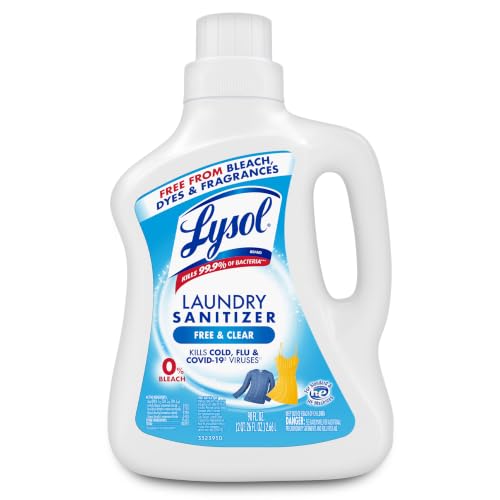
Yes, Lysol Laundry Sanitizer kills 99.9% of odor-causing bacteria on laundry without bleach by using quaternary ammonium compounds that activate in the rinse cycle, even in cold water — but it is an additive, not a detergent replacement, and only works if you add it correctly.
Our top picks



As an Amazon Associate we earn from qualifying purchases at no extra cost to you.
How It Kills Bacteria Without Bleach
Unlike chlorine bleach or oxygen bleach that work by oxidizing stains and microbes during the wash cycle, Lysol Laundry Sanitizer is based on alkyl dimethyl benzyl ammonium chloride, a quaternary disinfectant. It does not clean fabrics on its own. Instead, it sanitizes during the rinse cycle after detergent has already removed dirt and soils.
This distinction matters because detergent residue, fabric softener, and soil can deactivate the active ingredient. That is why Lysol specifies adding it to the fabric softener dispenser so it releases in the rinse, not with detergent at the start. It is also effective in cold water (as labeled for cold-water use), whereas bleach-based sanitizing often requires hot water to be both effective and fabric-safe.
On the label, the product claims to kill 99.9% of bacteria when used as directed, and to be effective against specific bacteria that cause odors. It is not marketed as a disinfectant for viruses on laundry for typical home use, and it does not remove stains. For general hygiene questions related to illness, immunocompromised household members, or infection control, consult a healthcare professional rather than relying solely on a laundry additive.
When You Actually Need a Laundry Sanitizer
For most everyday laundry, hot water and a quality detergent are sufficient. A rinse-cycle sanitizer is worth adding in specific situations where bacteria and odor persist despite clean-looking clothes.
Consider it if:
- You wash athletic wear, towels, or bedding that retain musty or sour odors after washing
- You launder clothes for a household with infants, elderly adults, or someone with skin sensitivities where hot-water washing is not possible
- You share laundry with pets, or wash pet bedding, and need odor-bacteria control without fading colors
- You must use cold water to protect fabrics, save energy, or because your machine defaults to cold
- You are washing items exposed to outdoor work, gyms, or food handling that need bacterial reduction without bleach damage
You can likely skip it for lightly worn office clothes, delicate dry-clean-only items, or loads where you already wash hot (130F / 54C and above) with bleach-safe whites.
Decision Matrix: Do You Need It?
| Your Situation | Best Approach | Why |
|---|---|---|
| Colored gym clothes, towels smell after washing | Detergent + Lysol Laundry Sanitizer in rinse | Targets odor-causing bacteria bleach would fade |
| White sheets and towels, bleach-safe cotton | Detergent + chlorine bleach in wash cycle | Bleach both sanitizes and whitens, cheaper per load |
| Baby clothes, must wash cold, sensitive skin | Detergent + Free & Clear sanitizer | No bleach, no dyes or fragrance, cold-water active |
| Everyday lightly worn clothes, no odor | Detergent alone | No measurable benefit from adding sanitizer |
| Front-loader with persistent machine odor | Clean machine separately + sanitizer for laundry | Sanitizer treats fabrics, not washer biofilm |
Scented vs. Free & Clear: Spec Comparison
Lysol sells the same sanitizing base in two main variants. Performance is identical when dosed correctly; the difference is fragrance and additives. Choosing the wrong one is the most common buyer regret.
| Feature | Crisp Linen / Original Scent | Free & Clear (Fragrance-Free) |
|---|---|---|
| Active Ingredient | Alkyl dimethyl benzyl ammonium chloride (same concentration) | Alkyl dimethyl benzyl ammonium chloride (same concentration) |
| Fragrance / Dye | Added fragrance, light blue tint | 0% fragrance, 0% dyes, clear liquid |
| Common Bottle Sizes (2026) | 41 oz (25 loads), 90 oz (55 loads) | 41 oz (25 loads), 90 oz (55 loads) |
| Standard Dose (HE and regular machines) | 2 capfuls (approx. 1.5 oz / 45 ml) for standard load, 4 capfuls for heavily soiled | 2 capfuls (approx. 1.5 oz / 45 ml) for standard load, 4 capfuls for heavily soiled |
| Cold Water Effective | Yes, in rinse cycle | Yes, in rinse cycle |
| Best For | Odor-prone towels, sportswear where scent desired | Infants, sensitive skin, eczema-prone households, fragrance-free preferences |
| Typical Market Price Range | $8 – $12 for 41 oz, $14 – $20 for 90 oz | $8 – $13 for 41 oz, $15 – $21 for 90 oz |
If anyone in the household has fragrance sensitivity, contact allergies, or you use the product for baby laundry, the Free & Clear version is the safer default. The scented version leaves a noticeable fresh-linen smell that can linger for days — pleasant on towels but often too strong for bedding or children’s clothes.
Fabric Compatibility: What Is and Is Not Safe
Because it is bleach-free, Lysol Laundry Sanitizer is labeled safe for most washable fabrics, but there are exceptions.
- Safe: Cotton, cotton blends, polyester, nylon, athletic synthetics, towels, denim, and most colorfast fabrics. Works in both standard and high-efficiency (HE) machines.
- Use with caution: Silk, wool, and other protein fibers. Always check the care label; these often require dry cleaning or gentle detergents and may not tolerate quaternary compounds well.
- Avoid: Items labeled “do not use fabric softener additives,” or that specify no additives beyond mild detergent. Also avoid directly pouring undiluted product onto fabric — always use the dispenser.
Do not mix it with bleach in the same cycle. The combination does not improve performance and can create excess suds and reduce the sanitizer’s effectiveness. Do not add it at the same time as detergent. If your machine has no fabric softener dispenser, use a rinse-cycle dispensing ball that releases during the rinse, or pause and add manually at the start of the rinse.
Cost Per Load: Worked Calculation
The bottle cost looks high until broken down per load. The actual cost depends on bottle size and dosing.
| Bottle Size | Labeled Loads (Standard Dose) | Example Price Range | Cost Per Standard Load (2 capfuls) | Cost Per Heavy Load (4 capfuls) |
|---|---|---|---|---|
| 41 oz | 25 loads | $8 – $12 | $0.32 – $0.48 | $0.64 – $0.96 |
| 90 oz | 55 loads | $14 – $20 | $0.25 – $0.36 | $0.50 – $0.73 |
Calculation method: Price ÷ Labeled Loads = Cost Per Standard Load. Double it for heavily soiled dosing. For example, a 90 oz bottle at $18 ÷ 55 = $0.33 per standard load.
For a household doing 5 sanitized loads per week, expect to use roughly one 90 oz bottle per 11 weeks (about 5 bottles per year). Using it only for towels and gym clothes (2 loads per week) stretches a 90 oz bottle to about 27 weeks, cutting annual cost to roughly $30 – $45. To save without losing efficacy, only sanitize odor-prone loads rather than every wash.
How to Use It Correctly (So It Actually Works)
Most negative experiences come from adding it to the wash cycle, where detergent inactivates it.
- Step 1: Wash as normal. Add detergent to the wash dispenser. Do not add the sanitizer here.
- Step 2: Dose correctly. Fill the cap to line 1 for a standard load (about 1.5 oz) or to line 2 for a large / heavily soiled load. For HE machines, the same dosing applies — do not overfill.
- Step 3: Add to the fabric softener compartment. This ensures release in the rinse. If you use liquid fabric softener, you must choose one or the other in the same load — do not add both, as softener residue can reduce sanitizing action.
- Step 4: Let the rinse complete. Do not shorten the cycle or use a “rinse and spin” skip. The fabric must stay in contact with the sanitizer throughout the full rinse. Then dry as usual.
If your machine has a soak or extra rinse option, you do not need it for the sanitizer to work, but ensure you are not using a detergent with built-in softener that may coat the dispenser and block release.
Durability and Ownership Realities
Lysol Laundry Sanitizer is not a one-time purchase fix; it is a consumable with handling quirks.
- Cap and dispenser residue: The quaternary liquid leaves a waxy buildup in softener dispensers and caps. Rinse the dispenser drawer monthly with warm water to prevent clogging, especially in HE front-loaders.
- What wears first: The thin plastic cap threads crack if overtightened, and the dispenser tray on older top-loaders can stain blue if scented product sits too long. Wipe spills promptly.
- Common mistake: Fabric softener confusion. Because it goes in the softener slot, many users add both. Pick one. Using sanitizer and softener together can leave towels less absorbent and reduce bacterial kill.
- Storage: Store upright at room temperature. Do not freeze or expose to high heat (above 90F / 32C) in a garage, as separation can affect dosing accuracy.
- Not a machine cleaner: It does not descaling or remove biofilm from the washer drum. For machine odor, run a separate washer cleaner cycle monthly.
Should You Buy It?
Buy Lysol Laundry Sanitizer if you regularly wash with cold water, have odor that survives detergent, need to protect colors from bleach, or need a fragrance-free sanitizing option for sensitive laundry. Choose Free & Clear for any household with babies, allergies, or fragrance sensitivities; choose Crisp Linen only if you specifically want scented freshness on towels and activewear.
Skip it if you already sanitize whites with hot water and bleach, or if your laundry has no persistent odor issues — detergent alone remains sufficient and cheaper. It is an effective, bleach-free tool for targeted loads, not a necessity for every cycle.
Frequently Asked Questions
Is Lysol Laundry Sanitizer a detergent?
No. It has no cleaning agents to remove soil or stains. You must still use a separate laundry detergent in the wash cycle before the sanitizer releases in the rinse.
Can I use it in a high-efficiency (HE) washer?
Yes, it is formulated for both HE and standard machines at the same dose. Use the fabric softener dispenser and do not exceed the machine’s fill line.
Does it work in cold water?
Yes, when used as directed in the rinse cycle. That is its primary advantage over bleach-based methods that may need hot water to be fabric-safe and fully effective.
Is the Free & Clear version less effective?
No, both versions contain the same active ingredient at the same concentration and kill 99.9% of odor-causing bacteria when dosed correctly. The only difference is the absence of fragrance and dyes.









