
The best grass seed for overseeding to fill bare and thin spots is a perennial ryegrass and fine fescue blend if you need fast fill-in that blends with existing turf, while a turf-type tall fescue blend like Jonathan Green Black Beauty Original is better for heat, drought, and disease resistance in sunny lawns.
For overseeding you don’t want a complete renovation mix. You want seed that germinates quickly in the shadow of existing grass, has a similar leaf texture and color to what you already have, and carries proven disease resistance so thin spots don’t return. The picks below are organized by situation, not just by brand.
Our top picks
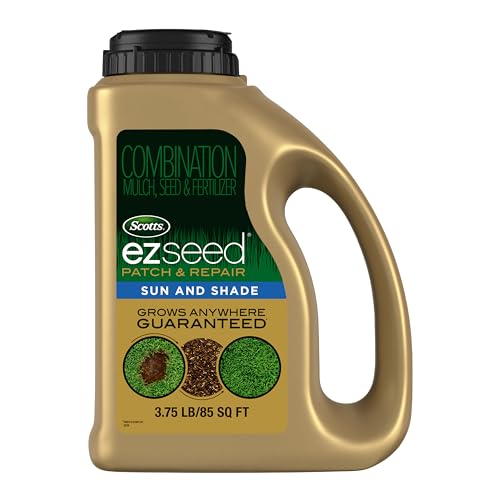 Scotts EZ Seed Patch & Repair for
- This lawn seed mix of Kentucky bluegrass seed,…
- Scotts EZ Seed Patch & Repair Sun and…
- One 3.75 lb
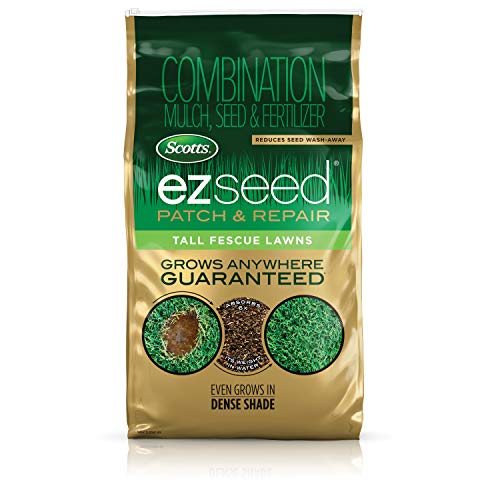 Scotts EZ Seed Patch & Repair Tall
- This Scotts grass seed mix contains a combination…
- Tall fescue lawn seed germinates best when daytime…
- One 10 lb
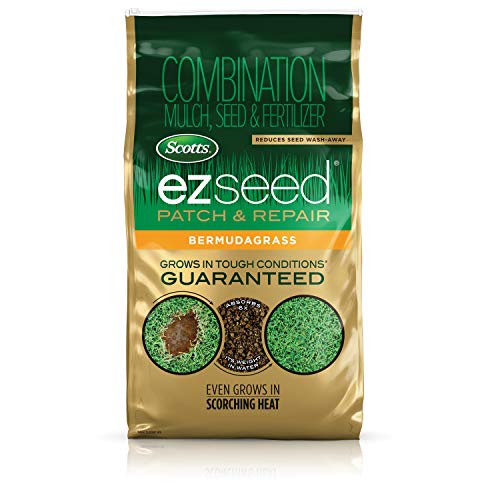 Scotts EZ Seed Patch & Repair Bermudagrass
- Contains a combination of high performance grass seed…
- Scotts EZ Seed Patch & Repair Bermudagrass is…
- Bermudagrass lawn seed germinates best when daytime temperatures…
| Product | Key specs | |
|---|---|---|
| Scotts EZ Seed Patch & Repair for | This lawn seed mix of Kentucky bluegrass seed,… Scotts EZ Seed Patch & Repair Sun and… One 3.75 lb | Check price |
| Scotts EZ Seed Patch & Repair Tall | This Scotts grass seed mix contains a combination… Tall fescue lawn seed germinates best when daytime… One 10 lb | Check price |
| Scotts EZ Seed Patch & Repair Bermudagrass | Contains a combination of high performance grass seed… Scotts EZ Seed Patch & Repair Bermudagrass is… Bermudagrass lawn seed germinates best when daytime temperatures… | Check price |
 Scotts PatchMaster Lawn Repair Mix Sun + | Scotts PatchMaster Lawn Repair Mix Sun + Shade… This sun and shade grass seed mix contains… Scotts PatchMaster Lawn Repair Mix Sun + Shade… | Check price |
As an Amazon Associate we earn from qualifying purchases at no extra cost to you.
How to Choose an Overseed Mix That Actually Blends In
Overseeding is different from starting a new lawn. The existing grass competes for light and water, so germination speed and shade tolerance at soil level matter more than absolute top-end turf quality.
1. Germination Speed vs. Long-Term Survival
Perennial ryegrass germinates in 5-10 days and is the workhorse for filling bare spots fast. Fine fescues (creeping red, chewings, hard fescue) take 7-14 days but tolerate shade and low fertility where thin spots often form. Kentucky bluegrass takes 14-28 days and spreads by rhizomes to knit thin areas together, but it is too slow alone for overseeding. Tall fescue germinates in 7-12 days and is the most durable for sun and traffic, but its wider blade can look coarse if your lawn is mostly bluegrass or fine fescue.
Most effective overseed mixes combine a fast germinator (perennial ryegrass) with a spreader (Kentucky bluegrass) or a stress-tolerant type (fine fescue or turf-type tall fescue).
2. Blending and Texture Match
Check what you have now. In the northern US and Canada, most lawns are Kentucky bluegrass, perennial ryegrass, and fine fescue blends. If your lawn has a fine, soft texture, avoid 100% turf-type tall fescue. If your lawn is already tall fescue (wider, slightly glossy blades), overseeding with fine fescue or bluegrass will look patchy and thin out in summer heat.
3. Disease Resistance
Bare and thin spots are often caused by brown patch, red thread, dollar spot, or summer stress, not just wear. Look on the label for varieties with noted resistance to brown patch, leaf spot, and gray leaf spot. Modern turf-type tall fescues and improved perennial ryegrasses have significantly better resistance than older common types. Coated seed (like Scotts or Pennington coatings) also includes fungicide treatment to reduce damping-off during the critical 2-week establishment window.
The Best Grass Seed for Overseeding by Situation
Best for Fastest Fill-In: Scotts Turf Builder Rapid Grass (Perennial Ryegrass Mix)
Scotts Rapid Grass is primarily perennial ryegrass with a coating technology designed for quick germination. It is the best option when you need to see results in 2-3 weeks and want to avoid bare soil washing away. It blends well into existing northern mixes and establishes before weeds can take over. It is not the most drought-tolerant choice long-term, so it works best when overseeding thin but generally healthy lawns rather than lawns with severe heat stress.
Best for Sunny, High-Traffic Lawns: Jonathan Green Black Beauty Original
Black Beauty is a turf-type tall fescue blend with deep rooting and strong heat and disease tolerance. It stays green longer in summer without constant irrigation and handles foot traffic better than ryegrass/bluegrass mixes. The texture is slightly coarser, so it is ideal if your lawn is already tall fescue or if you want to transition a struggling bluegrass lawn to something more durable. Germination is moderately fast at 10-14 days.
Best for Shade and Thin Spots Under Trees: Pennington Smart Seed Dense Shade Mix
This mix leans heavily on fine fescues and shade-tolerant perennial ryegrass. Fine fescues need less fertilizer and can establish with 3-4 hours of filtered light where bluegrass and tall fescue thin out. If your bare spots are under maples, oaks, or on the north side of a house, this composition will persist where sun-loving mixes fail.
Best for Self-Repairing Thin Lawns: Barenbrug RTF (Rhizomatous Tall Fescue)
Barenbrug RTF is a turf-type tall fescue that spreads via rhizomes like bluegrass, which is unusual for tall fescue. That spreading ability helps thin areas actually knit together over months, not just fill with individual plants. It is a strong choice for lawns that get both sun and moderate shade and where you want durability without reseeding every fall.
Best Low-Maintenance Northern Blend: Outsidepride Legacy Fine Fescue Blend
A blend of creeping red, chewings, and hard fescue is the lowest-input option. It requires less nitrogen, less water once established, and stays dense at a slightly higher mowing height. It will not give you a dark, striped Kentucky bluegrass look, but it will keep thin spots from returning in poor soil or where you don’t want to fertilize heavily.
Spec and Feature Comparison
| Product / Type | Primary Species | Germination Time | Coverage (overseeding) | Coated Seed | Best Use Case |
|---|---|---|---|---|---|
| Scotts Turf Builder Rapid Grass | Perennial Ryegrass blend | 5-10 days | ~1,000 sq ft per 5.6 lb bag | Yes, moisture coating + fungicide | Quick bare spot repair |
| Jonathan Green Black Beauty Original | Turf-Type Tall Fescue blend | 10-14 days | ~1,500 sq ft per 7 lb bag (overseed) | No | Sun, heat, drought, traffic |
| Pennington Smart Seed Dense Shade | Fine Fescue + Perennial Ryegrass | 7-14 days | ~1,250 sq ft per 7 lb bag (overseed) | Yes, Pennington coating | Shade, under trees |
| Barenbrug RTF | Rhizomatous Tall Fescue | 7-12 days | ~1,000 sq ft per 5 lb bag (overseed) | No | Self-repairing tall fescue lawn |
| Outsidepride Fine Fescue Blend | Creeping Red / Chewings / Hard Fescue | 7-14 days | ~1,000 sq ft per 5 lb bag (overseed) | No | Low fertilizer / low water |
Decision Matrix: Match Your Lawn to the Right Seed
| Your Situation | Choose This Type | Why |
|---|---|---|
| Bare patches from pets, foot traffic, need it filled in under 3 weeks | Perennial Ryegrass-heavy mix (Rapid Grass type) | Fastest germination outcompetes weeds and covers soil |
| Thin lawn in full sun that browns every summer | Turf-Type Tall Fescue (Black Beauty or RTF) | Deep roots, brown patch resistance, stays dense in heat |
| Thinning under trees or north-facing side | Fine Fescue blend (Dense Shade type) | Shade-tolerant, low nitrogen requirement |
| Northern lawn that is mostly Kentucky bluegrass and you want it to match | Bluegrass / Ryegrass / Fine Fescue northern mix (80% ryegrass/fescue, 20% bluegrass) | Color and blade width match, bluegrass rhizomes thicken over time |
| Poor soil, you rarely fertilize | Fine Fescue blend | Performs without heavy feeding where other species thin out |
Coverage Calculation: How Much Seed Do You Actually Need?
Overseeding rates are lower than new lawn rates, but most homeowners under-apply. Use this quick calculation to avoid buying too little.
Example: You have a 6,000 sq ft lawn that is 30% thin. You are overseeding only the thin areas plus a light pass over the rest.
- Thin area = 1,800 sq ft at full overseed rate. For a tall fescue blend, overseed rate is ~5 lbs per 1,000 sq ft = 9.0 lbs needed.
- Remaining 4,200 sq ft at half rate to thicken = 2.5 lbs per 1,000 sq ft = 10.5 lbs needed.
- Total = ~19.5 lbs. So you would need three 7 lb bags, not one.
- Cost context: In 2026, premium overseed mixes typically range from $25 to $55 for a 5-7 lb bag. Expect $75 to $150 for this size job, plus a starter fertilizer if soil phosphorus is low.
If you are overseeding the entire lawn uniformly, simply multiply total square footage by 5-6 lbs per 1,000 sq ft for tall fescue, or 3-4 lbs per 1,000 sq ft for ryegrass/bluegrass mixes. Always check the bag – coated seed is heavier, so the rate in lbs per 1,000 sq ft is higher than uncoated seed, but the seed count is similar.
Overseeding Steps That Improve Germination Without Tearing Up the Lawn
You don’t need to till. Disturbing existing turf creates more weeds.
- Mow low and bag: Mow at 1.5-2 inches and bag clippings 1-2 days before seeding. This lets light reach the soil without scalping permanently.
- Core aerate or rake aggressively: Aeration is better than dethatching for overseeding. It creates seed-to-soil contact and relieves compaction in thin spots. Leave the cores to break down.
- Seed, then top-dress lightly: Broadcast seed with a spreader, then apply a 1/8 to 1/4 inch layer of compost or peat moss over bare spots only. This retains moisture; burying seed deeper than 1/4 inch will prevent germination.
- Fertilize correctly: Apply a starter fertilizer or a balanced overseed fertilizer at seeding if a soil test shows low phosphorus. Avoid heavy nitrogen until after the first mow.
- Water shallow and often: Keep the top 0.5 inch moist with 1-2 light waterings per day for 14-21 days. One deep watering per day is not enough – seed dries out and dies in afternoon sun. Reduce to deeper, less frequent watering after the seedlings reach 2 inches.
- Mow high after establishment: Resume mowing at 3-3.5 inches when new grass is 3-4 inches tall. Cutting too early or too short pulls seedlings out.
Durability and Ownership Realities
What wears first with overseed mixes is not the seed itself but the establishment window. The most common failure is letting seeded areas dry for 24-36 hours during days 5-12, which kills germinating ryegrass. The second failure is using a cheap, uncoated contractor mix that contains older varieties with no disease resistance – it looks good for 6 weeks then thins again from brown patch.
Coated seed costs more per pound and covers less area per bag, but it reduces watering mistakes and includes fungicide that improves seedling survival. Uncoated seed gives you more seeds per dollar and is better for large areas if you can water reliably.
Consumables to plan for: straw or peat moss is not required if you top-dress with compost, and straw often introduces weed seeds. Expect to overseed again lightly each fall for 2 years until density builds, especially with bluegrass which takes a full season to spread.
Common mistakes to avoid: seeding in late spring when crabgrass pressure and heat will kill seedlings, applying crabgrass preventer at the same time as seeding (it blocks grass seed too – use a starter fertilizer with mesotrione instead if you need pre-emergent), and overseeding without addressing shade or drainage that caused the thin spots originally.
Final Pick by Lawn Type
If you want one bag to fix bare spots fast in a typical northern lawn, get a perennial ryegrass-based rapid-establishment mix. If your lawn struggles every summer and you want the fix to last, get a turf-type tall fescue blend like Jonathan Green Black Beauty or Barenbrug RTF. If shade is the cause, only a fine fescue blend will hold. Buy enough for the calculated overseed rate, aerate first, and keep it moist for three weeks – seed choice matters, but seed-to-soil contact and watering determine success.









