
The best recycling bins are the ones that fit your actual weekly volume, accept the materials your local service collects, and leave enough clearance to remove a full liner without scraping walls or cabinets.
Our top picks
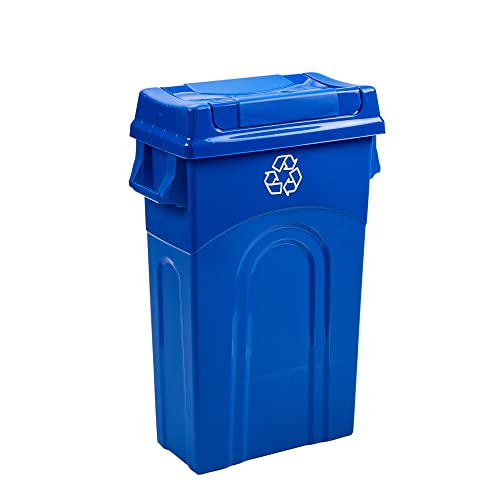 United Solutions 23 Gallon Highboy Plastic Recycling
- Space Saving Profile - The Highboy bin is…
- Easy Bag Removal - This indoor or outdoor…
- Dustpan Edge - Sweep debris directly into the…
 Rubbermaid Commercial Products Recycling Bin
- PCR: Made of post-consumer recycled resin for commercial…
- Enable easier lifting and carrying
- Designed to stack or nest for increased productivity
 Gracious Living Recycling Bin Container
- Recycling & Garbage Bin: This spacious blue bin…
- Blue Waste Bin: Measuring 22.25" L x 17.25"…
- Home Recycling Tote: Built with tall side walls,…
| Product | Key specs | |
|---|---|---|
| United Solutions 23 Gallon Highboy Plastic Recycling | Space Saving Profile - The Highboy bin is… Easy Bag Removal - This indoor or outdoor… Dustpan Edge - Sweep debris directly into the… | Check price |
| Rubbermaid Commercial Products Recycling Bin | PCR: Made of post-consumer recycled resin for commercial… Enable easier lifting and carrying Designed to stack or nest for increased productivity | Check price |
| Gracious Living Recycling Bin Container | Recycling & Garbage Bin: This spacious blue bin… Blue Waste Bin: Measuring 22.25" L x 17.25"… Home Recycling Tote: Built with tall side walls,… | Check price |
 Rubbermaid Commercial Products Stackable Recycling Bin | PCR: Made of post-consumer recycled resin for commercial… Enable easier lifting and carrying Designed to stack or nest for increased productivity | Check price |
As an Amazon Associate we earn from qualifying purchases at no extra cost to you.
Quick picks by household situation
- Small kitchen or apartment: Choose a 10–15 litre open-top or slim pull-out bin, or a 25–30 litre divided bin if you sort recycling indoors.
- Average household: A 40–50 litre single bin works well for mixed recyclables; a two-compartment model is better when paper and containers must be separated.
- Busy family kitchen: Choose 50–60 litres, preferably with a removable inner bucket or two independently removable compartments.
- Garage or utility room: Use a rigid 50–90 litre open container, such as an IKEA SORTERA-style lidded recycling box, rather than a pedal bin designed for food waste.
- Limited floor space: Look for a narrow rectangular bin under about 30 cm wide, or stackable containers with front access.
- Maximum convenience: A premium motion-sensor lid, such as the type used by Simplehuman, reduces hand contact but costs more and adds batteries and electronics to maintain.
Best recycling bins compared
| Bin type or example | Typical capacity | Typical footprint | Compartment layout | Lid design | Best use |
|---|---|---|---|---|---|
| Slim single-compartment pedal bin | 25–40 L | About 25–35 cm wide | One compartment | Foot pedal, usually soft-close | Small kitchens and narrow gaps |
| Divided kitchen bin | 40–60 L total | About 30–45 cm wide | Two compartments, commonly 2 x 20–30 L | Pedal, hinged, or removable split lids | Homes that separate paper from containers |
| Large rectangular recycling box | 50–60 L | About 35–45 cm wide | One compartment; stackable models available | Loose or hinged lid | Garages, utility rooms, and dry recyclables |
| Heavy-duty outdoor container | 80–120 L | About 45–55 cm wide | One compartment | Clip-on or hinged weather-resistant lid | High-volume households and collection-day storage |
| Premium sensor bin | 40–58 L | About 30–40 cm wide | Usually one compartment | Battery-powered automatic lid | Hands-free kitchen sorting |
These are useful planning ranges rather than universal product specifications. Internal capacity is often smaller than the outside dimensions suggest because hinges, liners, dividers, and motor housings occupy space.
Head-to-head: single bin or divided bin?
Single-compartment bins
A single bin gives you the most usable volume for the smallest footprint. It is the better choice when your local collection service accepts cans, bottles, cardboard, and paper together, or when you transfer materials into separate outdoor containers later. The simpler interior is also easier to wipe clean and less likely to trap wet labels and crumbs.
The drawback is that loose paper can become contaminated by leaking drink containers. A single 50-litre bin may also encourage overfilling, making it difficult to lift the liner without tearing it. For a household producing roughly 35 litres of dry recycling per week, a 40–50 litre bin provides useful headroom. Forcing the same volume into a 25-litre bin usually means more frequent emptying and compressed cardboard that springs back when removed.
Divided bins
Divided bins save sorting time at collection point and keep paper away from damp containers. A 2 x 25-litre arrangement is often more practical than a nominal 50-litre single cavity because each section can be carried separately. However, the divider reduces flexibility: a large cereal box or flattened shipping carton may not fit through either opening, and one compartment can overflow while the other remains half empty.
For most kitchens, choose a divided model only if your local rules require separate streams or you value sorting indoors. Check each compartment’s individual capacity, not just the combined headline figure.
What to look for in each design
Capacity and proportions
Estimate your volume before shopping. If your household fills a 30-litre sack every four days, weekly recycling volume is approximately:
30 litres × 7 ÷ 4 = 52.5 litres per week.
A 50-litre bin would therefore need emptying at least weekly and should not be filled to the rim. A 60-litre total capacity gives more realistic clearance for bulky bottles and flattened packaging. Remember that cardboard occupies space inefficiently unless flattened immediately.
Footprint and access
Measure width, depth, and height with the lid fully open. A bin that fits beneath a counter with its lid closed may be unusable if the hinge hits the underside. Leave at least 5 cm behind a pedal bin for the lid mechanism and enough side clearance to remove a bucket or liner.
Rectangular bins generally use wall space more efficiently than round bins. A 30 cm-wide rectangular model can fit beside a cabinet where a 35 cm-diameter round container cannot, even when their capacities are similar. For a pull-out cabinet, check the cabinet’s internal width and the position of plumbing, hinges, and drawer runners.
Lid design
- Open top: Fastest for dry paper and cardboard, but unsuitable where odours, pets, or visible clutter are concerns.
- Hinged lid: Keeps contents contained and reduces dust, but needs overhead clearance and can collect residue around the hinge.
- Soft-close pedal lid: A good kitchen compromise. Look for a pedal that does not require the bin to slide across the floor.
- Sensor lid: Convenient when your hands are full. Battery life commonly ranges from several months to about a year depending on use, but the lid is more expensive and should be kept away from splashing water.
- Clip-on garage lid: Best for dry storage and transport. It usually seals more securely than a kitchen lid but is less convenient for frequent access.
Cleanability and liner fit
Recycling bins rarely need the same odour control as food-waste bins, but sticky drink residue can quickly create mould and smells. Smooth polypropylene or powder-coated steel is easier to clean than deeply ribbed plastic. A removable inner bucket is valuable because you can wash it outdoors without carrying the whole bin.
Check whether the liner folds over the rim and whether the lid hides it. Custom liners provide a neat fit but can be costly. Standard bags are cheaper, though a bag that is too small may pull off the rim when the bin is lifted. For a divided bin, confirm that liners are available in the individual compartment sizes; a large bag designed for a single 50-litre cavity may not work in two 25-litre sections.
Decision matrix: match the bin to your setup
| Your situation | Recommended configuration | Why | What to avoid |
|---|---|---|---|
| One or two people, little floor space | 25–40 L slim single bin | Uses less room and is easy to empty often | 60 L wide bins that become storage obstacles |
| Two to four people, weekly collection | 40–60 L single or 2 x 25 L divided bin | Balances volume with manageable lifting weight | Compartments below 20 L each |
| Large family or high online-shopping volume | 60 L kitchen bin plus 80–120 L garage box | Keeps bulky cardboard out of the kitchen | Compressing cardboard into a small lidded bin |
| Strict paper/container separation | Two equal compartments or two stackable boxes | Prevents cross-contamination and uneven sorting | One tiny compartment paired with one oversized compartment |
| Frequent spills or messy packaging | Removable bucket, washable plastic interior | Simplifies deep cleaning | Unlined fabric or untreated wood interiors |
Worth considering: named product styles
Simplehuman’s rectangular and sensor bins are aimed at buyers who want polished finishes, stable pedals, and concealed liners; they are typically premium-priced and make most sense in a visible kitchen. Brabantia’s Bo and Sort-and-Go families cover compact, stackable, and divided approaches, with an emphasis on tidy placement and removable containers. Joseph Joseph’s Totem-style systems combine multiple compartments and can suit kitchens where vertical organization matters, although their stacked layout makes capacity and liner replacement more specialized.
IKEA SORTERA boxes are a practical garage choice when a lidded, stackable container matters more than hands-free operation. Rubbermaid-style commercial containers are better suited to utility rooms and garages where impact resistance and easy wiping matter more than furniture-like appearance. Prices vary widely by material and mechanism: expect roughly £20–£60 or $25–$75 for basic household bins, £60–£180 or $75–$220 for premium pedal or sensor designs, and about £10–£35 or $15–$45 for simple garage boxes.
Ownership details that affect the real value
The first parts to wear are usually pedal linkages, lid dampers, hinge pins, and sensor-lid batteries rather than the container itself. Do not force a lid open past its stop, and avoid putting wet cardboard into a dry-recycling bin. Liquids make paper heavier, contaminate neighbouring materials, and can corrode metal components.
Once a week, empty the bin before it is tightly packed, wipe the rim and lid underside with mild detergent, and dry the interior fully. Do not pour water over a sensor or electronic lid. For a garage box, inspect the lid seal and handles every few months; brittle plastic is more likely to crack when lifted in cold weather.
The best choice is therefore not automatically the largest or most automated model. Buy the smallest capacity that covers your collection interval with about 15–20% spare room, choose divided storage only when your sorting rules justify it, and prioritize a removable, washable interior if the bin will handle bottles, cans, or rinsed food packaging.









