
The best gutter cleaning tools depend on how much roof access you have: choose a scoop for low, reachable gutters; a telescoping wand for light debris from the ground; a pressure attachment for rinsing stubborn sediment; a vacuum for controlled removal around delicate landscaping; and a robot only when repeated roof-edge work justifies its cost and setup.
Our top picks
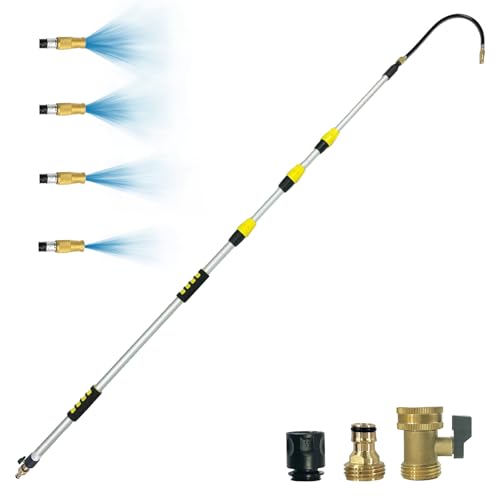 Buyplus 16FT
- 【Telescoping Gutter Wand】Buyplus gutter cleaning tool is made…
- 【Versatile Spray Patterns】The gutter flexible wand head can…
- 【Easy to Use】This long reach gutter cleaner wand…
 TONYINGO 24FT Reach Gutter Cleaning Tool with
- All-In-One Gutter Cleaning Tools for Complete Maintenance: TONYINGO…
- Hard Duckbill Nozzle with 360° Rotation for Precise…
- 16FT Telescopic Pole with Up to 24FT Reach:…
 Orbit Telescoping Gutter Cleaning Wand
- This wand easily extends from 40 in
- The zinc sweeper nozzle rotates 180 degrees, so…
- Angle the spray head up or down to…
| Product | Key specs | |
|---|---|---|
| Buyplus 16FT | 【Telescoping Gutter Wand】Buyplus gutter cleaning tool is made… 【Versatile Spray Patterns】The gutter flexible wand head can… 【Easy to Use】This long reach gutter cleaner wand… | Check price |
| TONYINGO 24FT Reach Gutter Cleaning Tool with | All-In-One Gutter Cleaning Tools for Complete Maintenance: TONYINGO… Hard Duckbill Nozzle with 360° Rotation for Precise… 16FT Telescopic Pole with Up to 24FT Reach:… | Check price |
| Orbit Telescoping Gutter Cleaning Wand | This wand easily extends from 40 in The zinc sweeper nozzle rotates 180 degrees, so… Angle the spray head up or down to… | Check price |
 Gutter Scoop Cleaning Tools | CLOGGED GUTTERS → FAST FIX Deep, curved scoop… MESSY CLEANOUTS → CLEANER DUMPING Shovel-style trough helps… TIGHT CORNERS & HANGERS → BETTER ACCESS Slim… | Check price |
As an Amazon Associate we earn from qualifying purchases at no extra cost to you.
Best gutter cleaning tools by situation
| Situation | Best choice | Why it fits | Main limitation |
|---|---|---|---|
| Single-story home, clear ladder access | Plastic gutter scoop | Fastest removal of wet leaves and compacted sludge | Requires ladder repositioning and roof-edge access |
| Two-story home with mostly dry leaves | Telescoping wand with curved nozzle | Works from the ground and reaches approximately 12–20 feet | Less effective on wet, packed debris |
| Fine silt, mud, or blocked downspout outlet | Pressure-washer gutter attachment | Strong flushing action and fast rinsing | Can spray dirty water onto walls, windows, and landscaping |
| Heavy debris near delicate beds or siding | Gutter vacuum | Captures leaves instead of scattering them | More expensive and slower to assemble |
| Frequent maintenance on a suitable low-slope roof | Gutter-cleaning robot | Reduces repeated manual roof-edge work | High purchase cost, limited compatibility, and supervision still required |
Gutter scoops: the budget champion for reachable gutters
A molded plastic gutter scoop is usually the best-value option when a stable ladder can be placed on firm, level ground. Its flexible front edge conforms to common 5- and 6-inch gutters, while the scoop’s rear lip helps lift wet leaves without scraping aggressively against the gutter coating. A typical scoop costs about $5–$15 and weighs less than 1 pound.
Use a scoop when the gutter contains pine needles, leaves, roof grit, and damp organic sludge. It removes a large volume quickly, but it does not eliminate the need for a bucket, tarp, or hose. Scooping debris onto the ground creates a second cleanup job, especially above patios or planted beds.
The main ownership issue is edge wear. A scoop that becomes curled, cracked, or too soft will leave debris behind. Avoid metal scoops on painted aluminum gutters because repeated contact can scratch the finish. For a one-story home cleaned twice a year, a scoop often has the lowest cost per use; a $10 tool used eight times over four years costs about $1.25 per cleaning before replacement.
Telescoping wands: the practical no-roof-access option
Telescoping gutter wands attach to a garden hose and usually end in a curved nozzle with one or two adjustable jets. They are useful for rinsing loose leaves and washing sediment toward the downspout while standing on the ground. Typical models extend from roughly 5 to 15 feet, with longer systems reaching about 20 feet when the user adds extension sections. Expect to pay approximately $25–$80.
Reach is not the same as working height. If the gutter is 22 feet above ground, a 15-foot wand may not be enough once you account for the operator’s height, the wand’s angle, and the need to keep the nozzle inside the gutter. Measure from the ground to the gutter lip, then subtract your comfortable standing reach. For example, a 16-foot gutter height minus a 7-foot standing reach leaves 9 feet of tool length. A 10- to 12-foot adjustable wand may therefore be adequate, while a 6-foot wand will not be.
Wands perform best on dry or lightly damp leaves. Wet mats, roof granules, and decomposed sludge may resist the water stream. They can also push debris toward a clogged downspout rather than remove it. Start at the downspout and work away from it, or flush the downspout separately before washing the rest of the gutter.
Pressure attachments: powerful, but easy to misuse
Pressure-washer gutter attachments use curved extensions or specialized nozzles to direct water along the gutter. They are the fastest option for rinsing fine sediment and breaking up compacted material, but they create the greatest risk of uncontrolled spray. General-purpose pressure washers commonly produce 1,500–3,000 PSI; that is far more force than is needed at close range for many residential gutters.
Use the lowest effective pressure, keep the nozzle moving, and do not aim directly at gutter seams, roof shingles, soffit vents, or window seals. High pressure can loosen gutter joints, drive water under roofing materials, and strip paint. A pressure attachment is best treated as a flushing tool after large debris has been removed, not as a replacement for scooping.
Expect about $30–$100 for the attachment, excluding the pressure washer. Check the connection type before buying: garden-hose fittings, quick-connect pressure-washer fittings, and proprietary systems are not interchangeable. Protective eyewear is especially important because gutter water can contain grit, decomposed leaves, and insect debris.
Gutter vacuums: the cleanest choice around property
Gutter vacuums use long tubes and curved heads to lift leaves and sludge into a collection container. Some systems are dedicated gutter vacuums; others use wet/dry vacuum motors with compatible extension kits. Typical working reach is 20–30 feet, with hose and tube systems weighing about 8–18 pounds depending on the motor, tube material, and number of extensions. Complete systems commonly cost $150–$600.
Choose a vacuum when falling debris would damage flower beds, stain siding, or create difficult cleanup around a pool or deck. Plastic tubes are lighter and easier to handle overhead; metal tubes are often more durable but can fatigue the user sooner. A transparent elbow or inspection section is useful because it shows whether material is moving or a blockage has formed.
Capacity matters. A 4-gallon collection container may fill quickly with wet leaves, while a 10- to 16-gallon wet/dry vacuum gives more working time but is heavier to empty. A simple estimate helps: if a gutter produces 1 gallon of debris per cleaning and the vacuum’s usable capacity is 80% of its stated size, a 4-gallon unit offers about three cleanings before emptying. Wet debris reduces practical capacity further.
Robot gutter cleaners: a niche answer, not a universal shortcut
Robot gutter cleaners are designed to travel inside the gutter and move leaves toward an opening or collection point. They may suit owners who clean frequently, have long uninterrupted gutter runs, and want to reduce ladder use. However, this category remains less standardized than scoops, wands, and vacuums. Compatibility can depend on gutter width, corner geometry, hangers, guards, slope, and the robot’s ability to cross downspout outlets.
Before considering one, verify the manufacturer’s stated gutter dimensions and whether it handles wet leaves, pine needles, compacted sludge, or only light dry debris. Battery runtime is often more important than headline speed: a tool that runs for 30–60 minutes may cover one modest cleaning session, but repeated repositioning and charging can reduce actual coverage. Robots also require supervision near roof edges, power lines, trees, and walkways; they are not a substitute for inspection.
Head-to-head comparison: reach, debris, and cleanup
| Tool type | Typical reach | Best debris | Cleanup method | Typical cost |
|---|---|---|---|---|
| Gutter scoop | Arm’s reach from ladder | Wet leaves, sludge, pine needles | Bucket, tarp, or ground collection | $5–$15 |
| Telescoping hose wand | 5–20 feet of tool reach | Loose leaves and rinseable grit | Water carries debris to outlet or ground | $25–$80 |
| Pressure attachment | Usually 10–25 feet with extensions | Fine sediment and compacted residue | High-volume water runoff | $30–$100 |
| Gutter vacuum | 20–30 feet | Dry leaves, needles, light sludge | Collection bin or vacuum bag | $150–$600 |
| Gutter robot | Limited by its travel path | Usually light, loose debris | Pushes or gathers material for later removal | $200–$1,000+ |
How to choose without overspending
- Choose a scoop if you have one-story gutters, safe ladder placement, and infrequent cleaning.
- Choose a wand if avoiding roof access matters more than removing dense sludge in one pass.
- Choose a pressure attachment if you already own a compatible washer and need flushing power, while accepting splash and surface-risk tradeoffs.
- Choose a vacuum if controlled cleanup and protection of landscaping are worth paying for.
- Choose a robot only after confirming its fit, corner performance, debris limits, battery coverage, and return or support terms.
For many homes, the most capable combination is not one expensive device but a scoop or vacuum for removal, followed by a hose wand for inspection and rinsing. A gutter guard also does not remove the need for maintenance: needles, roof grit, and fine sediment can accumulate on top or beneath the guard.
Safer setup and maintenance
Inspect the tool before every use. Replace cracked vacuum tubes, hardened hose washers, loose extension pins, and damaged electrical cords. Keep ladder feet on stable ground, maintain three points of contact, and never overreach sideways to avoid moving the ladder. Ground-based tools reduce ladder exposure but still require attention to overhead wires and falling debris.
Work in two passes: remove large material first, then flush or vacuum the remaining residue. Check that each downspout flows freely by directing a modest stream of water into the gutter. If water backs up, stop adding water and clear the obstruction from the outlet or cleanout rather than forcing pressure into a blocked system. Afterward, rinse and dry scoops, wands, tubes, and collection bins; decomposing debris left inside equipment causes odor, corrosion, and premature seal failure.
If gutters are loose, badly corroded, attached to a steep or fragile roof, or positioned above a difficult drop, hiring a qualified professional is safer than selecting a longer tool. The best gutter cleaning tools reduce effort, but they cannot correct unsafe access or damaged drainage hardware.









