
Key takeaways
- Amp and cab realism: The biggest differentiator at the top end. Fractal’s FM9/FM3 and the Quad Cortex model component-level circuit behavior and capture real amps, respectively, so they track picking dynamics and clean-up off the guitar volume more convincingly than most mid-priced units.
- Routing and I/O: Look for stereo effects loops, multiple outputs (XLR to front-of-house plus ¼” to a power amp), and the ability to run parallel signal paths. This is where Helix stands out — it’s essentially an audio switcher as well as a modeler.
- Latency: Anything under ~5ms feels transparent under your fingers. All the units listed here stay well below that at 48kHz; issues only arise when chaining multiple effects blocks plus USB audio simultaneously on underpowered hardware.
- Recording connections: A class-compliant USB audio interface with 4+ outputs lets you record a wet signal and a dry DI at the same time for re-amping — a major workflow advantage over miking an amp.
- Foot control and presets: Count the switches. The Helix Floor has 12; the FM9 has 9; the Quad Cortex has 11 but in a much smaller chassis. If you switch sounds mid-song, scenes/snapshots (multiple rig states within one preset) matter more than total preset count.
- Portability: A stompbox-sized modeler in your gig bag beats a head-and-cab when you’re flying or taking public transit to rehearsals.
The Short Answer
The best amp modelers in 2026 are the Line 6 Helix for players who want maximum routing and preset depth on a pedalboard, the Fractal Audio FM9 for those chasing the most realistic amp and cab feel, the Neural DSP Quad Cortex for compact rigs with capture-style profiling, and the Boss GX-100 or Positive Grid ToneX for tighter budgets and simpler workflows. The right pick depends less on raw sound quality — all of these are convincing now — and more on how you’ll use it: home practice, live stage rigs, or studio recording.
Key Buying Criteria That Actually Matter
- Amp and cab realism: The biggest differentiator at the top end. Fractal’s FM9/FM3 and the Quad Cortex model component-level circuit behavior and capture real amps, respectively, so they track picking dynamics and clean-up off the guitar volume more convincingly than most mid-priced units.
- Routing and I/O: Look for stereo effects loops, multiple outputs (XLR to front-of-house plus ¼” to a power amp), and the ability to run parallel signal paths. This is where Helix stands out — it’s essentially an audio switcher as well as a modeler.
- Latency: Anything under ~5ms feels transparent under your fingers. All the units listed here stay well below that at 48kHz; issues only arise when chaining multiple effects blocks plus USB audio simultaneously on underpowered hardware.
- Recording connections: A class-compliant USB audio interface with 4+ outputs lets you record a wet signal and a dry DI at the same time for re-amping — a major workflow advantage over miking an amp.
- Foot control and presets: Count the switches. The Helix Floor has 12; the FM9 has 9; the Quad Cortex has 11 but in a much smaller chassis. If you switch sounds mid-song, scenes/snapshots (multiple rig states within one preset) matter more than total preset count.
- Portability: A stompbox-sized modeler in your gig bag beats a head-and-cab when you’re flying or taking public transit to rehearsals.
Comparison at a Glance
| Modeler | Footswitches | Weight | USB Audio Channels | Effects Loops | Typical Price Range |
|---|---|---|---|---|---|
| Line 6 Helix Floor | 12 | 6.6 kg | 8 in / 8 out | 2 stereo (4 mono) | ~$1,500–1,700 |
| Fractal Audio FM9 Mk II | 9 | 4.1 kg | 8 in / 8 out | 2 | ~$1,900–2,100 |
| Fractal Audio FM3 | 3 | 1.9 kg | 4 in / 4 out | 1 | ~$1,100–1,200 |
| Neural DSP Quad Cortex | 11 (rotary/stomp) | 1.9 kg | 8 in / 8 out | 2 | ~$1,700–1,900 |
| Boss GX-100 | 10 | 3.0 kg | 8 in / 8 out | 1 | ~$600–700 |
| Positive Grid ToneX Pedal | 3 | 0.9 kg | 4 in / 4 out | 1 | ~$400–450 |
Decision Matrix: Match the Modeler to Your Situation
| Your Situation | Best Fit | Why |
|---|---|---|
| Gigging weekly, need MIDI control of other pedals | Helix Floor | Deepest routing, 4 send/returns, robust footswitch layout for scenes |
| Touring player who wants amp feel closest to real tubes | FM9 Mk II | Component-level modeling, best clean-to-breakup dynamics, huge cab IR library |
| Small pedalboard, fly dates, tight carry-on budget | Quad Cortex | Full power in 1.9 kg; capture function clones your favorite amps |
| Bedroom player, records direct, under $500 | ToneX Pedal | Cheap access to thousands of Tone Models; easy USB recording |
| Intermediate player, all-rounder, mid budget | Boss GX-100 | Touchscreen editing, solid Boss effects pedigree, built like a tank |
| Home + occasional stage, prioritizes portability over switching | FM3 | Fractal sound quality in a compact chassis; add an external switch if needed |
Amp and Cab Realism: What Separates the Tiers
Two philosophies dominate. Modeling (Fractal, Line 6, Boss) reconstructs the amp circuit mathematically — you get every knob behaving as it does on the real thing, including interactions like sag and presence. Capturing/profiling (Quad Cortex, ToneX, Kemper) snapshots a specific amp’s response at one dial setting, which sounds extremely authentic at that setting but adjusts less naturally when you move the virtual knobs.
Our top picks
 MOOER GE150 Pro Li Black Guitar Amp
- GE150 Pro Series, is designed based on MOOER’s…
- More Flexibility: Four multi-purpose footswitches for browsing presets…
- Massive Tone: 200 factory preset tones, 55 classic…
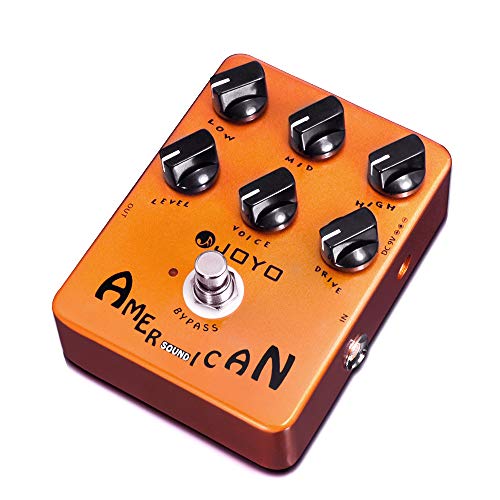 JOYO American Tube Amp Simulator & Preamp
- The American Sound authentically reproduces the legendary American…
- LEVEL, DRIVE, 3-BAND EQ & VOICE: Sculpt your…
- The integrated analog cabinet simulator lets you run…
 MOOER GE150 Pro Guitar Multi Effects Processor
- GE150 Pro Series, is designed based on MOOER’s…
- More Flexibility: Four multi-purpose footswitches for browsing presets…
- Massive Tone: 200 factory preset tones, 55 classic…
| Product | Key specs | |
|---|---|---|
| MOOER GE150 Pro Li Black Guitar Amp | GE150 Pro Series, is designed based on MOOER’s… More Flexibility: Four multi-purpose footswitches for browsing presets… Massive Tone: 200 factory preset tones, 55 classic… | Check price |
| JOYO American Tube Amp Simulator & Preamp | The American Sound authentically reproduces the legendary American… LEVEL, DRIVE, 3-BAND EQ & VOICE: Sculpt your… The integrated analog cabinet simulator lets you run… | Check price |
| MOOER GE150 Pro Guitar Multi Effects Processor | GE150 Pro Series, is designed based on MOOER’s… More Flexibility: Four multi-purpose footswitches for browsing presets… Massive Tone: 200 factory preset tones, 55 classic… | Check price |
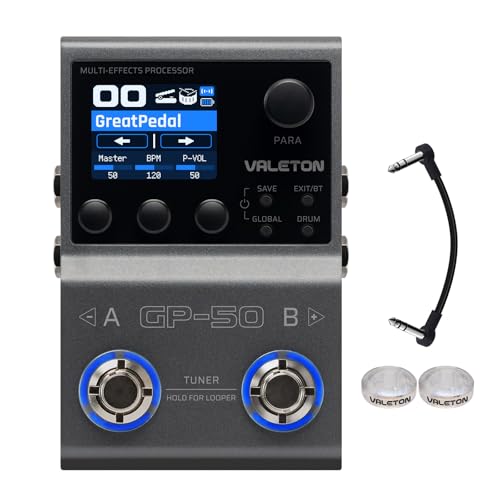 Valeton GP-50 Multi-Effects Processor | All-in-One Professional Effects Solution: Combines a multi-effects processor,… Flexible Module & Storage Capacity: Supports up to… Intuitive Operation & Clear Visualization: Equipped with dual… | Check price |
As an Amazon Associate we earn from qualifying purchases at no extra cost to you.
Cab simulation is where most realism is won or lost. All the flagship units support third-party impulse responses (IRs), and loading a quality IR pack often transforms a mid-tier modeler more than upgrading the modeler itself. Budget tip: a GX-100 with a good IR pack can get 90% of a flagship’s recorded tone for a third of the price.
Setting Up for Live Use
The standard stage workflow:
- Outputs: XLR left/right to front-of-house (with cab sim on), plus a ¼” output with cab sim off to a power amp and real cab for stage monitoring — the “4-cable” or “FRFR + cab” hybrid.
- Power amp monitoring: If you skip the PA feed, a full-range flat-response (FRFR) powered speaker is essential; a regular guitar cab colors the IR and sounds muddy.
- Scenes over presets: Configure one preset per song with scene changes (clean → crunch → lead) on footswitches instead of preset changes — preset switches can cause a 100–300ms audio gap on some units, while scene switches are gapless.
- Global EQ: Every room is different; use the global output EQ to tame boomy stages rather than editing each preset.
Ownership Realities
- What wears first: Footswitch contacts and expression pedal linkages — expect the toe-switch on expression pedals (Helix, GX-100) to loosen over years of heavy use. Dust caps on encoders help.
- Firmware dependency: These units live and die by updates. Fractal and Line 6 have long update track records; check a brand’s firmware cadence before buying — a modeler abandoned after two years loses resale value fast.
- Common mistakes: Running cab sim into a real guitar cab (instant fizz), setting input gain so the A/D converter clips, and building presets at bedroom volume that sound scooped and thin on stage. Build gig presets at near-stage volume.
- Backup: Export your presets to USB regularly and carry a cheap backup pedal — a modeler failure mid-gig with no backup ends your set.
- Consumables: None, but budget for a quality power supply cable and a hard case — the Quad Cortex’s touchscreen especially dislikes being tossed in a soft gig bag.
Frequently Asked Questions
Do amp modelers work without a computer?
Yes — every unit here runs fully standalone. Computers are only needed for editing software, firmware updates, and recording.
Can a modeler replace my tube amp entirely?
For recorded and front-of-house sound, absolutely. Where some players still notice a difference is “amp in the room” feel — the physical push of air from a real cab. A powered FRFR speaker at stage volume closes most of that gap.
How many presets do I actually need?
Far fewer than you think. Most gigging players use 8–12 presets with scenes. Prioritize switching flexibility and I/O over raw preset capacity when comparing units.









