
The best document safes are those with a verified UL 72 Class 350 fire rating, a credible water-resistance test, enough room for your actual files, and a lock that matches how often you need access.
Our top picks
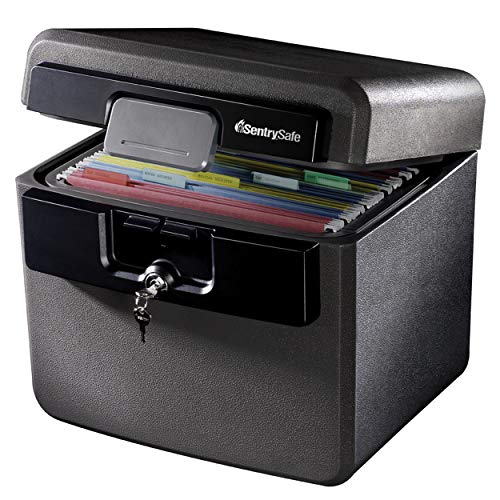 SentrySafe Black Fireproof and Waterproof Safe
- UL Classified to withstand high temperatures for up…
- Spacious interior fits hanging file folders and is…
- Durable key lock helps prevent unauthorized access and…
 SentrySafe Fireproof Safe Box with Key Lock
- Lifetime after-fire replacement guarantee
- Fire safe box is UL classified for fire…
- Fire resistant safe has a privacy key lock…
 SentrySafe Black Fireproof Document Box with Key
- Box is UL Classified to endure 1/2 hour…
- Fireproof safe features a flat key lock to…
- The fireproof file box for documents has a…
| Product | Key specs | |
|---|---|---|
| SentrySafe Black Fireproof and Waterproof Safe | UL Classified to withstand high temperatures for up… Spacious interior fits hanging file folders and is… Durable key lock helps prevent unauthorized access and… | Check price |
| SentrySafe Fireproof Safe Box with Key Lock | Lifetime after-fire replacement guarantee Fire safe box is UL classified for fire… Fire resistant safe has a privacy key lock… | Check price |
| SentrySafe Black Fireproof Document Box with Key | Box is UL Classified to endure 1/2 hour… Fireproof safe features a flat key lock to… The fireproof file box for documents has a… | Check price |
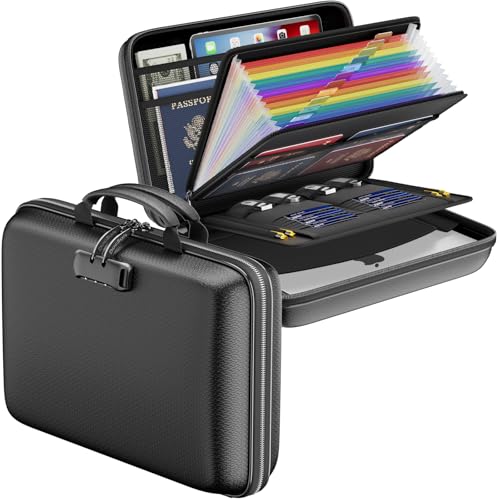 DocSafe Fireproof File Organizer with Lock | Ultimate Fireproof & Water-Resistant Protection: Keep your valuables… Upgraded Hard-Shell Design Fireproof Box: Our fireproof document… Large-capacity: Outside size: 15.5" x 11.5" x 3"(Thickness… | Check price |
As an Amazon Associate we earn from qualifying purchases at no extra cost to you.
Quick picks by situation
| Situation | Best choice | Look for | Typical market range |
|---|---|---|---|
| A few passports, certificates, and deeds | Portable fire-and-water document chest | UL 72 Class 350, 30-minute rating, key or combination lock, carrying handle | $35–$100 |
| A household file folder collection | Medium fire-resistant safe | At least 0.8 cubic feet, interior shelves or file rails, 60-minute rating | $120–$350 |
| Legal-size contracts or real-estate files | Legal-size fire safe or filing safe | Interior depth of at least 15 inches and a stated legal-file capacity | $250–$800 |
| Frequent access in a home office | Electronic fire safe | Motorized or solenoid lock, override key, replaceable batteries, relocker or pry-resistant door | $180–$700 |
| High theft risk or a business archive | Bolted, burglary-rated fire safe | Steel body, anchor holes, hardened locking hardware, independently verified burglary rating | $500–$2,000+ |
What the fire rating really tells you
For paper records, the useful benchmark is a UL 72 Class 350 rating. During the test, the safe is heated externally while the temperature inside is kept below approximately 350°F, the point at which paper can be seriously damaged. A rating such as “30 minutes” or “60 minutes” describes the test duration, not a guarantee that every document will survive every real fire.
Choose at least 30 minutes for a small home chest containing replaceable records. A 60-minute rating is more appropriate for tax files, property documents, business records, and irreplaceable originals. A two-hour safe can make sense for a large archive, but its extra weight and cost are substantial.
Do not confuse a fire-resistant safe with a fireproof safe. “Fireproof” is often marketing language unless it is supported by a named testing standard and a clear class and duration. Also check what was tested: a paper rating does not automatically protect computer drives, USB sticks, photographs, or magnetic media. Those may require a different temperature-rated media container.
Waterproof claims need careful reading
Fire hoses, sprinkler systems, burst pipes, and firefighting foam can damage documents even when heat does not. Some document chests use a gasket and buoyant design to resist brief immersion; others are merely splash-resistant. The distinction matters.
- Strongest claim: a stated immersion duration, depth, and independent test method.
- Useful but limited: a water-resistant gasket tested against spray or simulated hose exposure.
- Weak claim: “waterproof” with no duration, test standard, or explanation of whether the lid remains sealed after repeated use.
Water resistance is not permanent. The gasket can flatten, crack, or collect dust, and a warped lid can prevent a seal. Store the safe above floor level where practical, avoid placing heavy objects on its lid, and inspect the seal when changing batteries or reorganizing files. For especially important originals, use archival sleeves inside the safe rather than relying on the safe alone.
Capacity: measure folders, not the outside
Manufacturers commonly quote external dimensions or cubic feet, but insulation, door hardware, hinges, and the lock consume useful space. A safe advertised at 1.0 cubic foot may have an interior that is considerably smaller.
Letter-size paper is 8.5 by 11 inches. Legal-size paper is 8.5 by 14 inches. Before buying, measure the inside width, depth, and height with shelves and the door closed. A legal folder often needs at least 15 inches of usable depth because tabs, document sleeves, and a small clearance allowance add to the nominal 14 inches.
| Document load | Practical interior target | Approximate paper capacity | Suitable format |
|---|---|---|---|
| Passports, birth certificates, a few titles | 10 × 7 × 3 inches | One thin folder or several envelopes | Portable chest |
| One household filing box | 14 × 10 × 8 inches | About 800–1,200 sheets, depending on folders | Medium safe |
| Several active letter folders | 16 × 12 × 10 inches | About 1,500–2,500 sheets | Upright or shelving safe |
| Legal-size project files | 16 × 12 × 15 inches | Several hanging or expanding folders | Legal-size safe |
These sheet estimates are planning figures, not manufacturer capacities. A 2-inch expanding folder may occupy more space than hundreds of loose sheets, and fire insulation can reduce usable dimensions significantly.
Lock types: convenience versus attack resistance
Key locks
Keys are simple, do not need batteries, and work well for a safe opened only a few times per year. The weakness is key control: a spare left in an obvious drawer defeats much of the benefit. Choose a model with a protected keyway and keep the spare outside the immediate room but somewhere secure and accessible during an emergency.
Electronic locks
Electronic keypads are faster for regular access and can support multiple codes. Prefer a model with low-battery warnings, a replaceable battery compartment accessible from outside, and a mechanical override that is not stored beside the safe. A keypad is not automatically more secure than a key lock; inexpensive units may have vulnerable emergency bypasses or flimsy override covers.
Combination dials and biometric locks
Mechanical combination dials avoid batteries but take longer to open and require careful dialing. Biometric locks are convenient when supported by a quality backup system, but fingerprints can fail because of moisture, dirt, cuts, or sensor wear. For document protection, a dependable keypad or dial is usually a better priority than biometric access.
Portability and resistance to unauthorized access
A small document chest protects contents from heat but may be easy for a thief to carry away. Portability is therefore a trade-off, not an unconditional advantage. A chest weighing 10–20 pounds is convenient during evacuation, while a larger 60–150-pound safe is harder to remove but may still be carried by two people.
For meaningful theft resistance, look for a steel body, concealed or protected hinges, thick door construction, multiple locking bolts, pry-resistant seams, and pre-drilled anchor holes. Bolt the safe to a concrete floor or structural framing according to the manufacturer’s instructions. Anchoring a lightweight fire chest may be impossible or may damage its water seal, so treat that type primarily as a document-preservation container rather than a burglary safe.
Keep the safe out of sight, but do not place it where a falling shelf, flood, or blocked doorway could make retrieval impossible. Avoid bedroom locations that are obvious to intruders, and avoid damp basements unless the safe and its contents are protected from condensation.
How to choose the right size and rating
- List the originals first. Include passports, identity records, wills, property deeds, insurance documents, business contracts, and irreplaceable family papers.
- Separate active and archival files. Store frequently used papers in an accessible office safe and rarely used originals in a larger, more secure unit.
- Measure the thickest folder. Add at least 1 inch of depth and 2 inches of height for sleeves and future additions.
- Choose the test level. Select a verified 30-minute rating for a small essential set and 60 minutes or more for a substantial archive.
- Check the full specification sheet. Confirm internal dimensions, legal-size compatibility, water-test details, weight, battery procedure, and anchoring options.
- Plan access and recovery. Record the safe’s model and serial number separately, and store spare keys or recovery instructions securely.
Ownership realities and common mistakes
The first parts likely to cause trouble are batteries, keypad covers, hinges, and gaskets—not the steel shell. Replace batteries on a schedule rather than waiting for a warning, lubricate only components the manufacturer permits, and never force a jammed door. Excessive force can bend bolts or ruin the seal.
Do not overfill the safe. Packed folders can prevent the door from closing evenly, and pressure against the gasket can create a leak path. Do not store wet documents inside it, either; a sealed container can trap moisture and encourage mold. Allow papers to dry completely, use acid-free sleeves for long-term storage, and inspect the interior once or twice a year.
Finally, keep encrypted digital scans in a separate secure location. A safe protects against some fire, water, and theft scenarios, but it cannot replace backups, estate planning, or controlled access to the originals.
Bottom line
For most households, the best document safes are a 30- to 60-minute UL 72 Class 350 model with a tested water-resistance claim, enough interior depth for the required paper size, and a lock you will maintain correctly. Choose a portable chest for a small emergency set, a legal-size unit for real-estate or business files, and an anchored burglary-resistant safe when unauthorized access is the primary concern.









