
The best home water testing kit for reliable results is usually a certified laboratory kit for lead, arsenic, PFAS, or well-water compliance, while a DIY strip or color-change kit is better for quick screening of chlorine, hardness, pH, nitrate, and similar routine measures.
Our top picks
 Bestprod All-New 21 in 1 Drinking Water
- Clear Range: This house water testing kit offers…
- Easy to Use: The water hardness test kit…
- Easy to Understand: The water tester for drinking…
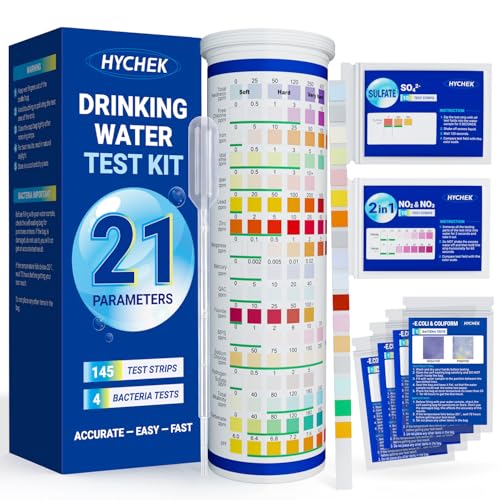 HYCHEK 21 in 1 Accurate Drinking Water
- Advanced 21-in-1 Water Test Kit: Professional-grade water test…
- Accurate and Clear Results: Our test strips, a…
- Easy 3-Step Testing: Dip (1 sec) → Wait…
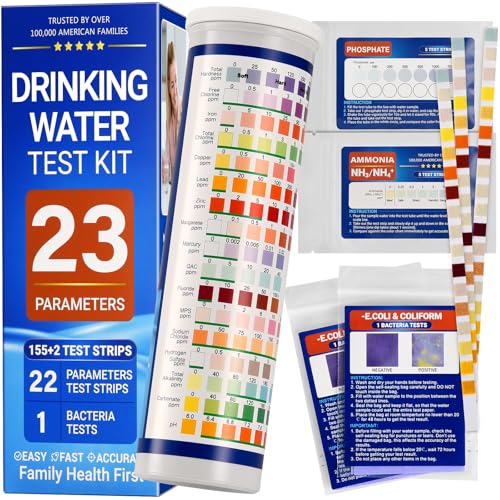 Water Test Kit for Drinking Water
- Test key drinking water indicators including bacteria screening,…
- Ideal for checking household tap water, private well…
- Dip the strip, wait, and compare with the…
| Product | Key specs | |
|---|---|---|
| Bestprod All-New 21 in 1 Drinking Water | Clear Range: This house water testing kit offers… Easy to Use: The water hardness test kit… Easy to Understand: The water tester for drinking… | Check price |
| HYCHEK 21 in 1 Accurate Drinking Water | Advanced 21-in-1 Water Test Kit: Professional-grade water test… Accurate and Clear Results: Our test strips, a… Easy 3-Step Testing: Dip (1 sec) → Wait… | Check price |
| Water Test Kit for Drinking Water | Test key drinking water indicators including bacteria screening,… Ideal for checking household tap water, private well… Dip the strip, wait, and compare with the… | Check price |
 26 in 1 Water Test Kit for | All-in-One 26-Parameter Water Test Kit: This comprehensive testing… 158 Test Strips for Long-Term Water Tracking: This… Dedicated E | Check price |
As an Amazon Associate we earn from qualifying purchases at no extra cost to you.
Quick picks by situation
| Your situation | Best choice | Why | Typical cost |
|---|---|---|---|
| You want dependable results for a health or property decision | Accredited laboratory kit | Uses controlled methods, chain-of-custody instructions, and a report with measured concentrations | $40–$250 per sample |
| You need a fast check after installing a filter | DIY color or strip kit | Results in minutes and inexpensive enough for repeat checks | $10–$35 per kit |
| You use a private well | Laboratory well-water panel | Can cover bacteria, nitrate, metals, and region-specific contaminants that strips often omit | $100–$300 per panel |
| You are concerned about PFAS, lead, or arsenic | Targeted laboratory test | These contaminants require laboratory instruments and careful sampling; household strips are not an adequate substitute | $50–$200 per contaminant or panel |
| You want to monitor aquarium or pool water | Purpose-built aquarium or pool test kit | Ranges and reagents are calibrated for those water conditions rather than drinking-water interpretation | $15–$60 |
Lab testing versus DIY testing
A laboratory kit is not necessarily a box of better test strips. It generally supplies a prepared bottle, sampling instructions, a prepaid shipping option, and a laboratory report. Depending on the service, the laboratory may use methods such as inductively coupled plasma mass spectrometry for metals, ion chromatography for anions, or specialized methods for PFAS and volatile compounds.
A DIY kit normally relies on a test strip, reagent tablet, liquid reagent, or small colorimeter. It is useful for observing change over time, but the result can be affected by lighting, expired reagents, water temperature, timing, and the user’s interpretation of a color chart.
| Feature | DIY strip or reagent kit | Laboratory mail-in kit |
|---|---|---|
| Typical sample size | 10–100 mL, often tested immediately | 100 mL–1 L, depending on the analyte and bottles supplied |
| Turnaround time | 1–15 minutes | Usually 3–10 business days after the lab receives the sample |
| Tests commonly available | pH, hardness, chlorine, alkalinity, nitrate, nitrite, sometimes iron and copper | Metals, bacteria, nitrate, volatile compounds, pesticides, PFAS, and broader panels |
| Result format | Color range or displayed number | Measured concentration, units, method, detection limit, and often comparison guidance |
| Repeat-test cost | About $1–$8 per strip or reagent test | About $40–$250 per sample, depending on the panel |
| Main failure risk | Misreading color, poor timing, or testing outside the stated range | Incorrect bottle, contamination, late shipping, or failure to follow preservation instructions |
Best home water testing kit types
Best for serious drinking-water questions: an accredited laboratory kit
Choose a laboratory service when the result could affect a renovation, a private-well treatment system, a child’s exposure assessment, or a decision to continue using the water. Look for the laboratory’s accreditation and the actual method or reporting limit, not merely the number of contaminants listed on the package.
Services such as SimpleLab’s Tap Score offer mail-in drinking-water tests with different panels, while services such as WaterCheck provide laboratory water analysis options. Panel names and availability vary, so confirm that the exact test includes the contaminant you need. A “comprehensive” panel is not automatically comprehensive for PFAS, bacteria, pesticides, or volatile organic compounds.
Best for inexpensive routine monitoring: multi-parameter strips
Multi-parameter strips are practical for tracking chlorine, pH, hardness, alkalinity, and nitrate when the kit specifically lists drinking water as an intended use. They cost little per test and require no shipping, making them useful after plumbing work or when adjusting a filtration system.
They are less useful when the color blocks are very broad. A strip that reports lead as “negative” may only indicate that lead was below that kit’s relatively high detection threshold. Treat such a result as a screen, not proof that the water meets a regulatory or health-based target.
Best for wells: a lab panel plus a focused follow-up
Private wells should not be evaluated only with a general-purpose strip. A sensible starting panel commonly includes total coliform and E. coli testing, nitrate, pH, total dissolved solids, and regionally relevant metals. Local geology and nearby agriculture, mining, fuel storage, or industrial activity can change the appropriate list.
After the baseline test, add targeted analyses rather than repeatedly buying a large panel. For example, an unusual odor may justify a different test from a persistent metallic taste, and a nearby industrial site may make PFAS or volatile-organic testing more relevant.
What each testing method can and cannot tell you
- Lead: Use a laboratory test, especially for older plumbing or a first-draw sample. Flush and first-draw samples answer different questions.
- Arsenic: Use laboratory analysis. It is colorless and odorless, and ordinary pH or hardness strips do not detect it.
- PFAS: Use a laboratory method designed for PFAS. A general “forever chemicals” claim without named analytes and reporting limits is insufficient.
- Bacteria: Use a properly preserved laboratory microbiology sample. Do not interpret a negative DIY result as a permanent guarantee of safety.
- Chlorine: A DIY kit is usually suitable for checking whether a disinfectant residual is present, provided the range matches your water system.
- Hardness and pH: DIY tests are generally useful for appliance protection and filter setup, but they do not establish overall potability.
- Nitrate: A strip can provide a preliminary indication, but laboratory confirmation is preferable for private wells or any result near the kit’s limit.
How to collect a sample without undermining the result
- Choose the correct tap. For drinking exposure, sample the cold kitchen tap rather than a hose bib or hot-water outlet. Remove faucet aerators only if the instructions request it.
- Decide between first-draw and flushed water. First-draw sampling can show water that has stood in household plumbing overnight. Flushed sampling better represents water entering the home after the line has run.
- Use only the supplied container. Laboratory bottles may contain preservatives. Never rinse one unless the instructions explicitly say to do so.
- Avoid contamination. Do not touch the bottle opening or inside of the cap. Keep soap, cleaners, soil, and fingers away from the sample.
- Record the details. Note the date, time, tap, whether the water was flushed, recent filter changes, and any unusual odor or discoloration.
- Ship promptly. Bacteria and volatile-compound samples can have short holding times. Follow temperature and courier instructions rather than leaving the package in a hot car or mailbox.
Worked cost comparison
Suppose you want to check chlorine, pH, hardness, and nitrate once a month for a year. A $24 DIY kit containing 50 tests costs $24 ÷ 50 = $0.48 per complete test if each strip covers all four measurements. If you instead order a $75 laboratory panel every quarter, the annual cost is $75 × 4 = $300, or $25 per monthly-equivalent test.
The DIY option is much cheaper for trend monitoring, but the laboratory option provides more defensible data and may include analytes the strip cannot measure. A practical compromise is monthly DIY screening plus a laboratory confirmation once or twice a year, or immediately after a concerning change.
Ownership details that affect reliability
- Reagents expire. Heat and humidity can degrade strips and tablets. Keep them sealed, dry, and within the printed date.
- Color charts are not interchangeable. Read the result under the lighting recommended by the manufacturer and at the specified time; waiting longer can change the color.
- Digital meters need maintenance. pH meters require calibration, electrode storage solution, and periodic replacement of the probe. A low-cost meter is not automatically more accurate than a fresh strip.
- Filters add sampling complications. Test both before and after filtration if you are evaluating performance, and label each sample clearly.
- Plastic bottles are consumables. Do not reuse laboratory containers or substitute household jars, particularly for metals, bacteria, or volatile compounds.
Bottom line
Buy a DIY kit when you need quick, repeatable information about basic water characteristics. Buy a laboratory kit when the question involves lead, arsenic, PFAS, bacteria, a private well, or a decision with meaningful health or financial consequences. If a laboratory report shows a concerning result, contact your local health department, water utility, certified water professional, or another qualified professional before choosing treatment or making decisions about drinking the water.









