
The best brand for smart TV in 2026 is Samsung for most living rooms, LG if you want an OLED for gaming and movies, Sony if you prioritize processing and color accuracy, and TCL or Hisense if you want the best value under $600 — the right choice comes down to operating system, how long apps will be supported, panel type, and warranty coverage for your budget tier.
Our top picks
 Roku 55-Inch Select Series Smart TV 2026-4K
- Breathtaking picture: Sharp 4K brings out rich detail…
- Seamless streaming: With fast Wi-Fi and apps that…
- TV, simplified: With setup that only takes minutes,…
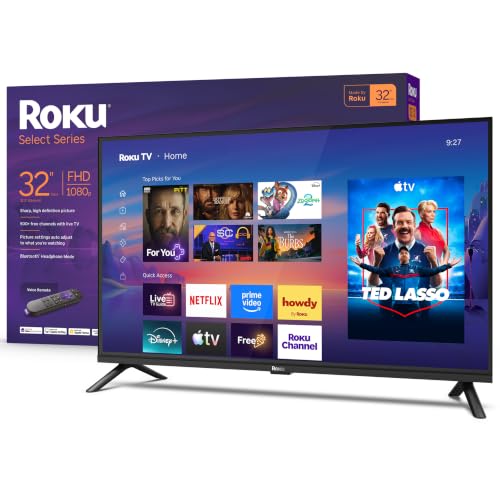 Roku 32-Inch Select Series Smart TV 2026-1080p
- Bright, clear picture: Bring entertainment to life on…
- Seamless streaming: With fast Wi-Fi and apps that…
- TV, simplified: With setup that only takes minutes,…
 Amazon Ember 55" 4-Series with Fire TV
- Get more from your TV
- Vivid views
- Speed, redefined
| Product | Key specs | |
|---|---|---|
| Roku 55-Inch Select Series Smart TV 2026-4K | Breathtaking picture: Sharp 4K brings out rich detail… Seamless streaming: With fast Wi-Fi and apps that… TV, simplified: With setup that only takes minutes,… | Check price |
| Roku 32-Inch Select Series Smart TV 2026-1080p | Bright, clear picture: Bring entertainment to life on… Seamless streaming: With fast Wi-Fi and apps that… TV, simplified: With setup that only takes minutes,… | Check price |
| Amazon Ember 55" 4-Series with Fire TV | Get more from your TV Vivid views Speed, redefined | Check price |
 Roku 43-Inch Select Series Smart TV 2026-4K | A treat for the eyes: Sharp 4K brings… Seamless streaming: With fast Wi-Fi and apps that… TV, simplified: With setup that only takes minutes,… | Check price |
As an Amazon Associate we earn from qualifying purchases at no extra cost to you.
How the Top Smart TV Brands Compare in 2026
There is no single best brand across all prices because panel technology and software support change dramatically between budget, midrange, and premium models. Use this overview to narrow by what matters most long-term, not just picture quality on day one.
| Brand | OS in 2026 | Panel Types Offered | Common Sizes | App Support Lifespan (Typical) | Standard Warranty | Panel Strength |
|---|---|---|---|---|---|---|
| Samsung | Tizen OS | QD-OLED, Neo QLED (Mini-LED), QLED, Crystal UHD | 43″ to 98″ | 7 years OS + security updates on 2024+ models (Tizen Upgrade Program) | 1 year parts/labor | Highest brightness, anti-glare, strong gaming features |
| LG | webOS 24 / webOS 25 | OLED evo (MLA/WOLED), QNED (Mini-LED) | 42″ to 97″ | 5 years webOS Re:New upgrades on 2022+ OLED/QNED (4 upgrades) | 1 year parts/labor; 5-year panel warranty on select G/Z OLED series | Best OLED viewing angles, lowest input lag, Dolby Vision + FILMMAKER Mode |
| Sony | Google TV | QD-OLED, WOLED, Mini-LED, Direct LED | 50″ to 98″ | 3-4 years major Google TV updates, longer security patches (varies by chipset) | 1 year parts/labor | XR Processor upscaling, best motion and color accuracy out of box |
| TCL | Google TV / Roku TV | QD-Mini LED, QLED, LED | 43″ to 98″ | 2-3 years OS updates (Google TV models), 3-4 years on Roku models via Roku OS | 1 year parts/labor | High brightness for price, large sizes under $1,000 |
| Hisense | Google TV / Roku TV / Fire TV / VIDAA | ULED Mini-LED, QLED, LED | 43″ to 100″ | 2-3 years OS updates (VIDAA and Google TV), Roku/Fire models tied to platform updates | 1-2 years (varies by series, 2 years on U7/U8 series in US) | Very competitive dimming zones and peak brightness in midrange |
| Vizio | SmartCast (based on VIDAA/WatchFree+) | QLED, LED | 43″ to 86″ | 2-3 years feature updates, ongoing security via SmartCast | 1 year parts/labor | Budget pricing, straightforward smart platform |
Numbers matter: Samsung’s 7-year Tizen promise applies only to 2024 and newer TVs, not older Crystal UHD models. LG’s 5-year Re:New program covers 2022 and newer OLEDs and select QNEDs, but 2021 and older sets are locked to their original webOS version with only security patches.
Operating System and App Support Lifespan: What You Will Actually Notice
Samsung Tizen vs LG webOS
Tizen and webOS are the most self-contained systems. Both support all major streaming apps in the US and UK — Netflix, YouTube, Prime Video, Disney+, Max, Apple TV, Hulu, Paramount+, Peacock — plus AirPlay 2, Miracast, and Matter for smart home. Samsung leans toward Gaming Hub (Xbox Cloud Gaming, GeForce Now, Luna without a console) while LG leans toward free channels and multi-view. For longevity, Samsung currently leads on paper with 7 years of OS upgrades; LG follows with 5 years.
Sony, TCL, Hisense with Google TV / Roku TV
Google TV gives you the largest app store and the best Google Assistant and Google Home integration, plus Chromecast built-in. Roku TV remains the simplest to use and the fastest on low-end processors, which is why TCL and Hisense still offer it on budget lines. Fire TV models from Hisense and other brands are best if you are already in the Alexa ecosystem. The trade-off is that update length depends on both the chip manufacturer and the platform owner, so Hisense or TCL with Google TV typically get fewer guaranteed Android TV OS upgrades than a Samsung or LG flagship.
Practical takeaway: If you plan to keep a TV for 6+ years, prioritize a brand that guarantees multi-year OS upgrades or plan to add an external streaming stick in year 3-4. App support ending does not break the panel, but it does mean new apps and interface features stop arriving and older apps may lose support first.
Panel Quality by Tier
Budget Tier ($280 – $600, 43″ to 65″)
This is where TCL Q5/Q6 series, Hisense Q6/U6 series, Samsung Crystal UHD DU7200/DU8000, and Vizio MQX compete. You get VA or ADS panels, 60Hz native, 300-500 nits peak brightness, and 32-48 local dimming zones if any. Color is good for bright rooms but contrast and black levels are average. For casual viewing and kids’ rooms, QLED budget models from TCL and Hisense offer better brightness and wider color gamut than basic Crystal UHD or standard LED.
Midrange Tier ($650 – $1,400, 55″ to 75″)
The sweet spot for most buyers. Look at TCL QM7/QM8, Hisense U7N/U8N, Samsung QN85D/QN90D (Neo QLED), LG QNED85/90 and B4/C4 OLED, Sony X90L/Bravia 7. You jump to 120Hz native, 800-1,500+ nits, 100-1,000+ dimming zones on Mini-LED, or self-emissive OLED with infinite contrast. This tier is where Mini-LED closes the gap with OLED on brightness while OLED keeps the advantage on viewing angle and per-pixel dimming. HDMI 2.1 (4K 120Hz, VRR, ALLM) is standard in this tier across Samsung, LG, Sony, and TCL/Hisense U7 and above.
Premium Tier ($1,500 – $4,500+, 55″ to 83″)
Samsung S90D/S95D (QD-OLED), LG C4/G4/M4 (WOLED with MLA on G4), Sony Bravia 8 and Bravia 9 (QD-OLED and Mini-LED). Peak brightness hits 1,500-3,000 nits on Mini-LED and 1,300-2,100 nits on QD-OLED/WOLED, with near-perfect black levels on OLED. Weight differences are real here: a 65″ OLED weighs about 35-45 lbs without stand versus 50-65 lbs for a 65″ Mini-LED due to backlight and heat sink. All premium models support Dolby Vision (except Samsung, which uses HDR10+ and HDR10) and Dolby Atmos passthrough via eARC.
Decision Matrix: Which Brand Fits Your Situation
Match your room, use, and how long you keep TVs to a brand tier, not just a brand name.
| Your Situation | Best Fit Brand and Tier | Why |
|---|---|---|
| Bright living room, sports during the day, $500-$800 budget | TCL QM7 or Hisense U7N | Mini-LED high brightness (1,200+ nits) beats edge-lit budget sets; Google TV stays fast on this chip |
| Dark room movie watcher, wants best contrast | LG C4 / Sony Bravia 8 OLED (55″-65″) | Self-emissive OLED, perfect blacks, Dolby Vision, wide viewing angle for off-center seating |
| Competitive gamer (PS5, Xbox Series X, PC) | LG G4/C4 or Samsung S90D/S95D | 4x HDMI 2.1, 4K 120Hz, VRR, 9-13ms input lag, Game Optimizer/Game Bar |
| Want longest software life without a stick | Samsung 2024+ Neo QLED/OLED or LG 2022+ OLED | 7-year / 5-year OS upgrade commitments are the longest guaranteed in 2026 |
| Rental, bedroom, or second TV under $450 | TCL Q6 or Hisense Q6 with Roku TV | Low cost, simple Roku OS, decent HDR for the price |
| Already in Google/Alexa home, voice control priority | Sony Bravia (Google TV) or Hisense Fire TV | Native Google Assistant/Alexa, Chromecast or Fire TV integration, no extra hub |
Cost Per Year: A Worked Calculation
Price alone is misleading. Divide total cost by realistic ownership years, factoring app support.
Example: A 65″ TCL Q7 at a general market range of $650-$800 with a 3-year OS upgrade window versus a 65″ Samsung QN90D at $1,400-$1,700 with a 7-year upgrade window. Keep both for 7 years.
- TCL: $730 average + $40 streaming stick in year 4 to replace outdated OS = $770 / 7 years = $110 per year.
- Samsung: $1,550 average, no stick needed = $1,550 / 7 years = $221 per year.
- Difference: Samsung costs about $111 more per year but delivers 1,800+ nits vs ~900 nits, more dimming zones (600+ vs ~120), and stays on the latest Tizen without extra hardware. If you only keep a TV 4 years, the gap shrinks: TCL $193/year vs Samsung $388/year.
If you rotate TVs every 3-4 years, budget QLED wins on cost per year. If you keep a main TV for 7+ years in a bright room, paying more upfront for longer support and higher brightness usually costs less than replacing early due to slow software.
Durability and Ownership Realities
Smart TVs fail in predictable ways. The panel rarely dies first.
- Power supply and backlight driver boards are the most common failures after year 3, especially on budget LED sets run at maximum backlight daily. Running backlight at 70-80% instead of 100% in a bright room reduces heat and extends driver life.
- OLED burn-in risk is much lower on 2023+ models due to pixel shift, logo luminance adjustment, and heat sinks, but static news tickers and HUDs at high brightness for thousands of hours still create uneven wear. Vary content and use screen saver and pixel care cycles.
- Cheap feet and stands: Budget 55″-65″ models often use two small feet that require a wide console (up to 48″ spread). Check footprint before buying; many midrange and premium sets offer center pedestal or adjustable-width feet.
- Cleaning: Use distilled water on a microfiber cloth, never alcohol or ammonia cleaners on the coating. Wiping a dusty anti-glare coating in circles creates swirl marks; wipe lightly in one direction.
- Common mistake: Blocking bottom vents by placing a soundbar directly against the lower bezel. Leave 1-2 inches for airflow; heat shortens board life.
- Consumables and extras: No filters to replace, but budget for a surge protector with at least 1,200 joules, an HDMI 2.1 Ultra High Speed cable for 4K 120Hz (often not included), and wall-mount screws rated for 75-100 lbs for 65″-75″ models.
Warranty reality: All major brands include one year by default in the US. Extended panel warranties (LG’s 5-year on G-series, some Hisense 2-year on U8) cover the panel only, not the main board or power supply. Retail extended plans often exclude burn-in, so read terms if you buy OLED for static office use.
Final Picks by Buyer Type in 2026
Best Overall: Samsung Neo QLED and QD-OLED (QN90D, S90D/S95D)
Strongest combination of brightness, anti-reflection, gaming hub, and 7-year OS support on current models. Choose Samsung if your TV is in a bright room and you want the longest guaranteed app support without adding a stick.
Best OLED for Most People: LG C4 and G4
C4 delivers full HDMI 2.1 suite and webOS Re:New upgrades at a lower price than G4; G4 adds MLA brightness and a 5-year panel warranty. Both are ideal for gaming and cinema with Dolby Vision and sub-13ms lag.
Best for Color Accuracy and Upscaling: Sony Bravia 7 / Bravia 8 / Bravia 9
Sony’s XR processor remains the reference for upscaling 1080p and handling motion without soap-opera effect. Google TV on Sony is also the most app-complete if you sideload or use niche services.
Best Value: TCL QM7/QM8 and Hisense U7N/U8N
These deliver Mini-LED performance — 1,000+ nits, 100+ zones, 144Hz on some sizes — for roughly half the price of Samsung/Sony Mini-LED flagships. Software life is shorter, but picture per dollar is hard to beat.
Best Budget Simple Smart TV: TCL or Vizio with Roku TV
If you want a second TV that just works with minimal menus and fast app switching on a low-end processor, Roku TV models are the most responsive under $500.
FAQ
Which smart TV brand lasts longest?
For software, Samsung (7 years from 2024) and LG (5 years from 2022) publish the longest guarantees. For hardware, longevity depends more on heat management and backlight design than brand; Mini-LED and OLED flagships with better thermal design typically outlast edge-lit budget models.
Is QLED or OLED better?
OLED is better for contrast, black level, and viewing angles in dark to moderate rooms. QD-OLED and Neo QLED/Mini-LED are better for bright rooms where peak brightness and anti-glare matter. Mini-LED has no burn-in risk and is brighter per dollar.
Do I need Dolby Vision?
Dolby Vision is useful if you watch Netflix, Disney+, and Apple TV+ which master many titles in Dolby Vision. Samsung does not support it and uses HDR10+ instead. Most viewers notice the difference on capable panels above 800 nits; on dim budget panels the impact is smaller.









