
Our Top Picks
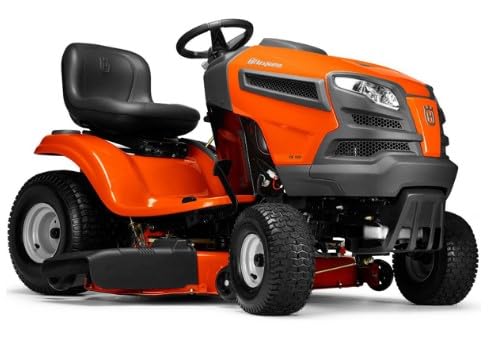


Short answer: the best riding lawn tractor for most large yards in 2026 is the Husqvarna TS 120 with the 46-inch deck — a 22 HP hydrostatic tractor that clears roughly 1.5 acres an hour, fits through a standard 48-inch gate, and sits in the mid-range price band. It suits half-acre to one-acre properties that get mowed weekly and owners who want a machine they can service in their own garage.
Three situations change that answer. If your narrowest gate is under 48 inches, or your lawn is closer to a third of an acre, the 42-inch TS 120 is the same tractor with less deck to store and less deck to scrape. If you are cutting two acres or more, or your property has a slope that spins a standard rear-drive tractor, step up to the Husqvarna TS 375XD and its differential lock. And if you want no gasoline, no oil changes and no exhaust, the EGO Power+ TR4204 is the battery machine worth paying a premium for.
Everything below is organised around the eight things that actually decide a purchase: deck width, transmission type, turning radius, terrain handling, towing capacity, comfort, maintenance access and yard-size fit.
Top 3 Picks
Best Overall: Husqvarna TS 120 (46″)
The 46-inch TS 120 is the sweet spot of the whole category: a 22 HP single-cylinder Briggs & Stratton engine, a foot-pedal hydrostatic transmission, and a deck wide enough to cut a one-acre lawn in about 40 minutes without becoming a storage problem. It is the pick for the reader who wants one machine to do everything competently — mow, tow a small cart, and hold up over a decade of seasonal use — without paying premium money for a feature they will never use.
Best Budget-Conscious Pick: Husqvarna TS 120 (42″)
The 42-inch TS 120 is the lowest-cost machine in this roundup that is still a genuine riding tractor rather than a toy or an accessory. It uses the same chassis and hydrostatic drive as the 46-inch version with a smaller engine and a narrower deck, so you give up about 10 percent of cutting capacity and a little hill-climbing torque in exchange for an easier fit through gates and a smaller footprint in the shed. Choose it if your gate is tight or your lawn is under three-quarters of an acre.
Best Premium: Husqvarna TS 375XD (54″)
The TS 375XD is the only machine here built around traction rather than convenience. Its differential lock lets both rear wheels pull at once, which is the difference between mowing a slope and sliding down it, and its 54-inch deck covers ground fast. It suits properties of an acre and up with grades, rough ground, or a genuine towing workload — carts of soil, aerators, spreaders and rollers.
Quick Comparison
The table below covers every product in this roundup, including the accessory and toy items that show up in the same search results as tractors. Price tiers are deliberately described as bands rather than figures, because listing prices move constantly with promotions and season.
| Product | Best for | Key specs | Price tier |
|---|---|---|---|
| Husqvarna TS 120 (42″) | Yards under ¾ acre; narrow gates | 42 in. deck; 19 HP Briggs & Stratton single; hydrostatic pedal drive; rear-wheel drive; ~18–20 in. turning radius class | Mid-range |
| Husqvarna TS 140X (48″) | Buyers stepping up in power and refinement | 48 in. deck; 24 HP Briggs V-twin; hydrostatic; X-series heavy-duty chassis and larger tires | Premium |
| EGO Power+ TR4204 | Quiet, fuel-free, low-maintenance mowing | 42 in. deck; EGO 56V ARC Lithium battery platform; electric drive; no fuel, oil or spark plugs | Premium |
| Husqvarna TS 120 (46″) | The middle of the range — best all-rounder | 46 in. deck; 22 HP Briggs single; hydrostatic pedal drive; ~1.5 acres/hour realistic coverage | Mid-range |
| GIYI Electric Riding Mower | Battery power at a mid-range price | 42 in. deck; six 40V 6.0Ah batteries (1,440 Wh total) plus charger included; electric drive | Mid-range |
| Husqvarna TS 375XD | Slopes, traction and real towing | 54 in. deck; 24 HP engine; differential lock; garden-tractor-class chassis and tires | Premium |
| PRORUN PLT60V42 | Households already on a 60V battery platform | 42 in. deck; 60V battery system; electric drive; no fuel handling | Mid-range |
| Husqvarna TS 154X | Two acres and up | 54 in. deck; 24 HP Briggs; hydrostatic; X-series frame; ~2.2 acres/hour realistic coverage | Mid-range |
| Zettum Mower Cover | Protecting a tractor stored outdoors | 600D Oxford-style woven fabric; waterproof coating; universal fit with adjustable hem | Budget |
| Kid Trax 12V Zero Turn | Young kids who want to mow alongside you | 12V rechargeable ride-on; zero-turn styling; forward and reverse; parent-supervised use | Budget |
| Bruder bworld John Deere Tractor | Play, display and gift-giving | Scale model with working steering, detachable trailer and gardener figure | Budget |
| INFRONT Remote Control Mower | Steep banks and slopes you should not ride | Tracked chassis; rated to 45° slope climbing; gas-electric hybrid power; remote operation | Budget |
How We Chose
This roundup is a research-based comparison, not a hands-on test. Selections were made by reading manufacturer specification sheets, published owner documentation, parts diagrams and brand service literature, then ranking each machine against the criteria that determine whether it works in a real yard.
The first filter was category fit: a riding tractor is a fundamentally different machine from a zero-turn, a walk-behind or a remote-controlled bank mower, and several products in this space are accessories or toys that appear in the same search results. We kept them, but labelled them honestly. The second filter was deck width, because it sets mowing capacity, gate clearance, storage footprint and price more than any other single number. The third was transmission and drivetrain type — hydrostatic versus gear drive, open versus locking differential — since that decides how the machine behaves on slopes and around obstacles. Fourth was engine configuration, where a V-twin versus a single cylinder changes smoothness, torque and noise as much as it changes horsepower.
We then scored comfort and control layout, maintenance access (filter and plug reachability, deck removal, grease points), parts availability and dealer service depth, and upgrade path within a brand’s line. Price was treated as a tier, not a number, because promotions shift constantly.
1. Husqvarna TS 120 (42″) – Best for Mid-Size Yards and Narrow Gates
As an Amazon Associate we earn from qualifying purchases at no extra cost to you.
The 42-inch TS 120 is the right tractor if your property sits between a third of an acre and roughly three-quarters of an acre, or if the only route into the back garden is a gate that a wider deck will not clear. It is a conventional rear-discharge lawn tractor: a single-cylinder Briggs & Stratton engine, a foot-pedal hydrostatic transmission, and a stamped steel deck. That is the simplest configuration in this roundup, and the easiest one to live with if you would rather not relearn a machine every spring.
Key specs at a glance
- Cutting deck: 42 inches, side discharge with mulch and bagging options
- Engine: 19 HP Briggs & Stratton single-cylinder, gasoline
- Transmission: hydrostatic, foot-pedal forward and reverse — no clutch, no gear selection
- Drivetrain: rear-wheel drive with an open differential
- Turning radius: roughly 18–20 inches uncut, which is class-typical for a lawn tractor
- Cutting height: lever-adjusted with multiple positions
- Overall deck width: expect roughly 44–46 inches across the deck, so plan on a gate opening of at least 48 inches
The case for this machine is that it does the ordinary job extremely well and nothing else. A 42-inch deck at a realistic 4 mph with normal overlap clears about 1.36 acres an hour on paper — which in practice means a one-acre lawn takes roughly 45 minutes of seat time before trimming. That is slower than a 54-inch tractor, but on a third-of-an-acre lot the difference is about ten minutes a week, and you get a machine that turns tightly around trees, stores in a narrow bay, and fits through a standard garden gate.
The single-cylinder engine is the trade-off. It is louder and buzzier than the V-twin in the X-series machines, and it has less low-end torque for pulling a loaded cart uphill or pushing through tall, wet spring growth. On flat ground with regular mowing, you will not notice. If your lawn grows fast in May or you regularly tow a spreader or a cart, you will.
From an ownership standpoint, this is about as simple as a riding tractor gets. The air filter, spark plug and oil filter are all reachable from the top of the engine bay without removing panels, the deck drops with a few pins, and consumables — blades, belts, filters, spark plugs — are widely stocked. Blades typically need sharpening every 20 to 25 hours of cutting, oil and filter change once a season or every 50 hours, and the battery should be expected to last three to five years with a trickle charger over winter.
Pros
- Lowest-cost genuine riding tractor in this roundup
- Fits through gates and into sheds that a 46- or 54-inch deck will not
- Hydrostatic pedal drive is intuitive for first-time tractor owners
- Simple, well-documented maintenance with widely available parts
- Tight turning radius makes it nimble around beds and trees
Cons
- Single-cylinder engine is noisier and less smooth than a V-twin
- 42-inch cut means noticeably more passes on anything over an acre
- Open differential limits traction on wet slopes
- Less low-end torque for towing uphill or cutting tall, heavy grass
Compared with the 46-inch TS 120 further down this list, the decision comes down to two numbers. The 46-inch machine adds 3 HP, a wider cut and about 10 percent more hourly coverage for a modest step up in tier; the 42-inch machine wins on gate clearance, storage and entry cost. If you have measured your gate and it is 48 inches or wider, buy the 46. If it is narrower, or your lawn is under three-quarters of an acre, the 42-inch version will never feel like a compromise.
2. Husqvarna TS 140X (48″) – Best for Buyers Stepping Up in Power and Refinement

The TS 140X is for the owner who has already decided that mowing is a weekly chore worth investing in, and who wants a machine that feels substantial rather than merely adequate. The “X” in Husqvarna’s naming denotes the heavy-duty end of the line, which generally means a reinforced front axle, larger tires and a more robust overall build than the base TS models. It is the natural upgrade for someone moving from a 42- or 46-inch tractor, or buying their second tractor after wearing out a first.
Key specs at a glance
- Cutting deck: 48 inches, side discharge with mulch and bagging capability
- Engine: 24 HP Briggs & Stratton V-twin, gasoline
- Transmission: hydrostatic, foot-pedal control
- Chassis: X-series — heavy-duty specification with larger tires and reinforced front axle components
- Turning radius: class-typical lawn tractor geometry, roughly 18–20 inches uncut
- Cutting height: lever-adjusted, multiple positions
- Seat and controls: higher-back seat with a more upright driving position than the base TS models
The V-twin is the headline change. Two cylinders firing in opposition cancel a large part of each other’s vibration, so the engine runs smoother, sounds less strained under load, and delivers torque lower in the rev range. In practice that shows up when you are cutting tall grass in spring, pulling a loaded trailer up a grade, or running a bagger that adds drag to the deck. A single-cylinder tractor does all of those jobs; a V-twin does them without sounding like it is being asked for a favour.
The 48-inch deck is the other half of the upgrade. At a realistic 4 mph with normal overlap it covers roughly 1.55 acres an hour — about 14 percent more than the 46-inch deck and around 14 percent less than a 54-inch. That is enough to make a one-acre lawn a comfortable single session and a two-acre property a two-pass job with time for trimming. It is also the widest deck that still feels genuinely manoeuvrable around a typical suburban landscape of beds, fences and trees.
Comfort matters more than buyers expect. A lawn tractor session on an acre runs 45 to 70 minutes; on two acres, it can run past two hours. The X-series seat and control layout are specified to make that tolerable — the deck lift and height adjustment fall naturally to hand, the steering effort is lower, and the pedals sit in a more natural position than on entry-level machines. If you have a bad back or a long lawn, this is the tier where that starts to matter.
Maintenance is broadly the same story as the rest of the Husqvarna line: top-access filters and plugs, a deck that drops on pins, and a consumables list that any small-engine shop stocks. The V-twin adds a second cylinder’s worth of plugs and slightly more oil capacity, which costs a few pounds a year and buys smoother running.
Pros
- V-twin engine is markedly smoother and stronger under load
- 48-inch deck balances coverage with manoeuvrability
- X-series chassis and larger tires handle rough ground better
- Comfortable seat and control layout for long sessions
- Strong parts and service network for long-term ownership
Cons
- Premium tier pricing for what is still a lawn tractor, not a garden tractor
- Open differential means slopes still limit traction
- Wider deck demands a wider gate and more shed space
- Heavier machine is harder to push or manoeuvre by hand when it is not running
Against the 46-inch TS 120, the 140X buys you 2 HP, 2 inches of cut, a smoother engine and a heavier chassis for a clear step up in price. If your lawn is one acre or less and reasonably flat, the 46-inch machine is the smarter purchase. If it is over an acre, uneven, or you simply want the machine to feel effortless for the next ten years, the 140X is the more satisfying choice — and it is the better stepping stone if you eventually move up to a 54-inch X-series model.
3. EGO Power+ TR4204 – Best for Quiet, Emissions-Free Mowing

The EGO Power+ TR4204 is the pick for anyone who has decided they are done with gasoline. It is a 42-inch battery-powered riding tractor built on EGO’s 56V ARC Lithium platform — the same battery ecosystem the company uses across its mowers, blowers, trimmers and chainsaws. If you already own EGO handheld tools, the batteries are shared, which changes the economics considerably.
Key specs at a glance
- Cutting deck: 42 inches, side discharge with mulch and bagging options
- Power source: EGO 56V ARC Lithium battery platform — no gasoline, no oil, no spark plugs
- Drive: electric, with none of the warm-up, choke or fuel-stabiliser rituals of a gas tractor
- Noise: dramatically quieter than any gasoline tractor in this roundup
- Maintenance: blade sharpening and battery care are effectively the whole service list
- Battery count and capacity: check the current listing, as bundle configurations vary
- Storage: no fuel tank to drain or stabilise for winter
The practical advantages of electric start with the absence of an engine. There is no cold-start procedure in April, no ethanol-related carburettor trouble in June, no oil change in October, and no exhaust smell drifting into the house when you park it. For households with allergies, young children, or neighbours close enough to hear a small engine from three doors away, that is worth real money. A battery tractor is also the only realistic option if your municipality has seasonal noise or emissions restrictions on small engines.
Runtime is the honest trade-off. A 42-inch electric rider under continuous cutting load draws somewhere in the region of 2 to 3 kilowatts, so runtime scales directly with how many kilowatt-hours you have on board and how heavy the grass is. That means a full acre on a single charge is achievable with a well-specified battery set but not guaranteed, and two acres almost certainly means a mid-job battery swap or a second set. EGO’s fast-charge ecosystem helps — batteries recharge in a fraction of the time a full mow takes — but you should plan the swap rather than assume it away.
Deck and cut quality are the parts that surprise gas loyalists. Electric motors deliver full torque from zero rpm, so the blades recover speed almost instantly when they hit thick grass, instead of bogging down and leaving a ragged stripe. The 42-inch deck keeps the machine compact and gate-friendly, which is why EGO paired it with this width rather than something wider.
Pros
- No fuel, oil, filters, spark plugs or winterising
- Very quiet operation, suitable for early mornings and noise-restricted areas
- Instant torque holds blade speed in tall or wet grass
- Shared 56V batteries with the wider EGO tool range
- Zero tailpipe emissions and no exhaust smell
Cons
- Premium price tier — the highest cost per inch of deck in this roundup
- Runtime depends on battery count, grass conditions and deck load
- Large properties may need a second battery set or a mid-mow swap
- Battery packs are a long-term consumable with a finite service life
Against the GIYI electric rider, the comparison is platform versus price. The GIYI ships with six 40V 6.0Ah batteries for a combined 1,440 Wh and sits in the mid-range tier; the EGO costs more and buys a mature battery ecosystem, a broader service and warranty footprint, and the ability to share packs with other tools. If you are buying into electric for the first time and want the safest long-term bet, EGO is it. If you want the lowest entry cost into a battery tractor and already understand that runtime is a battery-count question, the GIYI is the value play.
4. Husqvarna TS 120 (46″) – Best for Half-Acre to One-Acre Yards
The 46-inch TS 120 is our best overall pick because it is the point in the range where capability stops being a compromise and cost stops being a stretch. It suits the reader with roughly half an acre to a full acre, a gate at least 48 inches wide, and a genuine intention to mow weekly from spring through autumn. It is also the machine to buy if you are unsure — it is wide enough to be efficient on a real lawn and small enough that nothing about owning it is a project.
Key specs at a glance
- Cutting deck: 46 inches, side discharge with mulch and bagging options
- Engine: 22 HP Briggs & Stratton single-cylinder, gasoline
- Transmission: hydrostatic, foot-pedal forward and reverse
- Drivetrain: rear-wheel drive with open differential
- Realistic coverage: about 1.5 acres per hour at 4 mph with normal overlap
- Turning radius: roughly 18–20 inches uncut, class-typical
- Cutting height: lever-adjusted, multiple positions
Four inches of deck sounds trivial. It is not. Going from 42 to 46 inches reduces the number of passes across a one-acre lawn by roughly nine percent, and it reduces the awkward partial-width pass along fences and beds as well, because the machine’s track lines up better with common lawn geometry. Over a season of 25 to 30 mows, that is several hours of seat time returned to you, and it costs far less than jumping to a 48- or 54-inch machine.
The 22 HP single-cylinder engine sits in a useful middle ground. It has enough torque to pull a loaded cart on level ground and enough reserve to keep the deck spinning through thick spring growth, without the fuel consumption, weight and cost of a V-twin. It is still a single, so it is louder than the 140X and it will labour audibly in wet, long grass — but it will get through it.
Because this machine shares its chassis with the 42-inch TS 120, everything about living with it is familiar and inexpensive. Deck removal is a pin job, filters and plugs are reachable from above, and blades, belts and spindles are commodity parts available from multiple suppliers. Expect to sharpen blades every 20 to 25 hours, change oil and filter once a season or at 50 hours, replace the air filter annually in dusty conditions, and budget for a battery every three to five years. Grease the spindles and front axle at the start of each season and the machine will outlast most owners’ patience for mowing.
One caution specific to this size: measure your gate and your shed door before ordering. A 46-inch deck typically measures around 48 to 50 inches across at its widest, and many garden gates are exactly 48 inches. If you are within an inch or two, take the measurement twice.
Pros
- Best balance of cutting capacity, footprint and price in the range
- About 1.5 acres an hour — a one-acre lawn in roughly 40 minutes
- Same simple, inexpensive maintenance as the 42-inch model
- Hydrostatic pedal drive is easy for any household member to use
- Wide parts availability and a deep dealer network
Cons
- Single-cylinder engine is louder and less refined than a V-twin
- Open differential limits grip on wet or steep ground
- Requires a gate opening of roughly 48–50 inches
- Not enough deck for two acres without long sessions
The nearest alternative is the 42-inch TS 120. Buy the 46 if your gate allows it and your lawn is half an acre or more; the extra width pays for itself in seat time within a couple of seasons. Buy the 42 if your gate is tight, your shed is narrow, or your lawn is small enough that the wider deck is pure storage overhead. If you want more power rather than more deck, the 48-inch TS 140X is the next step up, adding a V-twin and an X-series chassis for a premium-tier price.
5. GIYI Electric Riding Mower – Best Battery-Powered Value

The GIYI electric riding mower is the machine to consider if you want battery power but the premium electric options feel like a stretch. It ships with six 40V 6.0Ah batteries and a charger, drives a 42-inch deck, and sits in the mid-range price tier. It suits a half-acre to three-quarter-acre lawn where quiet operation, no fuel handling and no engine maintenance matter more than raw acreage per charge.
Key specs at a glance
- Cutting deck: 42 inches
- Power source: six 40V 6.0Ah lithium-ion batteries, charger included
- On-board energy: 40V × 6.0Ah = 240 Wh per pack; 240 × 6 = 1,440 Wh total
- Drive: electric, no gasoline, no oil changes, no spark plugs
- Noise: far quieter than a comparable gasoline tractor
- Maintenance: blade sharpening, deck cleaning and battery care
- Battery handling: six packs means more individual charging and storage steps than a single large pack
The energy arithmetic is the useful part of understanding this machine. At 1,440 Wh total, and assuming a 42-inch deck under moderate load draws roughly 2,000 to 2,500 watts, you are looking at somewhere between 35 and 45 minutes of continuous cutting per full charge. Lighter grass, a higher cutting height and gentler ground speed stretch that; heavy spring growth, wet grass and a low cutting height shorten it. Three-quarters of an acre with a 42-inch deck typically takes 35 to 40 minutes of cutting, so this machine fits that job with a modest margin and gets tight above it.
The six-battery design has a real advantage and a real cost. The advantage is redundancy and flexibility: you can run part of the set while charging the rest, and if one pack fails you replace a smaller, cheaper unit rather than an entire large battery. The cost is logistics — six packs to charge, six packs to store, and six packs to carry to the machine. Owners who set up a dedicated charging shelf handle this fine; owners who leave the packs scattered in a shed will find it irritating.
Because there is no engine, the maintenance list is short and cheap. There is no oil, no oil filter, no air filter, no spark plug, no fuel stabiliser and no carburettor. That eliminates the single most common cause of a gas tractor failing to start in spring. What remains is blade sharpening every 20 to 25 hours, clearing clippings from under the deck after wet cuts, keeping the battery contacts clean, and storing the packs indoors at moderate temperature over winter rather than in a freezing shed.
Pros
- Six batteries and a charger included — no separate battery purchase
- Mid-range tier pricing for a battery-powered riding tractor
- No fuel, oil, filters or spark plugs to service
- Six-pack design allows partial charging and cheaper single-pack replacement
- Quiet enough to mow without disturbing the neighbourhood
Cons
- 1,440 Wh limits realistic runtime to roughly 35–45 minutes under load
- Managing six separate battery packs is more work than one large pack
- Smaller service and dealer footprint than the established brands
- Not suited to lawns much above three-quarters of an acre on a single charge
Against the EGO Power+ TR4204, the GIYI is the value route into battery mowing. EGO costs more and delivers a mature 56V platform, a broader tool ecosystem and stronger long-term support; GIYI delivers a comparable 42-inch deck and a workable battery set for mid-range money. Against the PRORUN PLT60V42, the deciding factor is usually which battery system you already own — the PRORUN runs on a 60V platform, so if your other cordless tools are 60V, that machine integrates better, while the GIYI’s six-pack bundle gives you everything you need in one box.
6. Husqvarna TS 375XD – Best for Slopes, Traction and Heavy Towing

The TS 375XD is the only machine in this roundup built to solve a traction problem rather than a convenience problem. Its differential lock lets both rear wheels drive together instead of letting one spin, which is the difference between climbing a wet slope and sliding sideways down it. With a 54-inch deck and a 24 HP engine, it suits properties of an acre and up that have grades, rough ground, or a genuine towing workload.
Key specs at a glance
- Cutting deck: 54 inches, side discharge with mulch and bagging options
- Engine: 24 HP gasoline engine
- Drivetrain: differential lock — both rear wheels drive under load
- Transmission: hydrostatic, foot-pedal control
- Class: garden-tractor territory — heavier chassis, larger tires, more ground clearance than a lawn tractor
- Realistic coverage: over 2 acres per hour at 5 mph with normal overlap
- Towing: rated for heavier implements — carts, spreaders, rollers, aerators — than the lawn-tractor models above
Differential lock is the feature that justifies the price. On an open-differential tractor, if one rear wheel loses grip — on wet grass, loose gravel, a muddy patch at the bottom of a slope — all the drive torque goes to that wheel and the machine stops. With the lock engaged, both wheels pull, and the machine keeps climbing. That does not make a riding tractor safe on steep ground; it makes it usable on moderate grades and soft ground where an open-differential machine would spin. You should still mow slopes up and down rather than across, and you should not point a lawn or garden tractor at anything that feels genuinely steep.
The larger tires and greater ground clearance are the second half of the story. They ride over roots, ruts and uneven ground more comfortably, they put a longer contact patch on the soil, and they resist turf damage better than the smaller wheels









